
UMKC wins $160m NSF award to rebuild US critical materials supply chain
The University of Missouri-Kansas City has been selected by the National Science Foundation to receive up to $160 million in funding for its Critical Materials Crossroads Engine, a decade-long initiative designed to rebuild domestic production capacity for the metals and advanced materials underpinning batteries, semiconductors, aircraft components and medical devices. The award is framed as one of the largest in Missouri's higher education history and represents a deliberate federal pivot away from import dependency, with China currently controlling large portions of the global critical materials supply chain.
The initiative brings together more than 260 partners spanning higher education, industry, government and community organisations across Missouri and Kansas. It is led by UMKC Chancellor Mauli Agrawal and vice chancellor Anthony Caruso, with Carnegie R1 research partners including the University of Missouri, Missouri S&T, the University of Kansas and Kansas State University. Industry partners include EaglePicher Technologies, a defence and aerospace battery manufacturer, and logistics operator Wagner Logistics, whose involvement signals that the programme is conceived as a full-stack supply chain rebuild rather than a pure research exercise.
From ore to output: the materials stack at stake
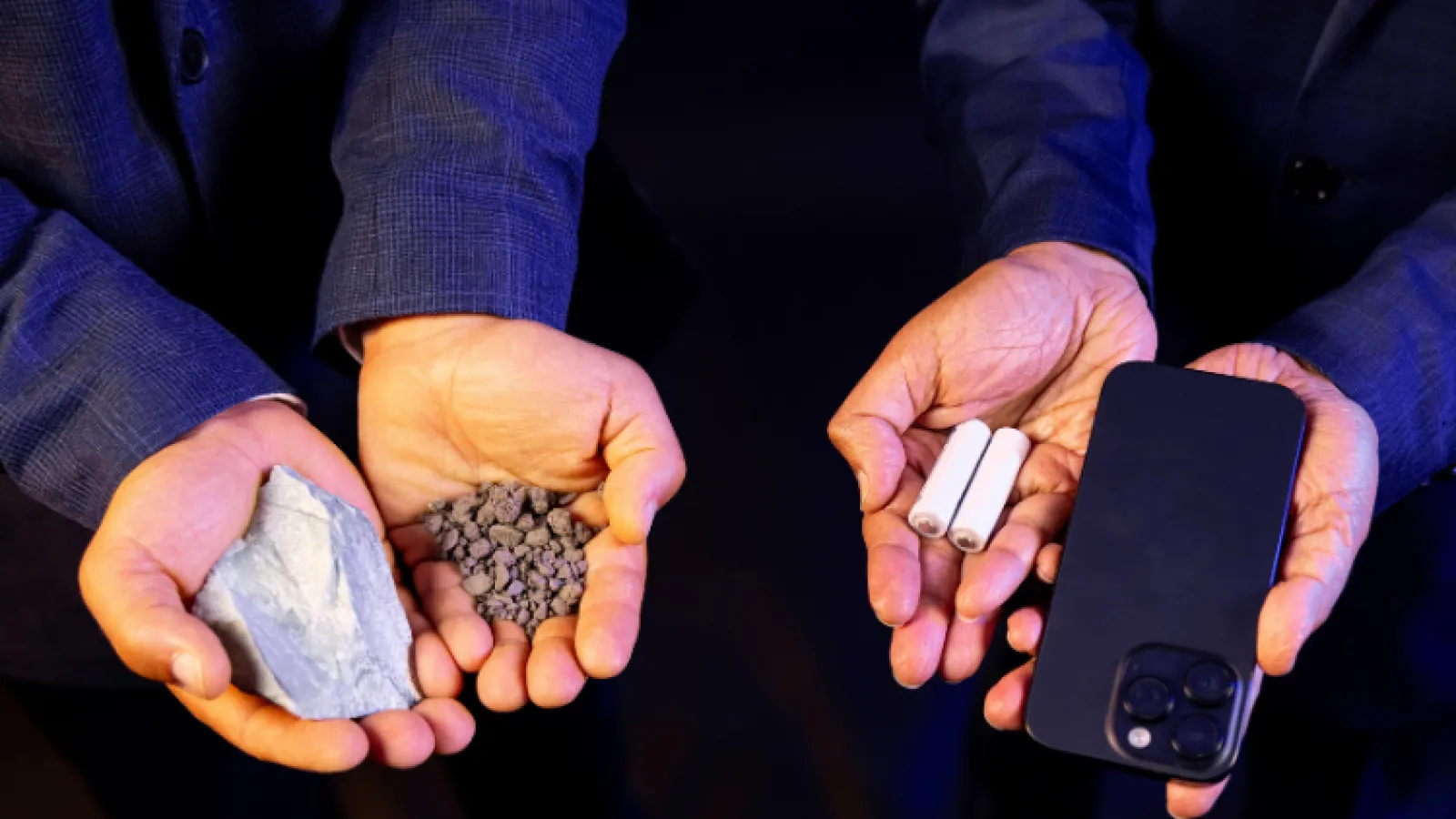
The programme's feedstock includes concentrated ore and spent materials recovered domestically and internationally, with the aim of processing them into the refined metals and advanced compounds that manufacturers require. The materials in scope sit at the intersection of several strategic industries: lithium and nickel chemistries for energy storage, rare earths for defence and aerospace, and specialty metals for semiconductor fabrication. The NSF's own framing names transportation, energy, communications and national security as the primary end-use sectors.
"For decades, the United States has steadily lost much of the workforce, infrastructure and manufacturing capacity required for critical materials production," Caruso said. "This investment allows us to rebuild that capability here in America, creating jobs, strengthening our national resilience and ensuring the technologies that power our future can be produced domestically."
The initiative is projected to create approximately 10,000 jobs by 2036 and generate up to $40 billion in economic output, with a $17 billion uplift to the combined Missouri-Kansas GDP over the same period, according to Missouri Extension. Funding is structured as a milestone-gated draw: an initial $15 million over two years unlocks further tranches contingent on demonstrated progress, with the full $160 million available over a decade.
The convergence read-across: why this matters beyond the Midwest
Critical materials sit at the convergence point of several overlapping strategic pressures, and the Kansas City award reflects a wider pattern of federal capital being deployed to close the gap between US technology ambition and the raw-material reality underneath it.
The defence and aerospace implications are direct. EaglePicher's participation as a battery-materials partner signals that domestically sourced chemistries for military platforms are an explicit design goal, not a secondary benefit. More broadly, the US industrial posture on hypersonics, satellite propulsion and next-generation aircraft all depend on access to specialty alloys and composites that are currently sourced predominantly from geopolitically exposed supply chains.
The energy transition dimension is equally significant. Battery-grade lithium, cobalt and nickel processing capacity is a hard constraint on the speed at which the US can build out domestic EV manufacturing and grid storage. A Kansas City processing hub positioned on one of the nation's most extensive rail and river networks could reduce the logistics cost of moving refined materials to Midwestern automotive and energy assembly lines.
For cross-sector investors, the programme represents a federally subsidised anchor around which private capital can build adjacent positions in processing technology, speciality chemicals and advanced manufacturing services. The NSF Engines model, which requires private-sector co-investment as a condition of milestone funding, is designed precisely to catalyse that dynamic. Whether the $160 million ceiling proves sufficient to shift the structural balance of critical materials supply remains a question the next decade will answer, but the direction of federal intent is now unambiguous.