
BMO Equipment Finance moves to NETSOL Transcend platform
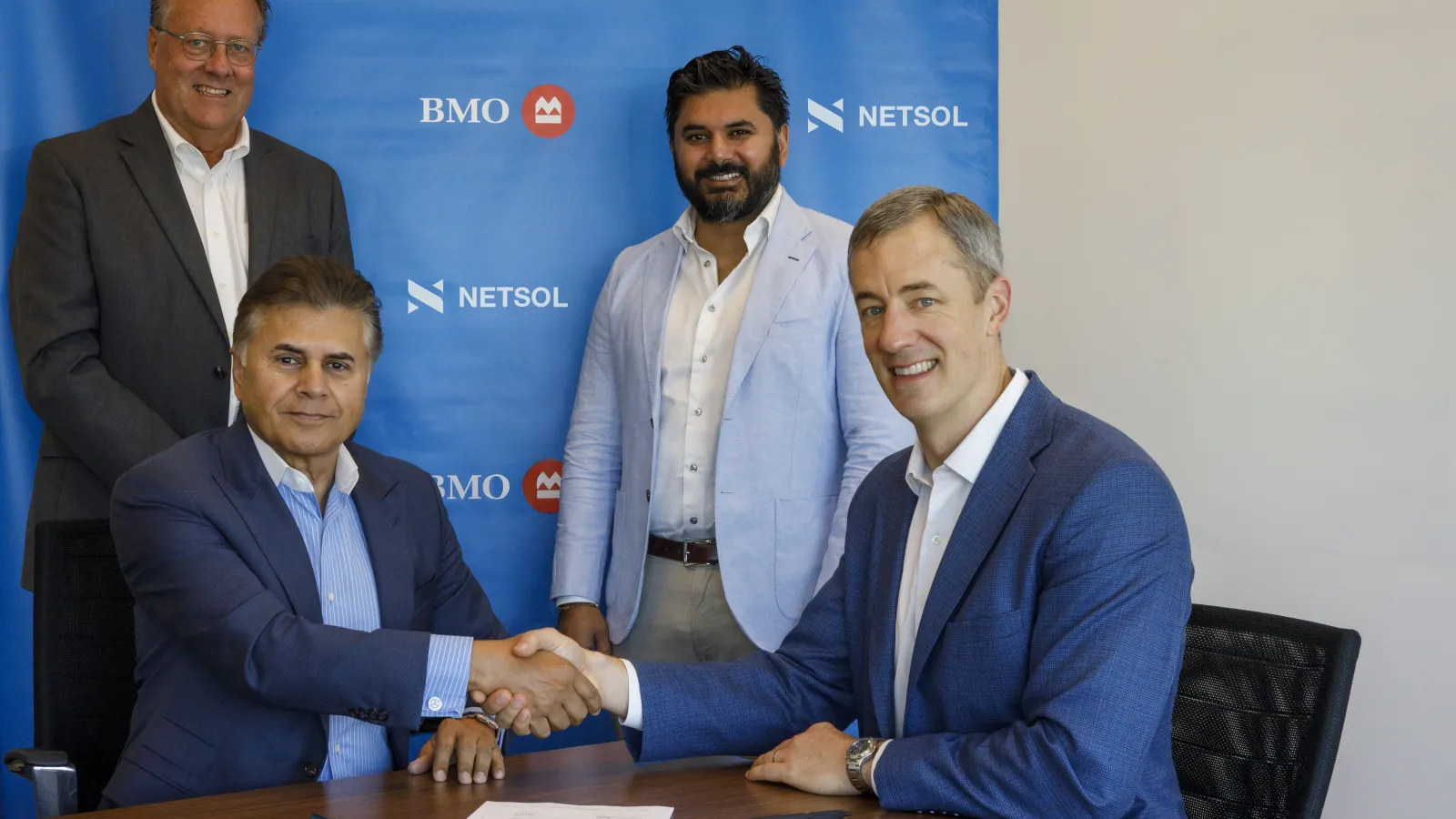
BMO Financial Group, North America's eighth-largest bank by assets at $1.5 trillion, has contracted NETSOL Technologies to migrate its US equipment finance portfolio from NETSOL's legacy LeasePak system onto the company's next-generation Transcend Finance platform. The deal, announced on 15 September 2026, marks a continuation of a partnership stretching back more than 30 years, but the upgrade carries implications well beyond a routine software refresh.
The Transcend Finance platform consolidates originations, loan servicing, and wholesale finance into a single AI-enabled environment. For a bank of BMO's scale, operating equipment finance assets across the United States, the shift from a legacy point solution to a unified lifecycle platform is principally a data architecture decision: it centralises risk signals, automates decisioning workflows, and creates a single source of truth across a complex, multi-asset portfolio.
Legacy replacement as a strategic lever
Equipment finance is frequently overlooked in the wider narrative of banking transformation, but it represents a substantial and structurally sticky business line for major commercial banks. Portfolios span rolling stock, construction machinery, agricultural equipment, and increasingly, energy transition assets such as utility-scale solar installations and battery storage systems. Managing that heterogeneity on ageing platforms built for a narrower asset universe creates operational drag and limits a bank's ability to introduce flexible financing structures as new asset classes emerge.
NETSOL CEO Najeeb Ghauri framed the transition explicitly in terms of strategic agility: "With the transition to our Transcend Finance platform, BMO is poised to unlock new levels of operational efficiency, risk management and customer engagement." Taken at face value, that is standard vendor language; the more concrete signal is that BMO is replacing a functioning platform rather than simply adding capability, which suggests the legacy constraints were material enough to justify migration cost and execution risk.
Convergence angle: equipment finance meets the energy transition
The timing of BMO's platform modernisation is not incidental. As North American banks deepen their exposure to energy transition financing, equipment finance desks are being asked to underwrite asset classes with unfamiliar residual-value profiles: electric vehicle fleets, grid-scale battery installations, and modular industrial heat pumps. Legacy asset finance platforms, calibrated to depreciation curves for diesel generators or offset printing presses, are poorly suited to pricing the residual risk on a five-year-old lithium iron phosphate battery pack.
A platform like Transcend Finance, built with configurable asset definitions and AI-assisted risk modelling, positions BMO to bid competitively on green-infrastructure financing without building bespoke workarounds on top of an ageing system. This is the quietly consequential convergence at the heart of this deal: the modernisation of back-office finance infrastructure is becoming a prerequisite for any major bank that wants a credible position in the energy transition capital stack.
Investor attention to this space has been building steadily. NETSOL operates across more than 30 countries and counts automotive and equipment original equipment manufacturers alongside banks among its client base, meaning its platform data sits at a useful intersection of asset lifecycle intelligence and financial risk. For cross-sector investors watching where enterprise software capital flows in the financial services space, the pipeline of legacy-to-modern migrations at tier-one banks represents a durable, if unglamorous, revenue category. The equipment finance software market is not a moonshot, but the platforms that win it gain proprietary data on how industrial assets are financed, depreciated, and remarketed globally, a dataset with growing value as physical-asset finance converges with sustainability reporting obligations and green-bond structuring.
The near-term question is execution: large-scale platform migrations at regulated financial institutions routinely face delays tied to data mapping complexity and regulatory sign-off requirements. The contract has been signed; the go-live timeline has not been disclosed publicly.