
Greenly and Normative merge to build global carbon accounting platform
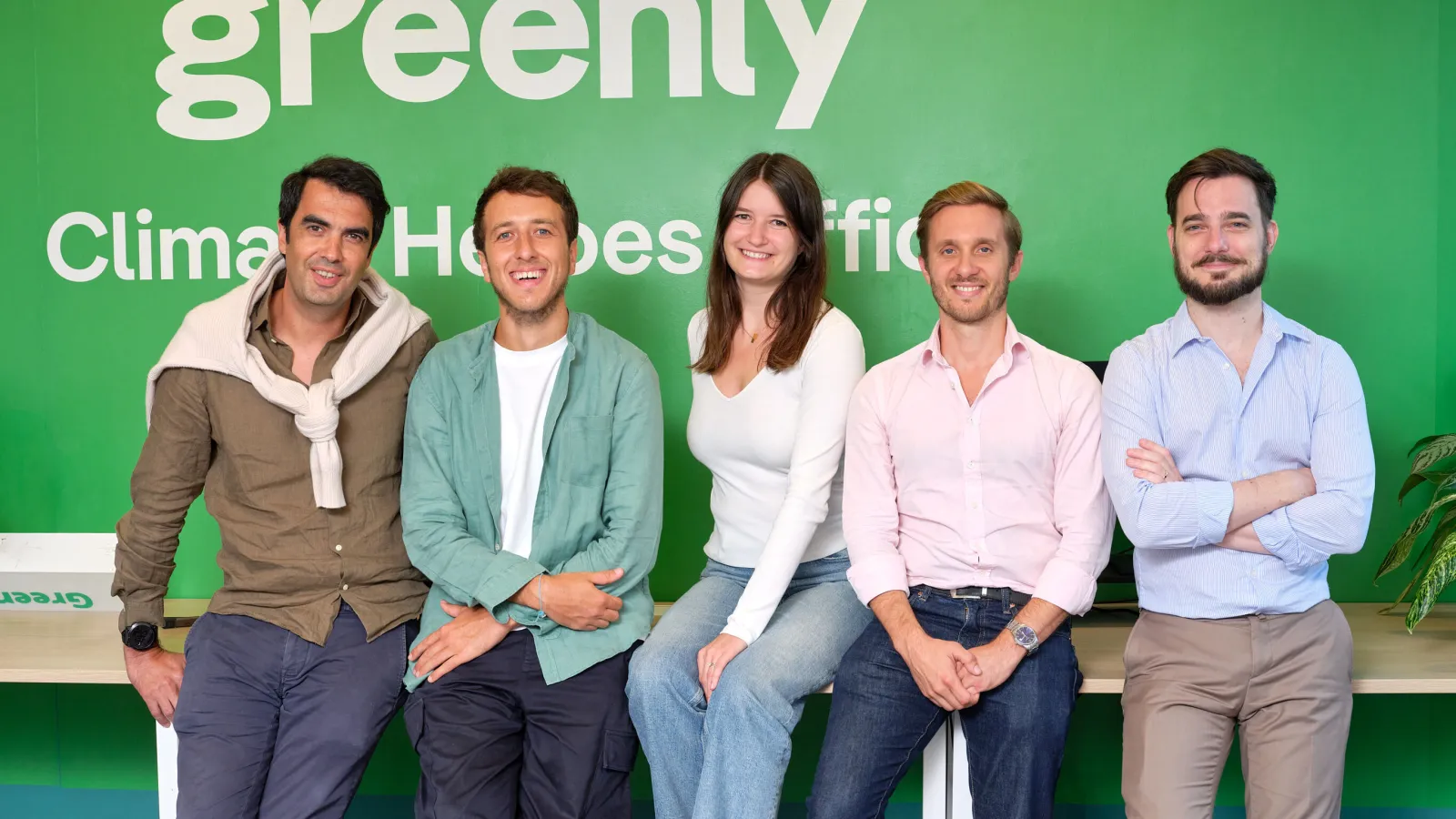
Greenly and Normative, two of Europe's largest carbon accounting platforms, have announced a merger to form what they describe as the world's biggest climate software provider. The combined entity will serve 4,000 customers across more than 30 countries and will, from day one, manage 500 million tonnes of CO₂ equivalent annually. Its backers include Blume Equity, ETF Partners, 2150, EIP, XAnge and 7Ridge.
The timing is deliberate. Corporate demand for emissions data is shifting from annual tick-box compliance towards continuous carbon management embedded in operational and financial decision-making. A cascade of regulatory deadlines is accelerating that shift: the EU's Corporate Sustainability Reporting Directive (CSRD), California's SB 253 and SB 261 supply-chain disclosure laws, the Carbon Border Adjustment Mechanism (CBAM), and the incoming Digital Product Passport all require granular, audit-ready Scope 3 data that most companies still lack.
One dataset to rule supply chains
The strategic logic of the merger rests on data network effects. Together, the two platforms consolidate more than five million emission factors drawn from hundreds of thousands of customers and suppliers. As more companies join, the accuracy of those factors improves and benchmarks become more meaningful, a compounding advantage that is difficult for smaller rivals to replicate. The combined group will also step up investment in Greenly's AI-native agent layer: four specialised tools already live on the platform can map multi-country corporate structures, expand supplier-level Scope 3 coverage, scale life-cycle assessments across product portfolios, and produce board-ready decarbonisation plans aligned with CSRD, IFRS and SBTi frameworks.
The competitive landscape named in the release gives a sense of how the market is fracturing geographically: Watershed holds a strong US position, Asuene is consolidating in Asia, and One Click LCA dominates construction product life-cycle assessment. The Greenly-Normative combination is positioned as the transatlantic generalist, spanning Europe and North America across multiple industry verticals including automotive, agri-food, logistics and financial services. Customers already on the platform include AXA, BNP Paribas, the Bank of England, Porsche, Toyota, Amazon, Vodafone and Bureau Veritas.
The combined group targets growth in annual recurring revenue from €30 million to €50 million over three years, remaining founder-led under Greenly CEO Alexis Normand. "When we look back from 2050 at what made global decarbonisation possible at scale, I believe we will see the emergence of a common language and source of truth for carbon as a defining moment, much as double-entry bookkeeping helped unleash modern finance during the Renaissance," Normand said.
The convergence angle: carbon data meets financial infrastructure
For Disrupts readers, the more consequential framing is what this merger signals about where climate software is heading as an asset class and a strategic tool. The release explicitly draws a parallel between carbon data and financial data, describing the goal as bringing "carbon information closer to the completeness and operational maturity expected of financial data." That is not a casual analogy. It implies a future in which carbon accounts sit alongside profit-and-loss accounts on the CFO's dashboard, and in which the platforms that hold the most reliable emissions data command the kind of pricing power and switching costs that financial data vendors such as Bloomberg and Refinitiv have historically enjoyed.
That framing has direct implications for capital allocation across several sectors. In financial services, banks and insurers already on the platform (BNP Paribas, AXA, the Bank of England) face growing regulatory pressure to disclose financed emissions under CSRD and TCFD; a single, auditable carbon ledger reduces their compliance overhead and their regulatory risk. In manufacturing and logistics, a shared emissions dataset across automotive, chemicals and freight supply chains enables genuine supplier benchmarking for the first time, potentially rewiring procurement decisions. For climate-tech investors, the merger signals that the carbon-software segment is entering a consolidation phase, a pattern that typically marks the transition from venture-scale experimentation to infrastructure-scale returns. The group's stated ambition to manage one billion tonnes of CO₂ by 2030 is a bold projection, but the regulatory tailwinds behind it are real and accelerating.