
zSpace AR/VR platform anchors Poland's Laboratorium 4.0 workforce hub
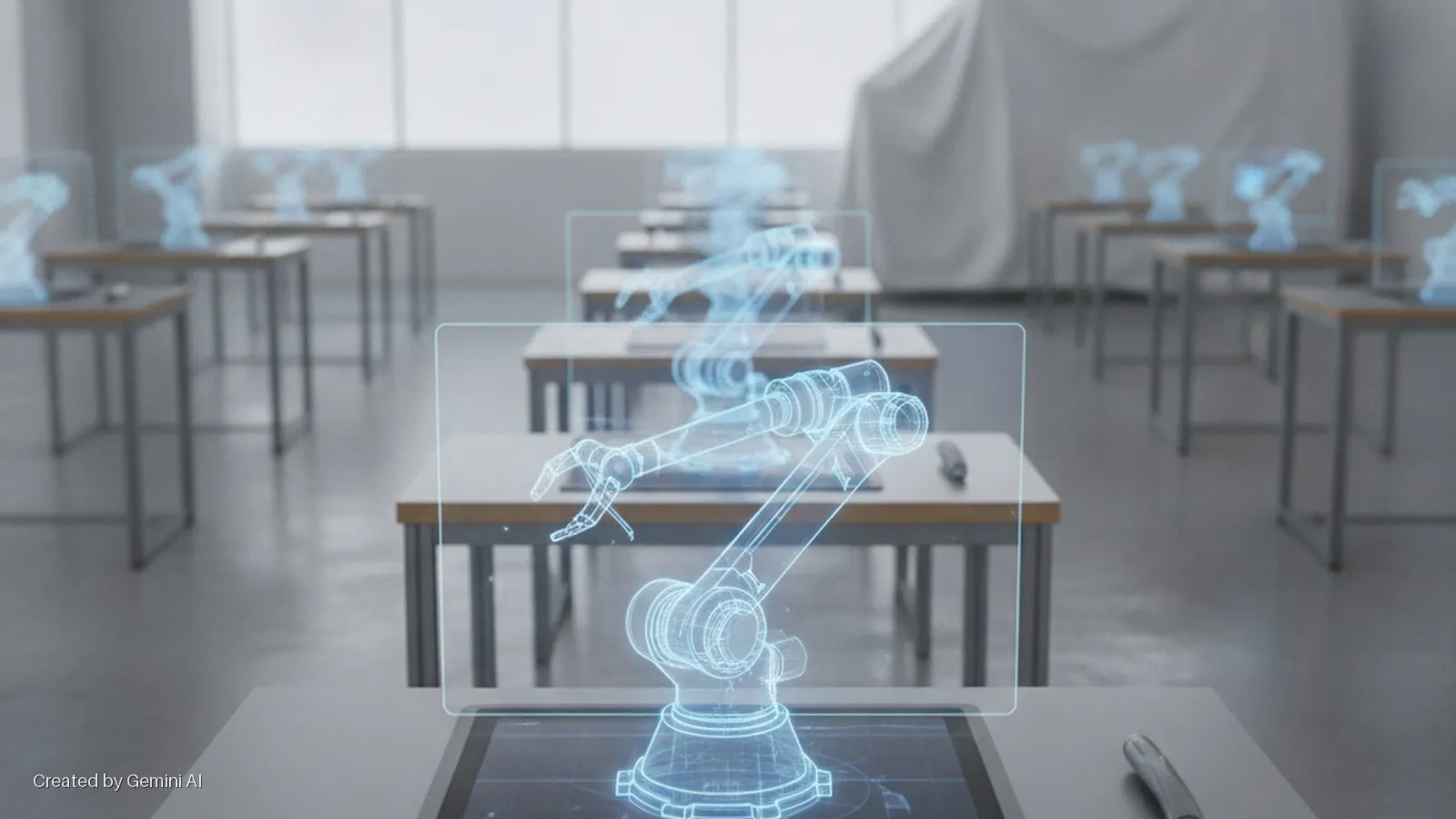
zSpace, the San Jose-based augmented and virtual reality education platform (OTC: ZSPC), has become the technology backbone of Laboratorium 4.0, a publicly funded career-exploration centre that opened in Warsaw in June 2026. Operated by Agencja Rozwoju Mazowsza and backed by Poland's National Recovery Plan, the facility is designed to bridge the gap between classroom instruction and the high-skill technical roles that European economies are struggling to fill.
The deployment is built around zSpace's Inspire 2, a glasses-free AR/VR laptop that allows students to manipulate interactive 3D models of industrial equipment, engineering components and anatomical structures using a stylus. The absence of a headset is a deliberate pedagogical choice: teachers remain at the centre of instruction and students can cluster around shared models, which the company says builds the spatial reasoning that technical vocations demand.
Four immersive environments, one workforce pipeline
Laboratorium 4.0 organises its offer across four themed zones. The Factory 4.0 environment walks learners through intelligent manufacturing workflows, from digital product design through to automated packaging and logistics. A second zone covers artificial intelligence, drones and robotics, exposing students to humanoid systems and showing how automation is redrawing job maps. A Visual Simulation Lab places students inside professional scenarios such as aircraft towing and tower crane operation, environments that would be prohibitively expensive or dangerous in physical form. A STEAM Lab rounds out the offer with cross-disciplinary project work.
The facility is expected to serve several thousand high school students across the Mazovian Voivodeship. "Laboratorium 4.0 shows what happens when a region invests in making future careers real for students," said Paul Kellenberger, CEO of zSpace. "With zSpace, learners in Warsaw can explore advanced manufacturing, robotics, and other high-demand professions hands-on, building the confidence and spatial understanding to choose their path forward."
The convergence read: workforce infrastructure as geopolitical asset
The Laboratorium 4.0 story sits at the intersection of several macro forces that Disrupts readers are already tracking. Poland is among the most active recipients of EU and NATO-adjacent industrial investment, with foreign manufacturers drawn by its engineering talent base and its position as a near-shoring alternative to Asia. Publicly funded AR/VR career infrastructure is, in effect, a soft industrial policy tool: by familiarising students with advanced manufacturing and robotics environments before they enter the labour market, governments accelerate the talent pipeline that attracts capital-intensive inward investment.
This logic is not unique to Poland. Gulf state sovereign wealth funds have been funding similar immersive-learning and vocational-tech initiatives as part of their broader workforce nationalisation strategies, and US states competing for semiconductor and EV gigafactory siting have begun treating workforce readiness infrastructure as a formal site-selection criterion. The zSpace deployment in Warsaw is a comparatively modest, grant-funded implementation rather than a nine-figure sovereign capital play, but it reflects the same structural logic: immersive simulation technology is transitioning from an EdTech curiosity into a component of national competitiveness strategy.
For investors tracking the convergence of robotics, advanced manufacturing and workforce development, the more relevant signal here is the demand-side dynamic. As automation raises the skill floor across factory and logistics roles, the addressable market for immersive technical training expands beyond higher education into state-funded secondary and vocational systems. zSpace's partnership model, delivered through local integrator Edukacja3D, is the route-to-market pattern that scales across public procurement cycles in Europe, where direct sales to ministries and regional development agencies carries lower commercial risk than district-by-district sales in the US. The company reports more than 3,500 institutional clients globally, though it has not disclosed the revenue split between its domestic and international books.