
Ebang bets on Inner Mongolia for clean-energy materials push
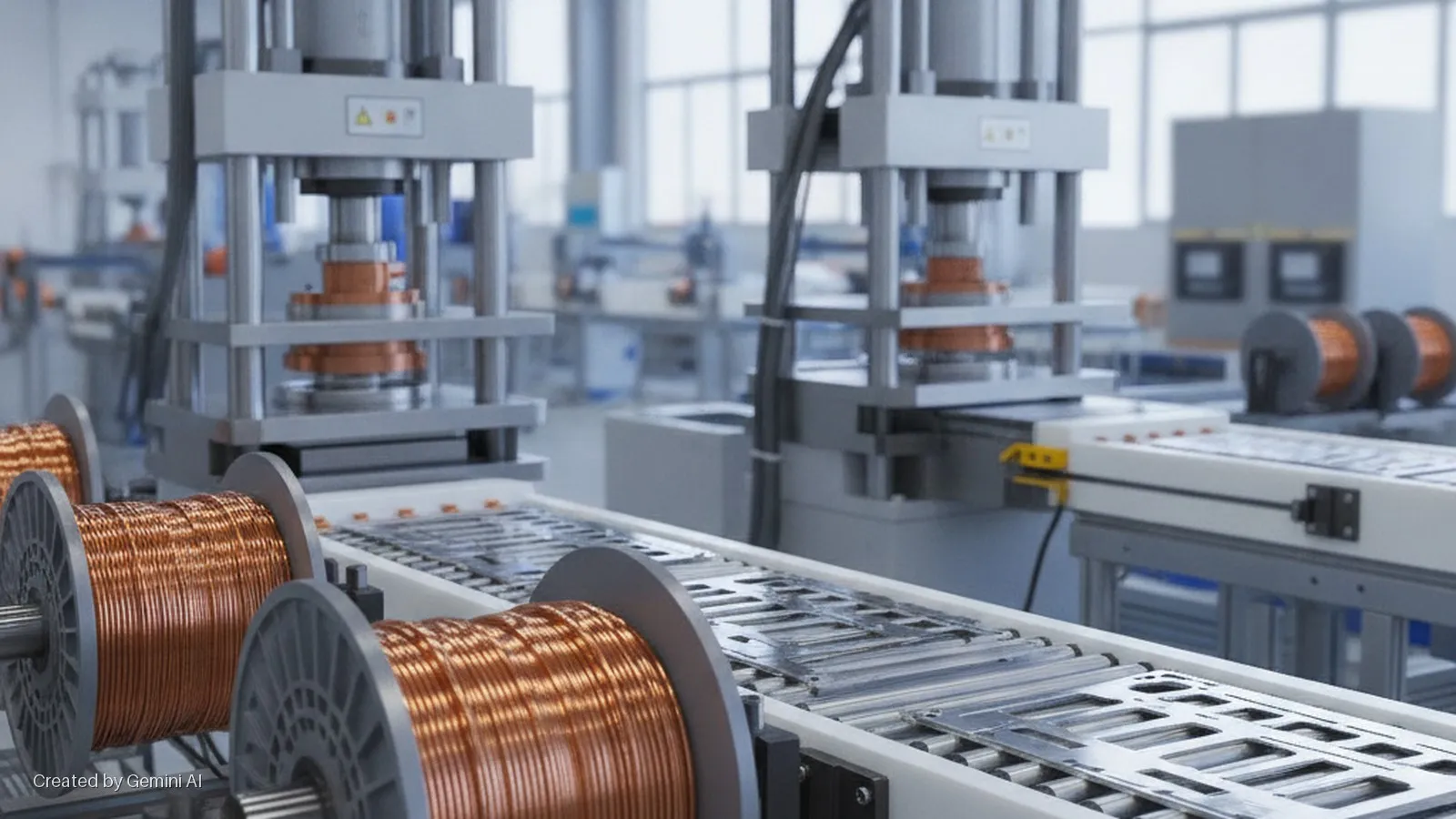
Ebang International Holdings, the Nasdaq-listed company that built its reputation on bitcoin mining hardware and fintech platforms, has secured industrial land in Xinghe County, Inner Mongolia, to construct manufacturing facilities for amorphous and nanocrystalline materials. The move signals another chapter in Ebang's pivot away from crypto infrastructure and toward the physical supply chain underpinning the global energy transition.
The materials in question, ultra-low-loss magnetic cores, sit at the heart of high-efficiency transformers, solid-state transformers (SSTs), and new energy motors. Reducing energy lost as heat during power conversion is a foundational challenge for grid modernisation, and the company says its products meet the latest transformer efficiency standards set by the US Department of Energy. That compliance detail matters: it signals an intent to sell into North American and European markets, not just domestic Chinese procurement.
Inner Mongolia's clean-power geography
The site selection is strategic rather than arbitrary. Inner Mongolia holds some of China's densest wind and photovoltaic capacity, giving an energy-intensive manufacturing operation access to low-cost, low-carbon electricity at scale. That matters both for unit economics and for Ebang's stated ambition to qualify as an ESG-aligned, low-carbon producer. The region has become a preferred location for energy-intensive industry precisely because its renewable buildout outpaces local consumption, keeping industrial power tariffs competitive.
Ebang's chairman, Hu Dong, framed the acquisition in supply-chain sovereignty terms. "We are not only addressing self-reliance and supply-chain control for the 'heart of the transformer' materials, but also proactively positioning ourselves in strategic sectors such as SST component materials and new energy motors," he said. The language of self-reliance is familiar from Beijing's industrial policy playbook, but the explicit reference to global competitive positioning suggests the Inner Mongolia base is being built to serve export markets as well.
Convergence read-across: grids, data centres, and CBAM
What lifts this beyond a routine capex announcement is the overlap between the end-markets Ebang names. Intelligent data centres appear explicitly in the release alongside photovoltaics and energy storage as target sectors for the new materials. This is not incidental. The hyperscale infrastructure buildout, driven by AI compute demand, is creating acute pressure on grid operators to deploy higher-efficiency power conversion equipment. Every percentage point of transformer loss eliminated translates directly into reduced cooling load and lower carbon intensity per GPU-hour, a metric that is increasingly consequential for data centre operators facing scope-2 emissions scrutiny.
The Carbon Border Adjustment Mechanism reference is equally pointed. CBAM, the EU's carbon tariff on energy-intensive imports, is a growing compliance cost for any manufacturer selling into Europe. By positioning its Inner Mongolia production as inherently low-carbon, Ebang is pre-empting a regulatory headwind that is already reshaping procurement decisions among European grid operators and industrial buyers. For cross-sector investors tracking the intersection of climate regulation and manufacturing competitiveness, this is the live trade: which materials suppliers are structurally advantaged as CBAM tariffs widen?
The broader capital landscape here is competitive. Established players in amorphous and nanocrystalline materials, including Hitachi Metals and China's Qingdao Yunlu, have built significant scale, and Ebang arrives as a relative newcomer to advanced materials manufacturing. Its background is in semiconductor-adjacent hardware for blockchain mining, a heritage that provides some fabrication discipline but limited chemistry expertise. Whether the Inner Mongolia facility can reach commercial-scale output of genuinely high-performance core materials remains the key operational question. The release offers no production capacity targets, timeline to first output, or capital expenditure figure for the build, which limits independent assessment of execution risk.
For macro investors, the story sits within a structural theme: the scramble to control the mid-stack of the energy transition, not the panels and turbines, but the conversion, storage, and grid-interface materials that determine system efficiency. Sovereign and institutional capital has flooded into battery chemistries and electrolyser technologies; advanced magnetic materials have attracted less attention but serve the same grid modernisation imperative. Ebang's pivot, however early-stage, is a signal that the competitive field for these enabling materials is widening beyond the incumbent specialists.