
AMMROC launches Emirati MRO talent drive targeting 100 technicians
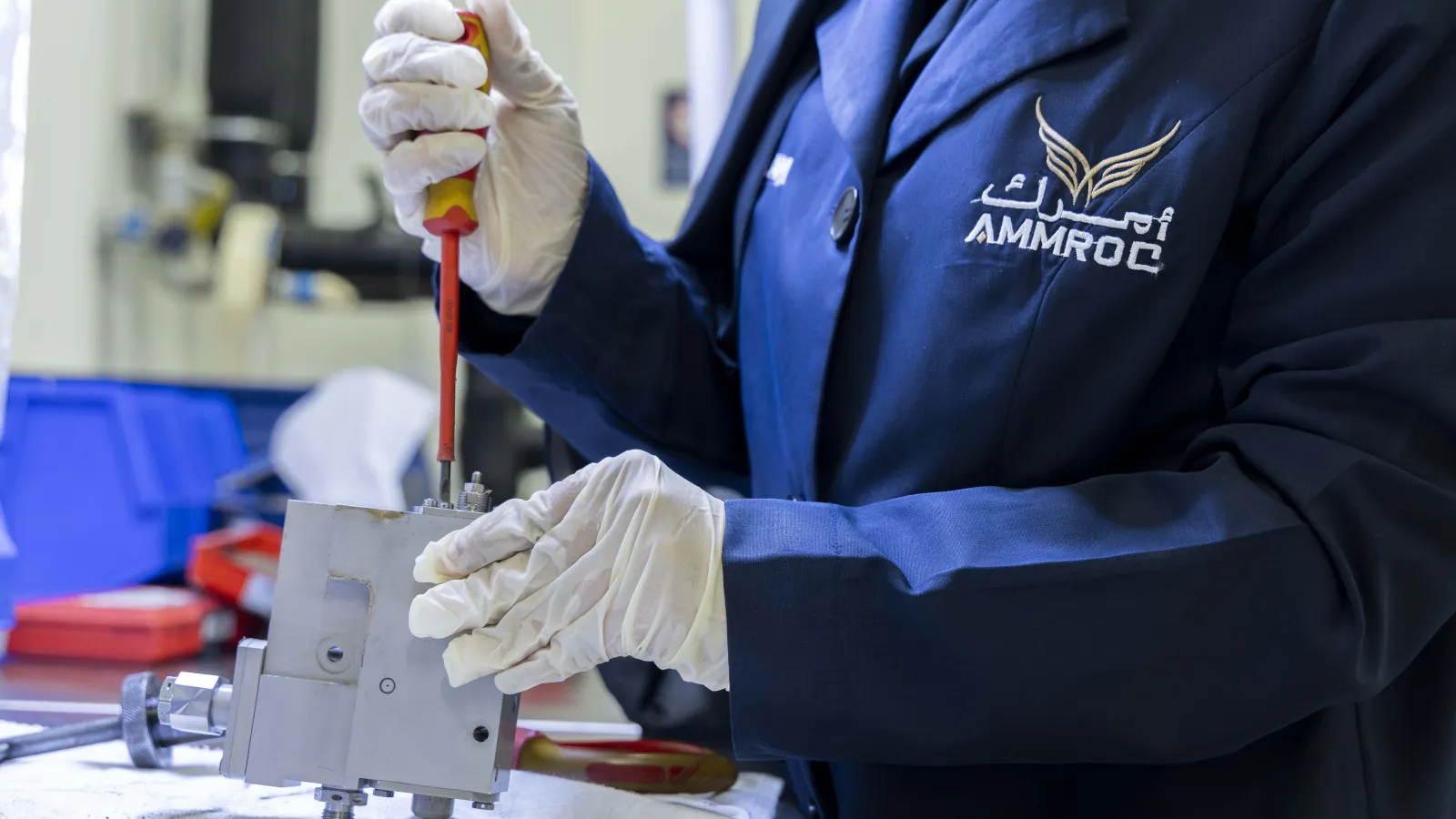
AMMROC, Abu Dhabi's military aircraft maintenance, repair, and overhaul (MRO) specialist, has launched the Ruwad AMMROC Programme, a structured national initiative to recruit, train, and permanently employ 100 Emirati aircraft technicians by 2030. The programme sits at the intersection of the UAE's Emiratisation labour strategy, its long-term defence-readiness agenda, and an accelerating regional push to indigenise the high-skill technical roles that underpin sovereign military capability.
The initiative delivers a two-phase curriculum combining classroom instruction in aeronautical theory with hands-on practical training inside AMMROC's hangars and workshops in Al Ain. Trainees rotate across four technical disciplines: Aircraft Structures, Engines, Components, and Specialised Services. The company says the programme is designed as a career pathway rather than a short-term placement, with on-the-job training embedded from the first day.
Emiratisation meets defence-industrial strategy
The Ruwad programme is explicitly framed as an instrument of the UAE's Emiratisation policy, which mandates rising proportions of Emirati nationals in private-sector workforces. For the defence and aerospace sectors, historically staffed by expatriate engineers and contracted Western technicians, Emiratisation has moved more slowly than in banking or hospitality, largely because of the depth of specialist knowledge required. AMMROC's attempt to build a structured MRO pipeline for nationals signals that the country's strategic industries are now actively working to close that gap.
Jasem Al Marzooqi, AMMROC's chief executive, positioned the launch as a foundational investment: "We firmly believe that investing in people is the foundation of operational excellence and long-term readiness across vital strategic industries." The framing is significant: in UAE policy terms, a government-affiliated defence MRO provider launching a national talent programme is less a voluntary CSR gesture and more a strategic mandate executed at the company level.
The macro read-across: Gulf talent as a defence-industrial input
The convergence angle here is broader than one training cohort. Across the Gulf, sovereign ambitions in aerospace and defence are running into a structural skills bottleneck. Saudi Arabia's Vision 2030 aviation targets, Qatar's expansion of its military-logistics infrastructure, and the UAE's own defence-industrial cluster around EDGE Group all require a growing base of technically credentialled nationals who can operate and maintain increasingly sophisticated platforms, from fixed-wing military aircraft to, increasingly, uncrewed aerial systems.
For international MRO operators and Western OEMs (original equipment manufacturers) with platform-support contracts in the region, the rise of state-sponsored national talent pipelines represents both an opportunity and a competitive pressure. Programmes like Ruwad AMMROC gradually shift the balance of technical knowledge and maintenance certification in-country, reducing long-term dependence on expatriate labour and potentially constraining the margins of foreign MRO subcontractors who have historically filled the gap.
From a capital and procurement perspective, the talent dimension is increasingly a factor in how Gulf sovereign wealth allocates defence-industrial investment. A credible national workforce makes it easier to justify co-production agreements, technology-transfer clauses, and domestically anchored maintenance contracts, all of which are priorities for the UAE as it deepens its defence-industrial base. The Abu Dhabi-based EDGE Group, AMMROC's parent ecosystem, has signalled repeatedly that local content and national workforce targets are non-negotiable conditions for new platform acquisitions.
The 100-technician target by 2030 is modest in absolute terms, but the programme's real significance is structural: it establishes a repeatable pipeline model for MRO talent development that can be scaled and replicated across other technical disciplines as the UAE's defence-industrial ambitions expand. Whether the same model can be extended to uncrewed systems maintenance and, eventually, to software-defined platform support is the next question facing Gulf defence planners.