
PureCycle and Mitsui target Japan's BOPP film market with recycled resin
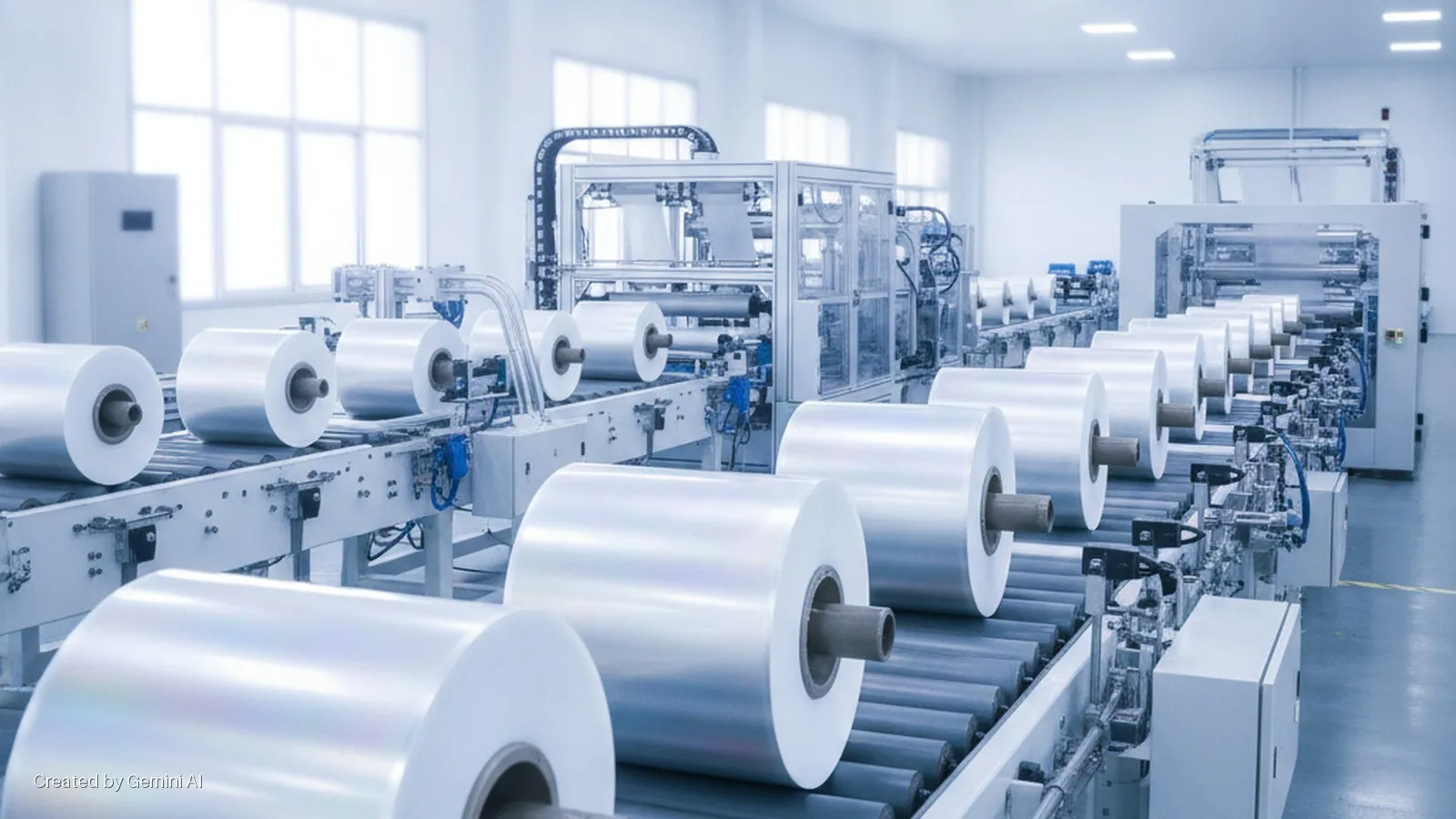
PureCycle Technologies, the Nasdaq-listed US plastics recycler, has joined forces with Japanese film giant RM TOHCELLO and global trading house Mitsui to introduce recycled polypropylene into biaxially oriented polypropylene (BOPP) film manufacturing in Japan. The move targets one of the highest-value and most technically demanding segments in flexible packaging, a market where recycled content has historically been excluded on quality grounds.
BOPP film is the material found in food wrappers, labels, and consumer goods packaging. Its production demands exceptional optical clarity and chemical consistency, requirements that mechanically recycled polypropylene has never reliably met. PureCycle's proprietary dissolution process, originally developed by Procter and Gamble and now exclusively licensed to the company, strips post-consumer polypropylene waste of colour, odour, and additives to produce a certified virgin-quality resin it calls PureFive. Pilot-scale trials with RM TOHCELLO, which began with initial samples in early 2023, have now been successfully completed. A formal commercial agreement is anticipated in 2027, with Japanese shipments to follow once import compliance is cleared.
Why BOPP matters to the circular economy calculus
The significance of cracking the BOPP segment runs well beyond a single supply deal. Flexible packaging accounts for a fast-growing share of global plastic consumption, yet its multi-layer, high-purity requirements have effectively insulated it from the circular economy pressure building across the rest of the plastics industry. Brand owners in food and consumer goods have faced a structural gap: sustainability commitments demand recycled content, but their most technically sensitive packaging lines could not accommodate it. PureCycle and RM TOHCELLO are positioning this partnership as a resolution to that tension.
"Flexible films are one of the fastest growing segments in packaging and we've been waiting for a solution like PureCycle's to allow us to start using recycled content in BOPP film and PP sealant film," said Masaru Furukawa, RM TOHCELLO Executive Officer and Head of Business Sector. "We believe these innovative films can help transform post-consumer waste into materials contributing to GHG-emission avoidance."
Convergence of trade infrastructure, sustainability mandates and capital geography
The Japan angle is not incidental. Mitsui, with operations across more than 60 countries, provides the cross-border commercial architecture that a US-origin technology typically lacks when entering tightly regulated Asian markets. The tripartite structure reflects a broader pattern: deep-tech materials companies increasingly rely on established trading houses to navigate Asian regulatory regimes, manage feedstock logistics, and accelerate brand-owner adoption. Mitsui's involvement effectively converts a bilateral technology licensing deal into a market-entry play backed by one of Japan's most globally connected conglomerates.
For investors tracking the sustainability-industrial convergence, the PureCycle story also sits within a wider capital narrative. The advanced recycling sector, encompassing both dissolution and chemical pyrolysis technologies, has attracted significant institutional interest as extended producer responsibility legislation tightens in the EU and is beginning to influence procurement policy in Asia. PureCycle itself is building or planning commercial-scale facilities in Ohio, Belgium, Thailand, and Georgia, suggesting that the Japan partnership is one node in a deliberately global production network rather than a standalone commercial agreement.
The near-term question is execution. A formal commercial agreement is not expected until 2027, and shipments remain contingent on Japanese import compliance, leaving meaningful revenue some way off. PureCycle has previously flagged going-concern considerations and dependency on external capital. If dissolution recycling can definitively prove itself at scale in a high-purity application like BOPP film, the technology's commercial addressable market expands materially, and the licensing model that underpins PureCycle's business becomes considerably more defensible across the global packaging supply chain.