
Zhuhai airport targets GBA's $41bn airspace with drone training push
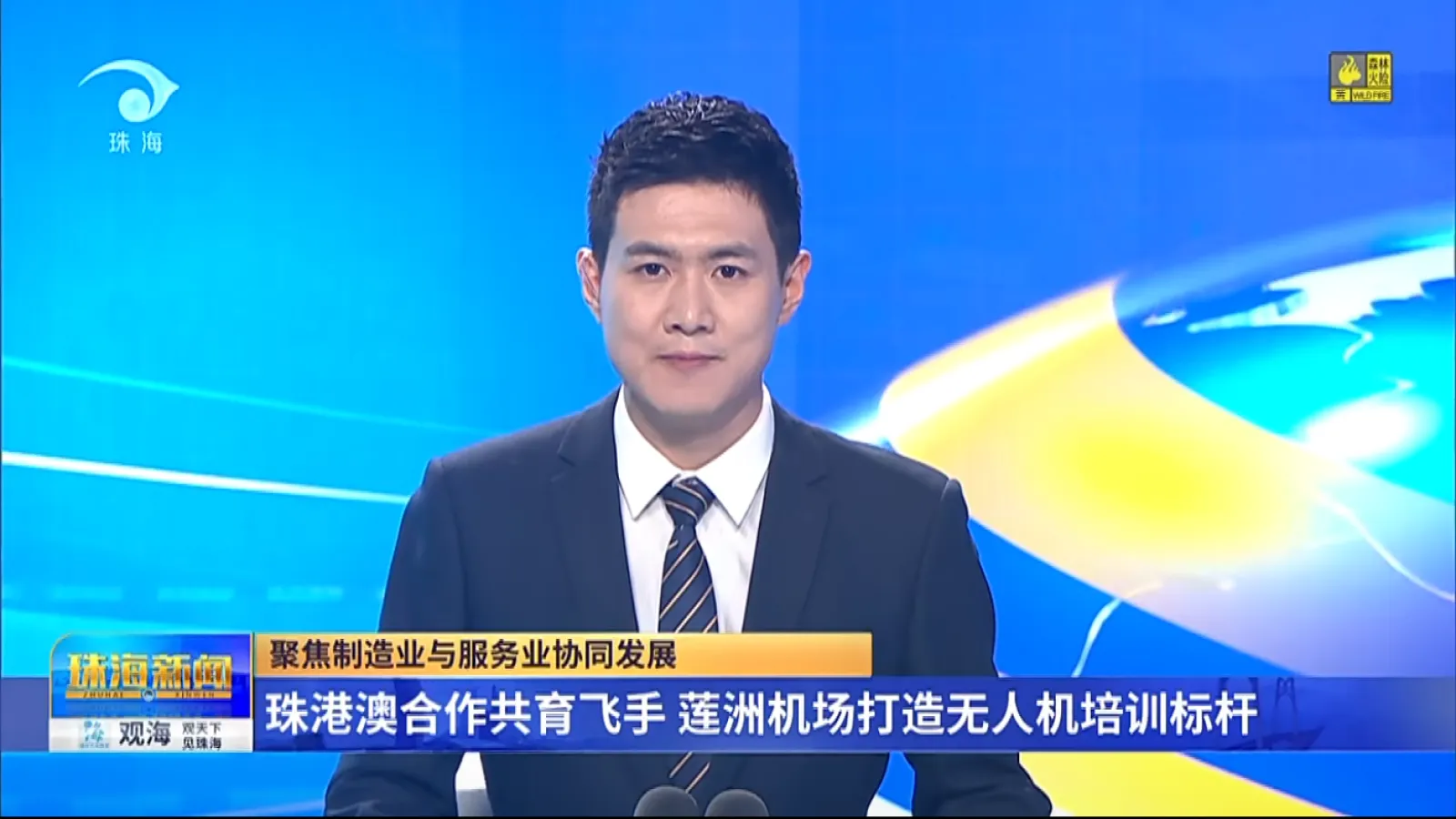
Zhuhai Lianzhou Airport has launched the first drone pilot training programme designed specifically for residents of Hong Kong and Macau, positioning the Greater Bay Area's (GBA) nascent low-altitude economy as a credible industrial frontier rather than a regulatory experiment. The inaugural cohort is already undergoing weekend-intensive instruction at the airport's UAV training base in Guangdong Province, with the programme targeting a market the operator values at RMB 300 billion (roughly USD 41 billion).
The timing is deliberate. China's Interim Regulations on the Flight Management of Unmanned Aircraft now require certified licences from the Civil Aviation Administration of China (CAAC) for operators of small, medium, and large civil UAVs. The operator reports that more than 90% of commercial drone projects currently demand licensed pilots, while average monthly industry salaries sit at approximately RMB 8,000. Certification, in other words, is no longer optional, it is the entry ticket to a professionalising market.
From hobbyist to infrastructure operator
The programme's curriculum reflects how far the drone-pilot role has travelled from recreational flying. Trainees cover hardware debugging, flight-path planning, meteorological analysis, and data interpretation, competencies that map directly onto industrial applications including power-grid inspection, aerial surveying, agricultural monitoring, and cross-border logistics. The airport's 380 square kilometres of compliant airspace and a total flight zone of approximately 600 square kilometres below 900 metres altitude provide the operational canvas. Bilingual Cantonese and Mandarin instruction, combined with Sunday-only scheduling, accommodates working professionals crossing from Hong Kong and Macau for the 26-day course.
"We aim to leverage the unique airspace and facility resources of Lianzhou Airport to deliver a high-quality educational experience," said Ling Luzhen, Deputy General Manager of Zhuhai General Airport Investment and Construction Co., Ltd. "By building this into a benchmark drone training initiative for Zhuhai, Hong Kong, and Macau, we are establishing a robust talent pipeline to power the broader development of the Greater Bay Area's low-altitude industries."
The programme has drawn institutional endorsement from the Liaison Office of the Central People's Government in Macao and coverage from Xinhua, signalling that Beijing views cross-border UAV workforce development as a component of GBA regional integration strategy, not merely a commercial training product.
The convergence read-across
For cross-sector investors, the story is less about flight hours and more about what a licensed UAV workforce unlocks. Low-altitude airspace, once treated as an afterthought in urban planning and logistics networks, is rapidly becoming contested infrastructure. The GBA's geography, dense urban corridors, a major port network, and one of the world's highest concentrations of manufacturing, makes it a natural proving ground for beyond-visual-line-of-sight (BVLOS) logistics, autonomous inspection, and eventually urban air mobility.
The talent bottleneck the programme addresses is one that aviation regulators and logistics operators from Europe to the Gulf are also confronting. As drone corridors are legislated into existence, the EU's U-space framework, the UK CAA's drone registration regime, and China's own CAAC ruleset are all moving in parallel, demand for certified human operators is structurally outpacing supply, even as autonomy reduces the operator-per-drone ratio over the longer term. Capital flowing into drone-logistics platforms and urban air mobility ventures will hit a workforce constraint before it hits a technology one, and programmes such as Lianzhou's represent an early institutional response.
For investors tracking GBA infrastructure more broadly, the low-altitude economy also intersects with real-estate and urban-planning decisions: vertiport siting, rooftop airspace rights, and corridor designation are all emerging asset questions. The RMB 300 billion market figure the operator cites is a company-issued projection and should be treated as directional rather than audited, but the regulatory momentum behind it is independently observable.