
Link Developments launches 200ha smart city in Abuja Free Trade Zone
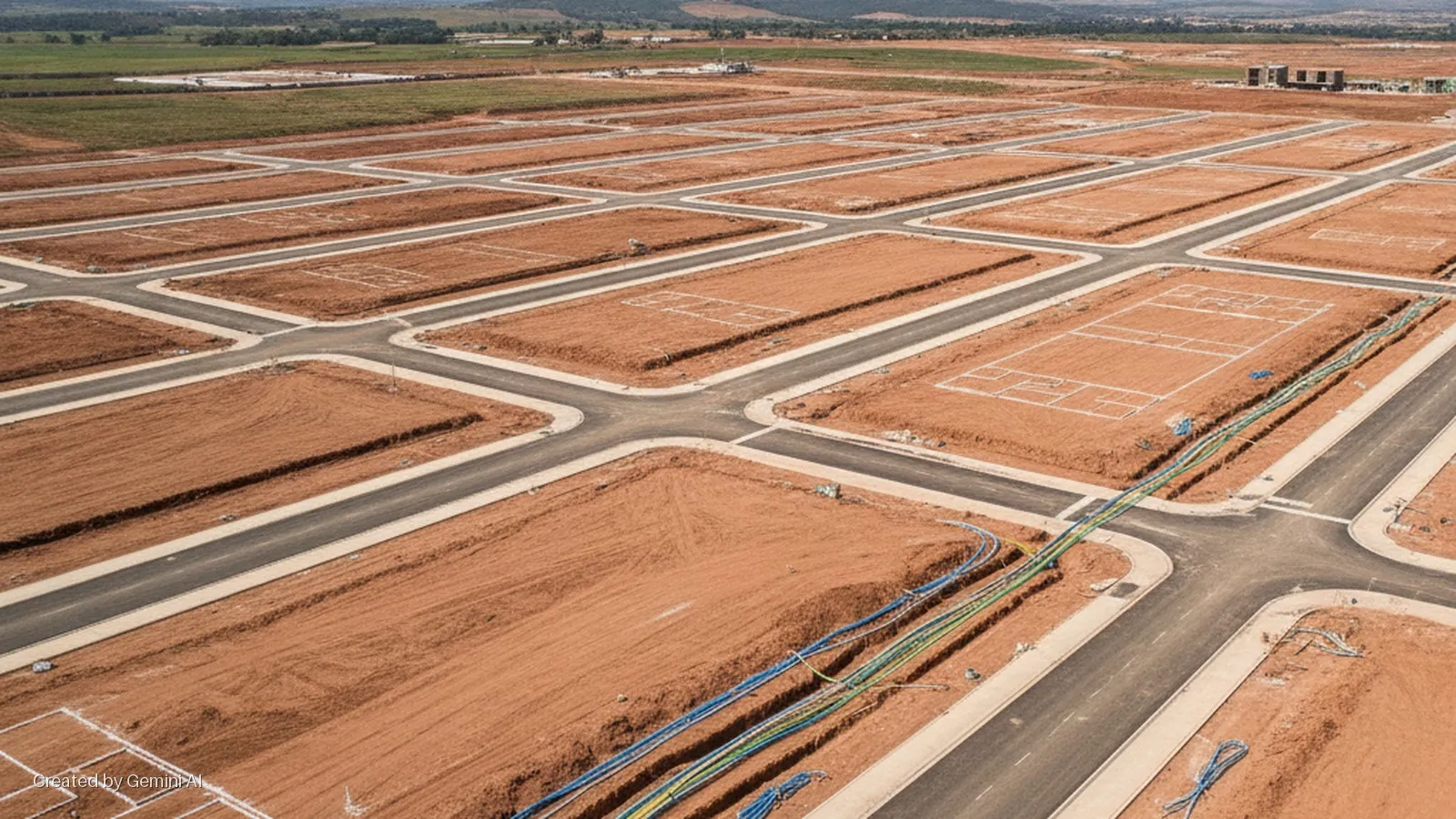
Link Developments has unveiled City Walk Abuja, a privately funded, 200-hectare mixed-use smart city development on the corridor connecting Nigeria's Central Business District with Nnamdi Azikiwe International Airport. Sitting within a government-designated Free Trade Zone, the project is being positioned as a new continental gateway for inward investment, regional headquarters, and technology-enabled urban living, a signal that large-scale, internationally financed real estate is once again targeting sub-Saharan Africa at scale.
The masterplan, designed by London- and Shanghai-headquartered studio Benoy, will integrate commercial, residential, hospitality, leisure, cultural, and civic districts around a natural ravine that forms the development's ecological spine. Its headline features include Africa's tallest tower at 450 metres and an international arena seating more than 16,000, two anchor landmarks designed to make Abuja legible on the global city map in the way that landmark vertical infrastructure has done for Dubai, Riyadh, and Singapore before it.
West Africa's Free Trade Zone play
The Free Trade Zone designation is arguably more significant than the tower. It allows businesses to establish regional headquarters with reduced regulatory friction and internationally competitive tax structures, bypassing some of the operational complexity that has historically made Nigeria a harder jurisdiction for foreign capital. For multinationals assessing West African market entry, a purpose-built FTZ node on Abuja's main airport corridor addresses infrastructure, logistics, and legal-entity concerns simultaneously.
Link Developments has appointed Broadgate Developments Group Ltd as Development and Construction Management Adviser. Broadgate brings a direct track record in Nigerian real estate, having previously delivered Jabi Lake Mall and Heritage Place in Lagos, as well as One Airport Square in Ghana and the Douala Airport Business Park in Cameroon. That regional pedigree matters: one of the persistent barriers to institutional investment in West African real estate has been the shortage of developers with verifiable delivery credentials at master-planned scale. The appointment is a structural risk-mitigation move as much as a procurement decision.
Convergence of capital, infrastructure, and urban tech
City Walk Abuja sits at the intersection of several macro-level capital trends that Disrupts readers will recognise from other geographies. First, the "smart city as investment thesis" model, where technology-enabled urban infrastructure is packaged as an asset class attracting sovereign wealth and institutional capital, has migrated steadily from Gulf states and East Asia toward sub-Saharan Africa. Second, Africa's urban population is projected to roughly double by mid-century, and the continent's largest cities are increasingly competing to attract the same pool of multinational tenants and regional headquarters that Dubai and Singapore have long absorbed. Abuja, as Nigeria's political capital with an improving transport corridor, is a credible candidate for that competition.
The sustainability dimension adds a further layer. The development's stated ecological spine, biodiversity corridors, and water management systems reflect the ESG framing that has become near-mandatory for any mixed-use development seeking European or GCC institutional co-investment. Whether those commitments translate into certified green-building standards, and which standards, will be a material question for prospective investors.
Peter Young, CEO of Broadgate Developments Group, described the project as one where "vision, technical excellence, and disciplined execution must work together seamlessly," language that, stripped of its promotional register, signals that the development team is already managing stakeholder expectations about the complexity of delivery at this scale.
What happens next will hinge on two variables: the pace of anchor tenant signings within the FTZ, which will determine whether the commercial thesis holds, and the financing structure behind the privately funded model. Link Developments has not disclosed capital partners, total development cost, or phasing timelines. For cross-sector investors tracking Africa's urban infrastructure opportunity, those disclosures will be the ones that count.