
U.S. Global Investors posts $3.1m profit on gold and defence-tech surge
U.S. Global Investors (NASDAQ: GROW), a San Antonio-based registered investment adviser specialising in niche sectors from gold and natural resources to airlines and defence, has swung from a net loss of $334,000 in fiscal year 2025 to net income of $3.1 million for the year ended 30 June 2026. Total operating revenue rose 21% to $10.3 million, while average assets under management (AUM) climbed 8% to $1.5 billion, with period-end AUM reaching $1.7 billion, a 26% year-on-year increase.
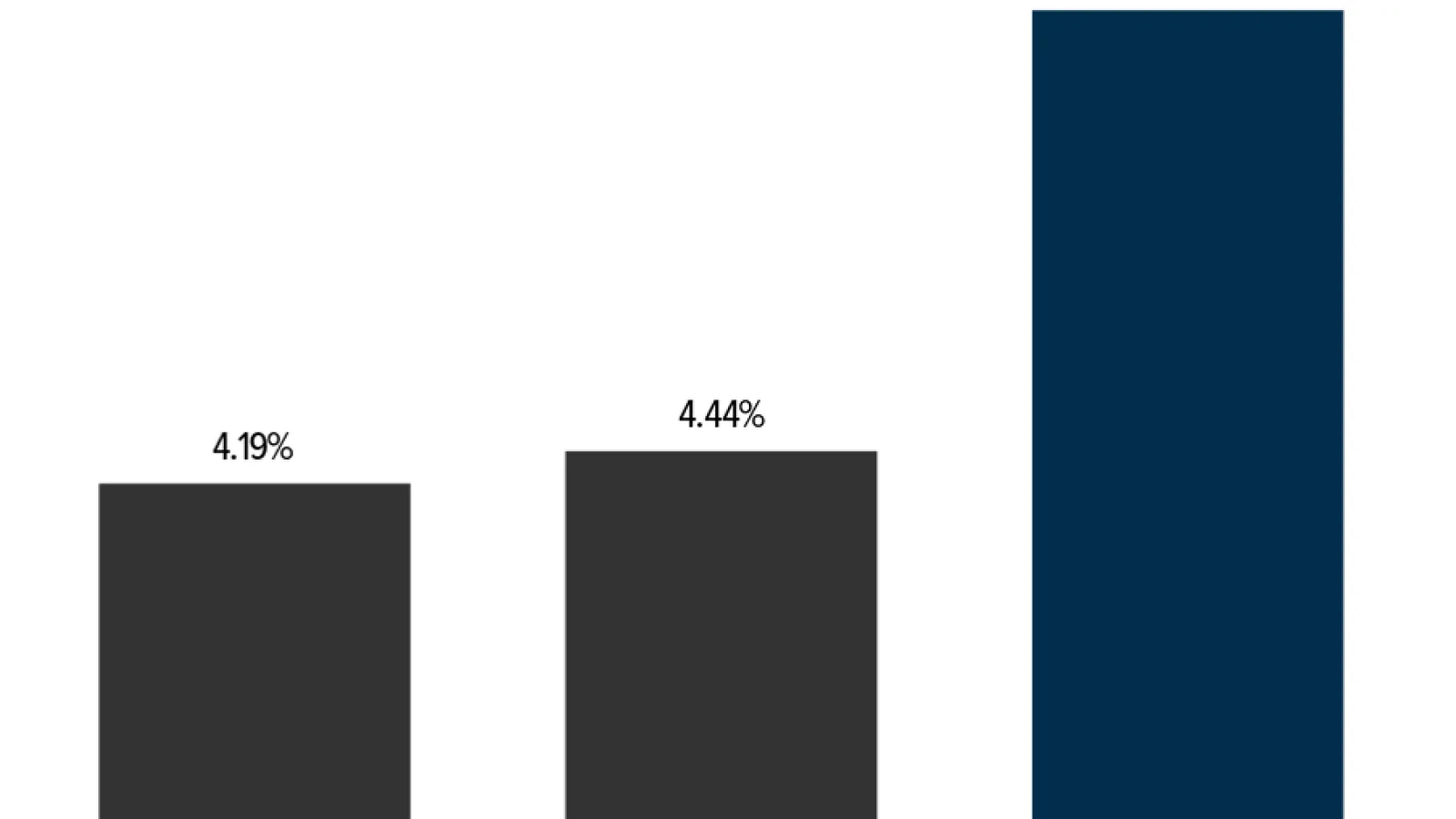
The turnaround was powered primarily by advisory fees from the firm's gold and natural resources funds, which more than doubled to $3.8 million. A non-cash gain of approximately $3.2 million on equity securities carried under the measurement alternative also bolstered net investment income to $4.1 million, up from $2.4 million the prior year. Despite a shareholder yield of 7.9%, above both the five-year and ten-year US Treasury yields at period-end, the company still recorded an operating loss of $603,000, a significant improvement on the $3.0 million operating loss posted in 2025.
Gold's macro tailwinds
The gold story carries weight beyond one firm's balance sheet. According to the World Gold Council, central banks added a net 289 tonnes of gold in the second quarter of 2026, roughly five times the volume added in the first quarter and a record for any second quarter. Separately, 89% of central bank survey respondents said they expected global reserves to rise over the next twelve months, with a record 45% intending to increase their own holdings. That structural demand backdrop, sovereign institutions diversifying away from dollar-denominated paper assets, underpins the performance of gold-focused funds across the industry, not just GROW.
CEO and Chief Investment Officer Frank Holmes attributed outperformance in mining equities specifically to cost discipline. "The companies that mine it had the better year," Holmes said. "When the price of an ounce climbs faster than the cost of digging it up, the difference goes straight to the bottom line. What encourages me most is that these companies are holding onto the cash this time instead of spending it on bad deals, the way they did in past cycles."
Defence-tech convergence fuels WAR ETF
The more strategically significant signal for cross-sector investors may be the rapid growth of the firm's U.S. Global Technology and Aerospace and Defence ETF (NYSE: WAR). Launched in December 2024, the actively managed fund closed the fiscal year with $41.3 million in assets, up from $6.1 million at June 2025, a near-sevenfold increase in twelve months. The fund is explicitly designed to capture the convergence of artificial intelligence, semiconductors and cybersecurity with traditional aerospace and defence hardware.
Holmes framed the thesis in blunt terms: a low-cost drone destroying a multimillion-dollar vehicle changes procurement priorities at a governmental level, meaning defence budgets now flow to both legacy hardware manufacturers and technology firms supplying the software and silicon that make modern weapons systems function. That dual-exposure thesis positions WAR squarely at the collision point between defence procurement cycles and the broader AI infrastructure buildout, a theme that sovereign wealth allocators and cross-sector institutional investors are tracking closely.
Convergence read-across
The WAR ETF's growth reflects a wider capital reallocation trend. NATO member governments have accelerated defence spending commitments, and the procurement shift towards autonomous systems, electronic warfare and battlefield AI is redirecting institutional flows away from pure-play hardware contractors and towards companies straddling the defence and deep-tech sectors. For macro investors, the implication is that the traditional boundaries between defence equities and technology equities are dissolving at the portfolio level, not just the product level.
Meanwhile, the parallel rally in gold, driven by central bank reserve diversification, reinforces a broader thesis: institutional capital is simultaneously hedging geopolitical risk through hard assets and betting on the technology redefining how geopolitical risk is prosecuted. U.S. Global Investors, operating across both those themes within a single $1.7 billion AUM platform, offers a compact case study in how smaller specialist managers are navigating the convergence era.