
HII scales ROMULUS USV output with dedicated Gulf Coast supply chain
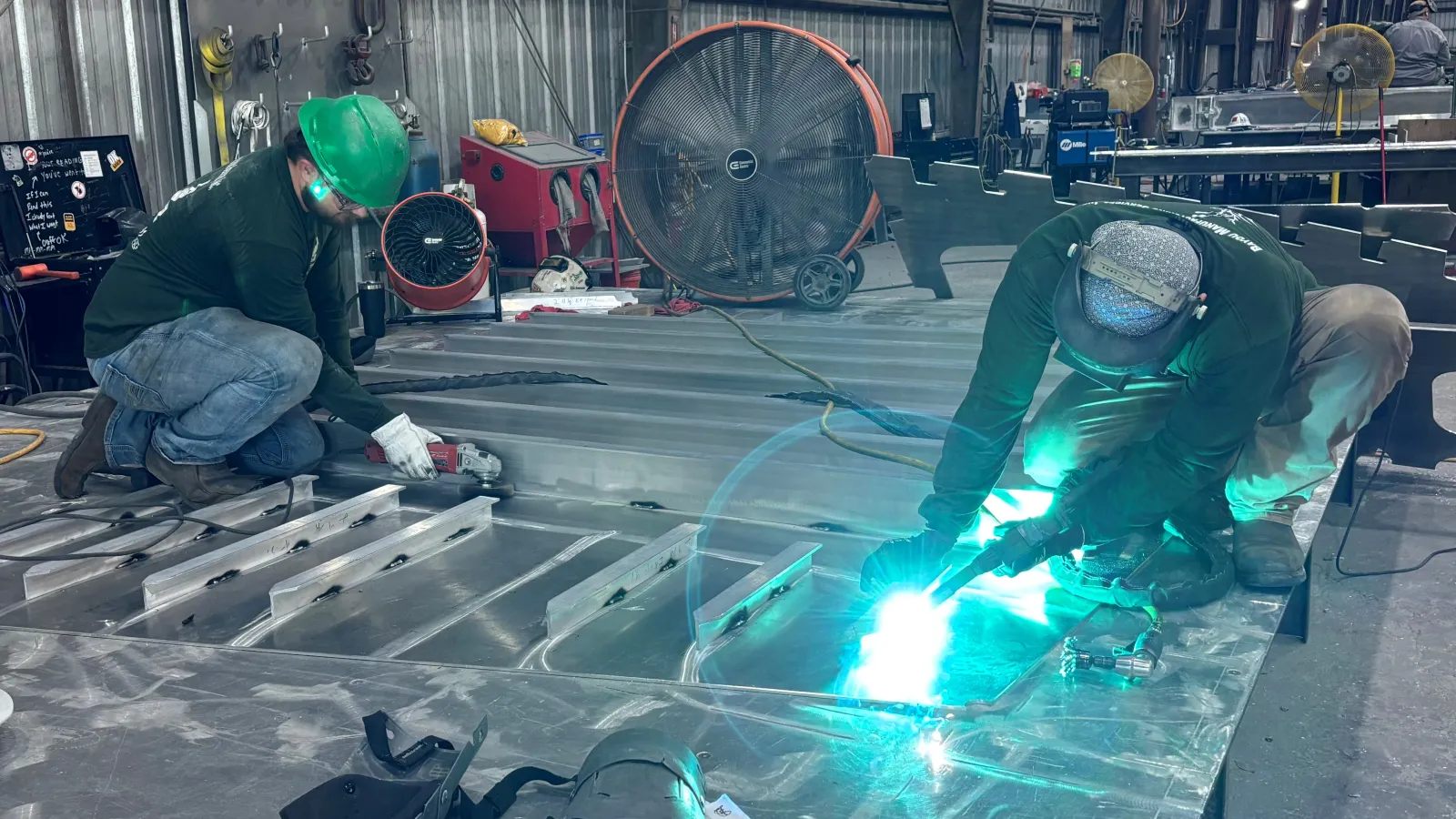
HII (NYSE: HII), America's largest military shipbuilder, has moved its ROMULUS unmanned surface vessel (USV) programme decisively from prototype into serial production, anchoring the supply chain in Louisiana with a new dedicated manufacturing line operated by strategic partner Bayou Metal Supply & Manufacturing. The move signals a broader maturation of the autonomous-maritime industrial base — and the beginning of a race to industrialise AI-enabled naval platforms at scale.
The Slidell, Louisiana facility handles precision cutting, bending, welding, and assembly of major structural aluminium components, shipping completed units to Breaux Brothers Enterprises for final integration. HII recently confirmed orders for four additional ROMULUS 151 vessels to be built by Breaux Brothers, on top of one already under construction — a rapid expansion that the dedicated supply-chain node is explicitly designed to support.
From prototype to production line
The ROMULUS platform is engineered as a modular, AI-enabled family of USVs capable of intelligence, surveillance and reconnaissance (ISR), mine countermeasures, strike operations, counter-unmanned systems, and the launch and recovery of both unmanned underwater and aerial vehicles. Its deliberate design for "serial, repeatable production" — a common manufacturing and autonomy baseline across multiple vessel sizes — reflects a lesson the US defence establishment has absorbed painfully from drone warfare in Ukraine: capability at scale beats capability in isolation.
Andy Green, HII's executive vice president and president of its Mission Technologies division, framed the partnership in explicitly industrial terms. "As we move from prototype to production, partnerships like Bayou Metals are essential to delivering capability at speed and scale," he said. "Their ability to combine material supply with advanced fabrication strengthens our production model, reduces risk, and accelerates delivery of the ROMULUS USV to the fleet."
The integrated model — completing most structural setup before components arrive at the shipyard — is designed to compress the bottlenecks that have historically plagued US naval procurement. By co-locating material supply and fabrication within a single strategic partner, HII is applying a supply-chain logic closer to automotive or aerospace series production than traditional bespoke shipbuilding.
The convergence angle: autonomous platforms meet industrial policy
The ROMULUS programme sits at the intersection of three converging strategic forces. First, the accelerating integration of AI and autonomy into hard military hardware: the platform's autonomy stack is not an add-on but a design baseline, positioning it as an early production-scale example of AI-enabled kinetic and ISR capability. Second, the reindustrialisation of the US Gulf Coast defence supply chain — a stated priority under successive administrations — is here made concrete, with skilled manufacturing jobs and aluminium fabrication capacity being built in Louisiana rather than offshored.
Third, and most consequential for cross-sector investors, the move reflects a shift in defence procurement philosophy towards platform families designed for volume production. The same logic is reshaping the drone and autonomous-systems markets globally: Turkey's Bayraktar ecosystem, Australia's Ghost Shark programme, and China's expanding USV fleet all reflect a world in which autonomous naval platforms are procured in hundreds, not dozens. HII's decision to industrialise ROMULUS now — building the supply-chain infrastructure before demand fully crystallises — is a bet that the US Navy and allied partners will follow suit at pace.
For capital allocators with exposure to defence primes, the signal is structural. The value in autonomous-maritime programmes is migrating upstream into the industrial base: materials, fabrication, and autonomy software — not just the vessel itself. Tier-2 and Tier-3 Gulf Coast manufacturers with marine-grade metals and precision fabrication capabilities are increasingly in the frame as strategic assets, not merely subcontractors. Investors watching the broader defence-tech convergence of AI and advanced manufacturing should note that the industrialisation phase of autonomous systems — historically the most capital-intensive — is now visibly under way.