
BlockchAIn raises $63m to scale AI digital infrastructure
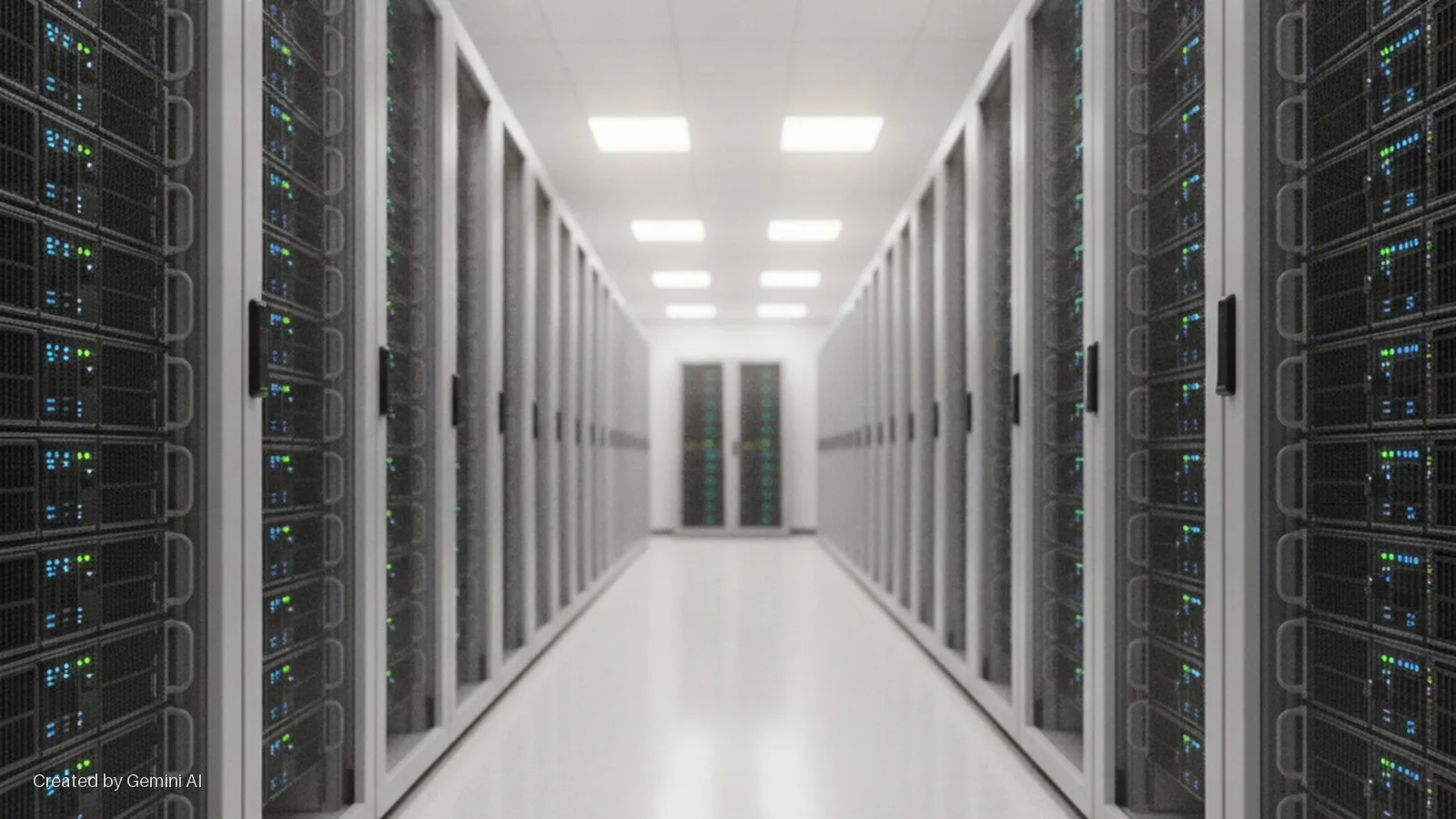
BlockchAIn Digital Infrastructure (NYSE American: AIB), a New York-based developer and operator of compute facilities for artificial intelligence and high-performance computing (HPC) workloads, has closed a public equity offering totalling approximately $63.25m in gross proceeds after its underwriter exercised its overallotment option in full.
The raise comprised 38.3 million shares sold at $1.65 per share, with the underwriter's additional 5 million shares generating a further $8.25m on top of the base offering. Lucid Capital Markets acted as sole book-running manager. The company says proceeds will be directed towards working capital, capital expenditure, and general corporate purposes.
Small-cap operator, macro-scale ambition
BlockchAIn's pitch is straightforward: modular infrastructure plus reliable power access, positioned to absorb surging enterprise demand for AI and HPC compute capacity. Its forward-looking disclosures reference the planned conversion of an existing facility, designated CLT-01, from cryptocurrency mining to AI and HPC data centre use. That pivot from proof-of-work mining to GPU-dense AI hosting is a pattern playing out across the sector as operators chase more stable, contract-backed revenue from enterprise AI tenants rather than volatile token economics.
The company's registration statement, initially filed with the US Securities and Exchange Commission on 2 June 2026 and declared effective two days later, signals a relatively swift path from filing to close, suggesting reasonable investor appetite for the equity at this price point. At $1.65 per share, the raise sits firmly in the small-cap tier, and the reliance on a single book-runner rather than a syndicate of major banks reflects the company's current scale.
Convergence read-across: the infrastructure race beneath the AI boom
The BlockchAIn raise is a granular data point in a much larger structural shift. The race to build out AI compute capacity is no longer driven solely by hyperscalers such as Microsoft, Google, and Amazon, which are each committing tens of billions of dollars annually to their own infrastructure programmes. Increasingly, a tier of smaller, specialist operators is emerging to serve the mid-market: enterprises and AI model developers that need dedicated, scalable GPU capacity but cannot economically justify building proprietary data centres.
This dynamic has material implications beyond the infrastructure sector itself. For capital markets, the proliferation of small-cap AI infrastructure listings means investors must now assess a new category of asset, one that blends the power-contract economics of a utility with the growth-rate expectations of a technology company. For the broader AI ecosystem, operators like BlockchAIn function as the physical substrate on which foundation model training, inference, and agentic workloads will run. The bottleneck in AI development is increasingly compute access and power availability rather than algorithmic capability.
Geopolitically, the concentration of this buildout in the United States also carries weight. Post-CHIPS Act, Washington has made clear that it views AI infrastructure as a strategic asset, not merely a commercial one. Small-cap operators converting legacy mining facilities into HPC centres contribute to domestic compute capacity in a manner that dovetails with that policy posture, even if they operate far below the visibility threshold of a CoreWeave or Equinix.
The CLT-01 conversion, if executed on schedule, will be a useful indicator of whether the second tier of AI infrastructure operators can translate equity capital into operational capacity at the pace the market currently demands. Supply chain conditions, utility interconnection timelines, and contractor performance are all cited as material risks in the company's own filings, and each represents a genuine chokepoint in an industry where power and permitting can move faster than construction.
For cross-sector investors monitoring the AI infrastructure buildout, BlockchAIn's offering is less about this single company and more about the emerging template: a listed, asset-heavy vehicle using public equity markets to fund the physical layer of the AI economy.