
Cespira and Volvo Group back hydrogen ICE for long-haul trucks
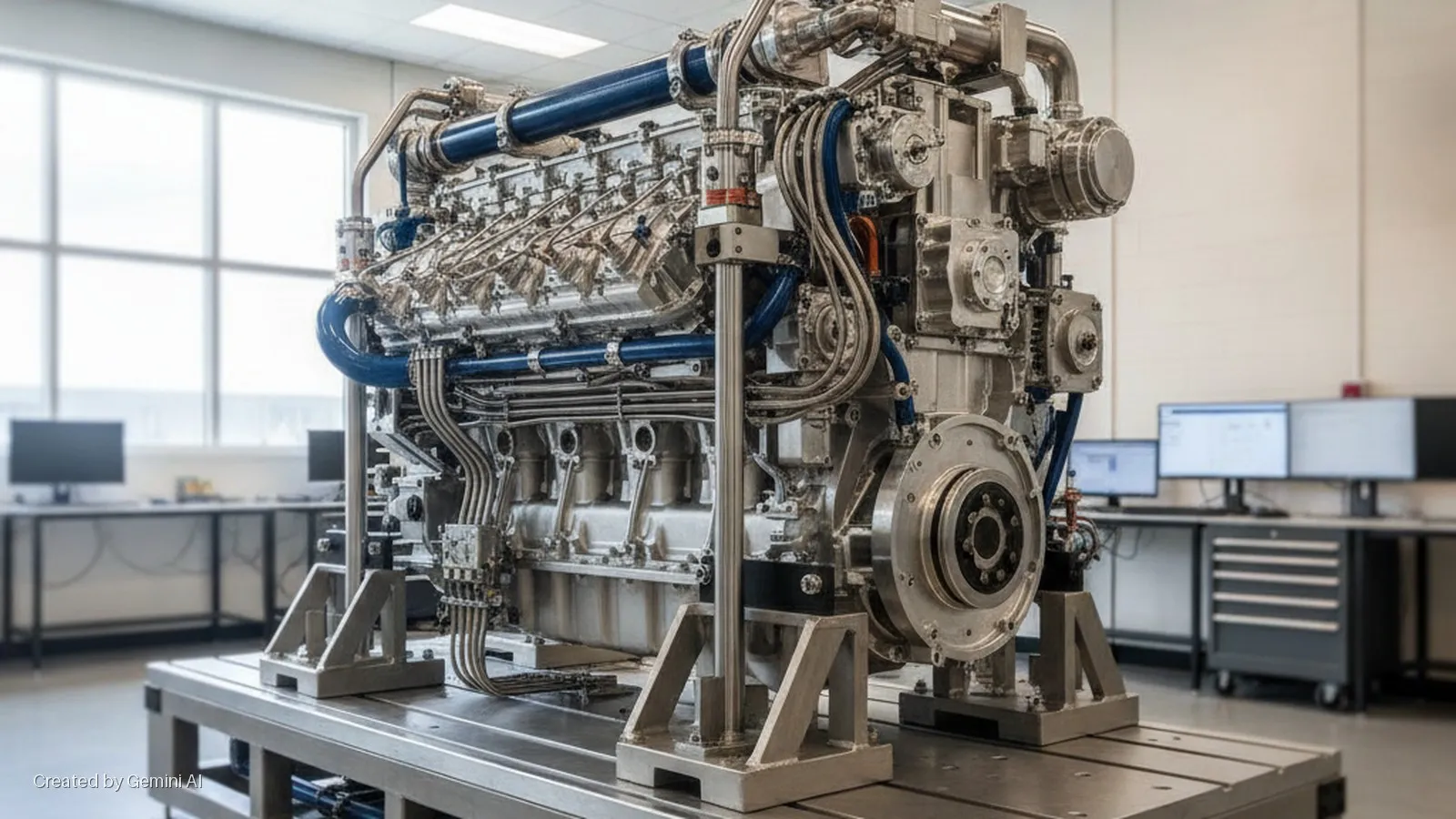
Cespira, the joint venture between Westport Fuel Systems and Volvo Group, has signed a development agreement with Volvo Group to complete integration and commercialisation of its HPDI fuel system technology on a hydrogen-fuelled 13-litre heavy-duty engine. Volvo trucks running the system are already in on-road testing, with a European certified commercial launch targeted before 2030. The deal marks a significant commitment to hydrogen internal combustion engines (H2-ICE) as a decarbonisation pathway for long-haul freight, at a moment when the transport sector faces mounting regulatory pressure and a fractured infrastructure landscape.
The announcement is notable less for the technology itself than for what it signals about the strategic calculus among major European OEMs. Rather than betting exclusively on hydrogen fuel cells, Volvo Group is explicitly funding a parallel H2-ICE pathway. That dual-track posture reflects a wider industry reckoning: fuel-cell systems require near-pure hydrogen, which constrains supply-chain options, while HPDI's tolerance for variable hydrogen purity and its ability to blend with natural gas gives fleet operators more flexibility as green-hydrogen infrastructure remains patchy across key freight corridors in Europe and North America.
Technology context: why HPDI differs from fuel cells
HPDI, which stands for High Pressure Direct Injection, works by injecting alternative fuels directly into a conventional internal combustion engine at high pressure. Originally developed for liquefied natural gas, the system is now being extended to hydrogen. The company says diesel-equivalent performance is achievable with a zero-carbon fuel, and that efficiency under heavy-duty load cycles is competitive with fuel-cell drivetrains.
Mehdi Ferhan, Senior Vice President of Powertrain Technology at Volvo Group, framed the rationale in terms of optionality: "We recognise the potential of hydrogen internal combustion as a viable long-haul option for fleets to reduce emissions in demanding applications." Carlos Gonzalez, President and CEO of Cespira, added that the system's purity tolerance and blending capability "support better economics for all stakeholders," while allowing OEMs to adapt to regional differences in fuel availability, price, and infrastructure.
The commercial launch is still several years away and carries meaningful execution risk: regulatory certification for H2-ICE applications in Europe remains unsettled, green-hydrogen production costs have not yet reached parity with diesel on a total cost of ownership basis, and refuelling infrastructure for heavy vehicles is thin outside a handful of corridors.
Convergence read-across: freight decarbonisation as a capital and geopolitical question
For cross-sector strategists, the deeper story here is the shape of decarbonisation capital in heavy transport. The freight sector accounts for a disproportionate share of hard-to-abate emissions, and the race to own its powertrain architecture is now a three-way contest between battery-electric, hydrogen fuel cell, and H2-ICE. Each pathway implies a different upstream industrial bet: battery-electric favours lithium and grid-infrastructure investment, fuel cells favour platinum-group metals and electrolysis capacity, and H2-ICE favours existing engine manufacturing and the natural-gas distribution network as a transitional bridge.
The Cespira-Volvo agreement is therefore also a signal to sovereign and institutional capital currently allocating into green-hydrogen production assets. A viable H2-ICE market at scale would expand the addressable demand base for hydrogen, including lower-purity grades that are cheaper to produce, potentially accelerating returns on electrolysis and storage infrastructure investments that have so far been slow to pencil out. Europe's Hydrogen Bank auctions and equivalent initiatives in the Gulf Cooperation Council states are underwriting supply; deals like this one constitute the demand-side confidence that those supply investments require.
Geopolitically, the location of certification matters. A European launch before 2030 puts this technology squarely within the revised EU CO2 standards for heavy-duty vehicles, which require significant fleet-level emission reductions by that date. Whether H2-ICE qualifies for zero-emission classification under applicable standards is, as Westport's own risk disclosures note, still unresolved. That regulatory question will shape not only Cespira's commercial trajectory but the broader competitive positioning of European truck OEMs against Chinese electric-commercial-vehicle manufacturers who are moving quickly in adjacent markets.