
Holtec and EDF submit SMR-300 plans for UK's Cottam coal site
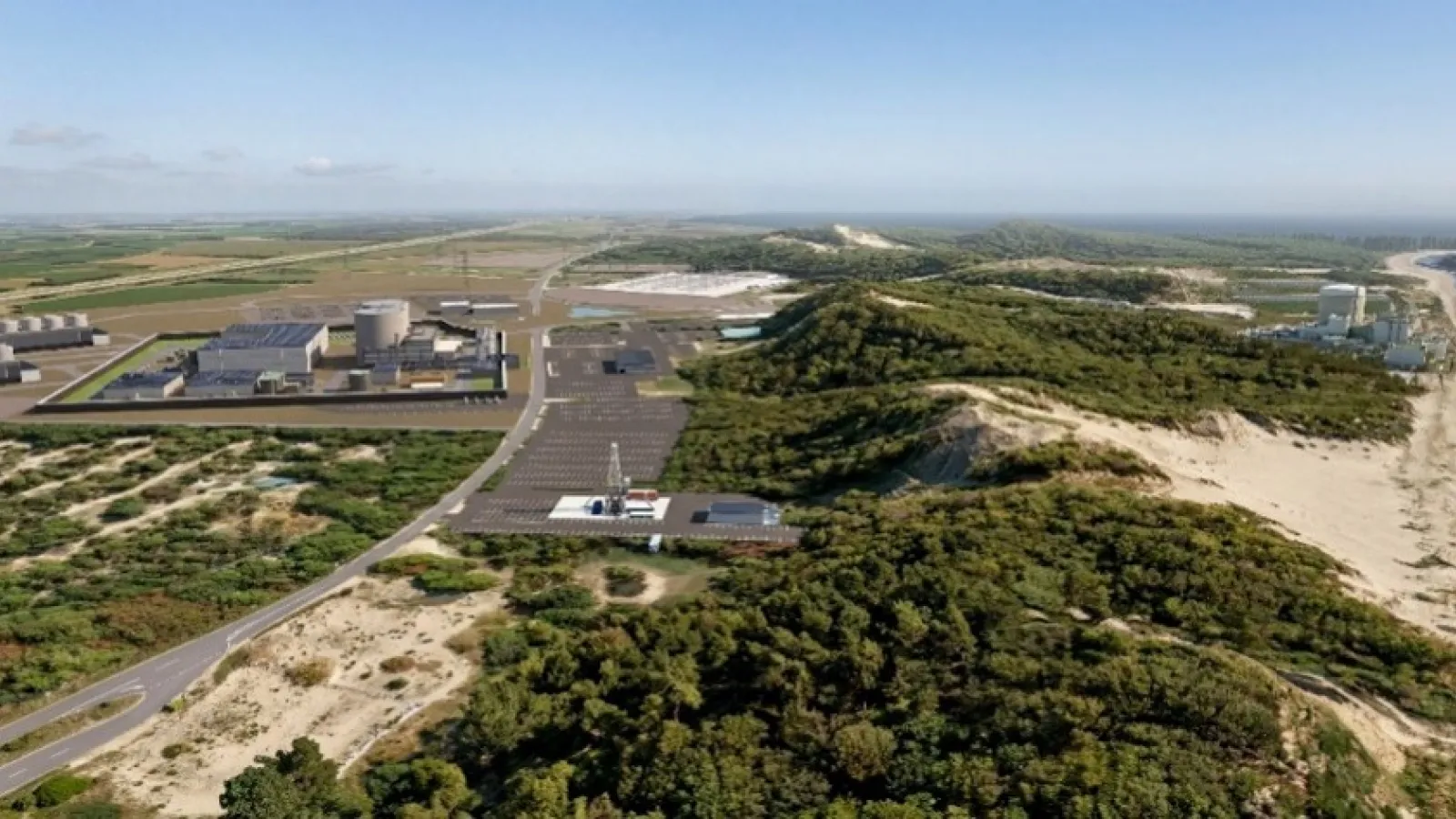
Holtec International and EDF Energy have submitted a joint proposal to the UK Government to deploy up to four SMR-300 small modular reactors at the former Cottam coal-fired power station in Nottinghamshire. The two companies simultaneously signed Heads of Terms to formalise a joint venture, marking the most concrete commitment yet under Britain's Advanced Nuclear Framework, the regulatory vehicle designed to attract private capital into next-generation nuclear development.
The Cottam site would host approximately 1.3 gigawatts of generating capacity. Crucially, it sits on existing grid infrastructure, a factor that substantially compresses both the permitting complexity and the capital outlay typically associated with greenfield nuclear builds. The repurposing of former fossil-fuel sites for new nuclear is a pattern gaining traction across OECD economies, and Cottam is positioned as a leading proof of concept.
From regulatory milestone to construction pipeline
The submission follows Holtec's completion of the UK's Generic Design Assessment for the SMR-300, a process that confirmed the reactor's fundamental safety, security, and environmental adequacy. That clearance provides the regulatory foundation for site-specific permitting at Cottam, and the UK's Office for Nuclear Regulation is already coordinating with its US counterpart, the Nuclear Regulatory Commission, to align oversight across both the Cottam project and Holtec's twin Pioneer units under construction in Michigan in partnership with Hyundai E&C.
The Michigan Pioneer project is itself the first-of-a-kind (FOAK) build. Cottam is designated second-of-a-kind (SOAK), a categorisation that matters commercially: SOAK projects benefit from resolved engineering unknowns and established supply-chain relationships, typically translating into lower per-unit cost and faster delivery timelines than the FOAK. The NRC is currently reviewing Holtec's construction permit application for Pioneer, meaning the two regulatory processes are running in parallel and feeding learning back and forth between jurisdictions.
"This submission represents an important milestone for the project and for advanced nuclear energy in Great Britain," said Dr Rick Springman, President of Holtec International, adding that the company plans to expand its UK operational footprint and is evaluating a domestic nuclear-equipment manufacturing facility.
The convergence play: energy security, industrial policy and capital reallocation
The Cottam announcement sits at the intersection of three macro forces that are reshaping capital allocation across energy, defence, and industrial policy simultaneously. First, energy security: the post-2022 recalibration of European governments away from Russian gas dependency has elevated firm, low-carbon baseload capacity to a strategic priority that no renewables-only portfolio can satisfy on its own. Second, industrial revitalisation: the Advanced Nuclear Framework is explicitly structured to attract private-sector finance rather than relying on government balance sheets, echoing the logic of the US CHIPS Act in semiconductors. The question of whether private capital can actually absorb the construction-risk premium on nuclear, without the sovereign guarantees that underwrote Hinkley Point C, is the central tension every investor in this space is watching.
Third, and most relevant to Disrupts readers tracking cross-sector capital flows, SMR deployment is beginning to attract interest from a different class of investor than traditional utility or infrastructure funds. Hyperscalers and data-centre operators facing acute power constraints, particularly in AI-compute-intensive facilities, have started to explore long-term offtake arrangements with SMR developers as a route to reliable, carbon-accountable baseload. Microsoft's agreement with Constellation to reopen Three Mile Island in the US is the most cited precedent. Cottam's proximity to existing grid interconnects and the East Midlands' emerging data-infrastructure corridor makes it a plausible candidate for similar corporate power purchase agreements, though none have been announced.
For sovereign wealth and infrastructure funds rotating out of fossil-fuel assets in response to decarbonisation mandates, SOAK nuclear projects with regulatory clarity and an established technology partner represent a rare combination of known risk profile and credible timeline. The Holtec-EDF submission is likely to accelerate that conversation in the UK market.