
Snowline Gold appoints Site General Manager and publishes ESG report
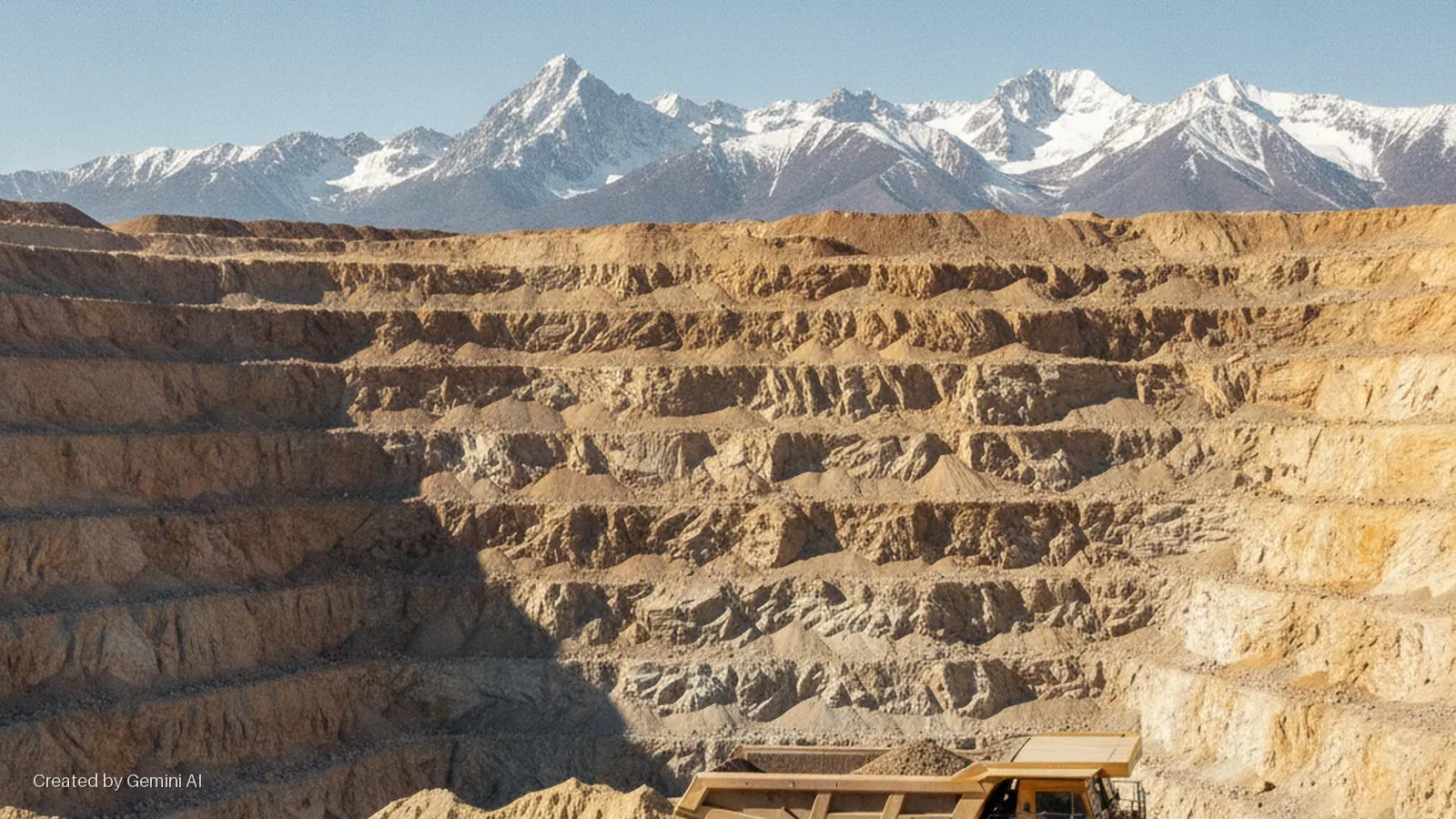
Snowline Gold Corp., the TSX-listed Yukon gold explorer behind the Valley deposit, has published its 2025 Sustainability Report and named Clinton Wakefield as Site General Manager for its Yukon project portfolio. The twin announcements mark a deliberate step from exploration-stage junior to a development-ready mining operation, a transition that carries implications for Indigenous economic participation in the Canadian North and for the broader financing dynamics of responsible junior mining.
The Valley deposit, located in the Selwyn Basin within the Tintina Gold Province, hosts a mineral resource estimate of approximately 7.94 million ounces of gold at 1.21 g/t in the Measured and Indicated categories, plus a further 0.89 million ounces Inferred. A Preliminary Economic Assessment published in 2025 suggests the project could support a long-life, low-strip bulk-tonnage mining operation. Those are meaningful numbers for a project still advancing through permitting, but they come with the standard caveat that mineral resources are not mineral reserves and do not yet have demonstrated economic viability.
Indigenous procurement as a governance signal
The sustainability report's most quantitatively specific disclosure concerns local and First Nations spending. The company says it directed approximately $30 million of its $33 million in Yukon-based contractor expenditure in 2025 to businesses affiliated with Yukon First Nations, including through its partnership with Na-Cho Nyak Dun Development Corporation. That partnership also underpins Snowline's CO2 offset arrangement: the company leased a PowerPod solar farm system through NNDDC to offset 36.5 tonnes of CO2 emissions during the year.
The scale of that procurement ratio is notable in the context of Canadian critical-minerals policy. Federal and territorial governments have made Indigenous co-ownership and benefit-sharing an increasingly explicit condition of project social licensing, and institutional investors applying ESG screens to junior mining now treat First Nations spending ratios as a proxy for permitting risk. The Government of Yukon awarded Snowline the Robert E. Leckie Award for Responsible and Innovative Exploration and Mining Practices for a third consecutive year, providing an external data point to support that framing, though the award does not substitute for a formal permitting decision.
From exploration to development: the capital and talent question
Wakefield's appointment reflects the operational demands of the exploration-to-development transition. He most recently managed the shift from exploration to full construction at B2Gold Corp.'s Goose project in Nunavut, a comparable remote, high-latitude setting. Bringing in a construction-specialised general manager at this stage is consistent with the playbook of junior miners seeking to demonstrate execution credibility ahead of financing rounds, whether project-level debt, streaming arrangements, or equity raises.
That credibility question matters beyond the Valley project itself. The broader junior gold sector is navigating a capital environment in which rising gold prices have improved project economics but institutional capital remains selective, favouring developers with credible permitting trajectories and demonstrated community relations. Snowline's ESG disclosures, taken together, appear positioned to address that selectivity directly: the report covers health and safety management system development, an expanded environmental baseline programme to support advanced permitting, and board-level governance strengthening.
For cross-sector investors tracking critical-minerals supply chains, the Yukon context adds a further dimension. Canada's Selwyn Basin sits in a jurisdiction subject to increasing geopolitical interest as Western governments seek to diversify gold and base-metals supply away from higher-risk jurisdictions. Whether that interest translates into sovereign-backed offtake or project financing for a pre-production junior at this scale remains an open question, and one the sustainability report does not directly address.
The next material catalyst for Snowline will likely be a permitting milestone or an updated resource estimate, either of which would test whether the governance infrastructure being assembled now translates into the timeline certainty that development-stage financing requires.