
Tessera ups stake in drone-testing firm MEA to 15%
Tessera Defense and Homeland Security (NYSE American: HLSQ) has amended its investment agreement with Israeli firm M.E.A. Testing Systems (trading as Motomea) to lift its equity stake from 10% to 15%, adding a convertible loan facility of up to $475,000 and an exclusive worldwide licence over MEA's testing technology. The deal also preserves an option for Tessera to acquire Motomova's majority holding in MEA at a price tied to MEA's audited 2027 results, giving the US-listed security company a structured path to full ownership of a niche but strategically positioned Israeli testing house.
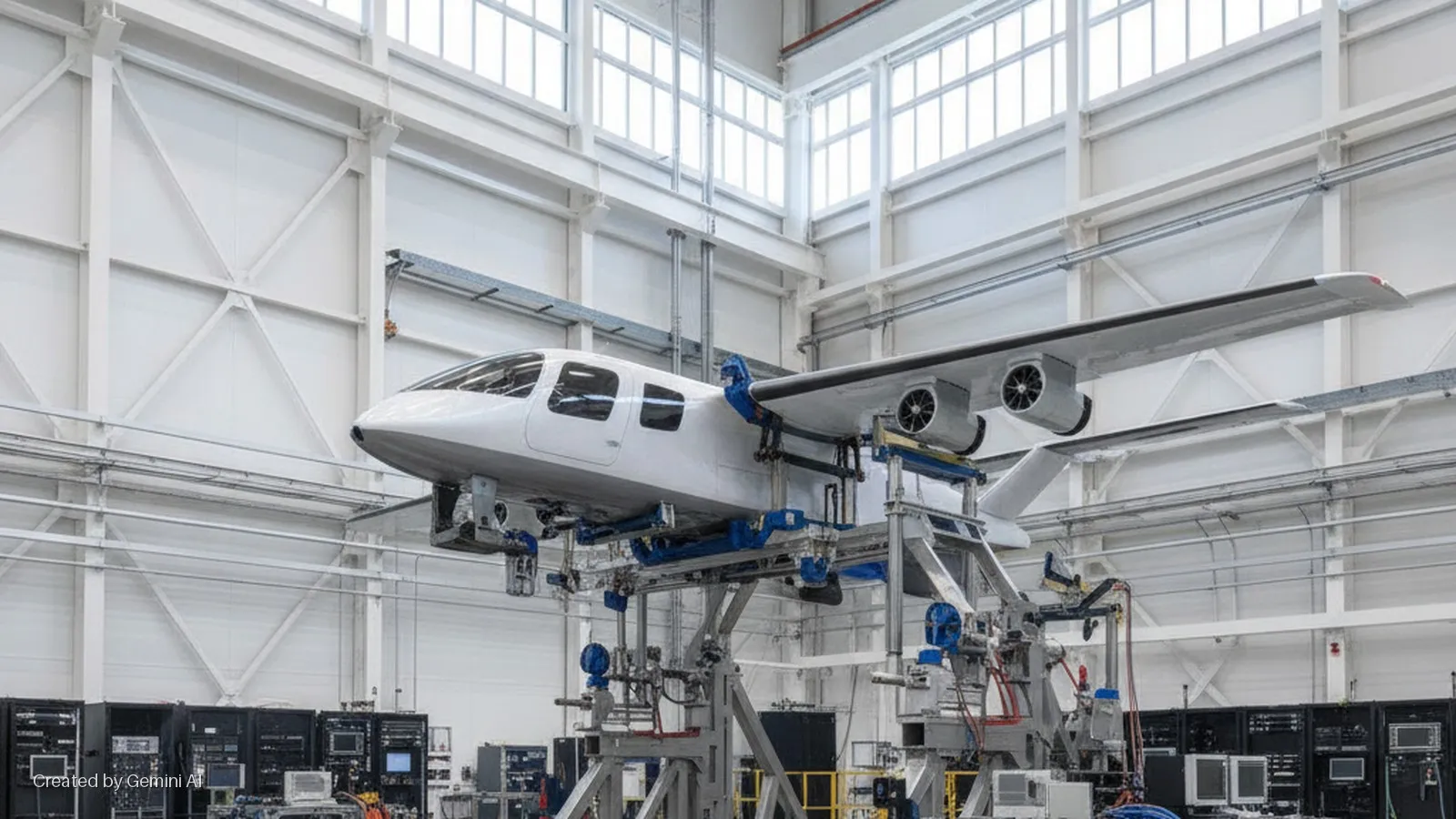
The headline figure is modest: $50,000 in cash plus 130,000 shares of Tessera common stock (with a further 65,000 shares pending NYSE American approval). But the strategic rationale is larger than the price tag implies. MEA brings more than 25 years of electric-motor and rotating-machine testing expertise, including a patented load-free inertial dynamometer system that evaluates motor performance during acceleration and deceleration without traditional mechanical loads. That capability applies across electric propulsion systems for drones, manned aircraft, robotics, and ground vehicles, meaning the technology cuts across several of the most capital-intensive sectors in defence procurement right now.
Testing as a Defence Capability Layer
Michael Oster, Tessera's chief executive, framed the acquisition in operational terms. "Drone threats are now a reality at every site we protect, and effective defense begins with rigorous testing," he said. "MEA adds a critical testing capability to Tessera's AI-driven security platform, which connects predictive intelligence, sensing, analysis, decisioning and response."
That framing is significant. Counter-drone and drone-defence spending has accelerated sharply since Russia's full-scale invasion of Ukraine normalised unmanned aerial systems (UAS) as a persistent threat at both military and civilian infrastructure sites. Governments across NATO, the Gulf, and Indo-Pacific have since moved to harden critical-infrastructure protection, creating a procurement surge that blends physical security hardware with AI-driven threat analysis. Tessera is positioning its integrated platform, which layers cameras, sensors, detection algorithms, and response coordination, squarely in that market.
Cross-Sector Read-Across: Where Testing Meets the Convergence Economy
The less obvious angle here is what MEA's motor-testing IP means beyond counter-drone applications. Electric propulsion testing is foundational not only to defence-grade UAS but to the broader electrification of mobility: urban air mobility (eVTOL) aircraft, electric ground vehicles, and increasingly, autonomous robotic platforms used in logistics, mining, and industrial inspection. MEA already counts clients across aerospace, automotive, energy, and transportation, which means Tessera is acquiring technology that sits at the intersection of several capital-intensive transition cycles simultaneously.
For investors tracking the convergence of defence-tech and the electrification megatrend, this is worth noting. The global market for drone-related testing and verification services remains fragmented and underlicensed; few pure-play public companies have secured the kind of proprietary, patent-protected dynamometer systems MEA holds. If Tessera exercises its full buyout option, it would acquire that IP at a valuation anchored to 2027 audited results, a structure that limits downside if MEA's commercial scaling stalls but caps upside if the electric-propulsion testing market grows faster than expected.
The deal also carries a geopolitical dimension. Israel's defence-tech ecosystem has deepened its commercial ties with US-listed vehicles in recent years, partly as a route to NYSE or NASDAQ capital markets access for companies that would otherwise remain private. Tessera's incremental stake-building approach, loan-to-equity conversion rights, and perpetual worldwide licence structure reflects a template increasingly common in Israel-US defence-tech roll-up strategies. Whether that template produces durable returns will depend on MEA's ability to convert its testing heritage into recurring revenue as the drone-propulsion market matures.