
Tessera Defense raises MEA stake to 15% to bolster drone testing
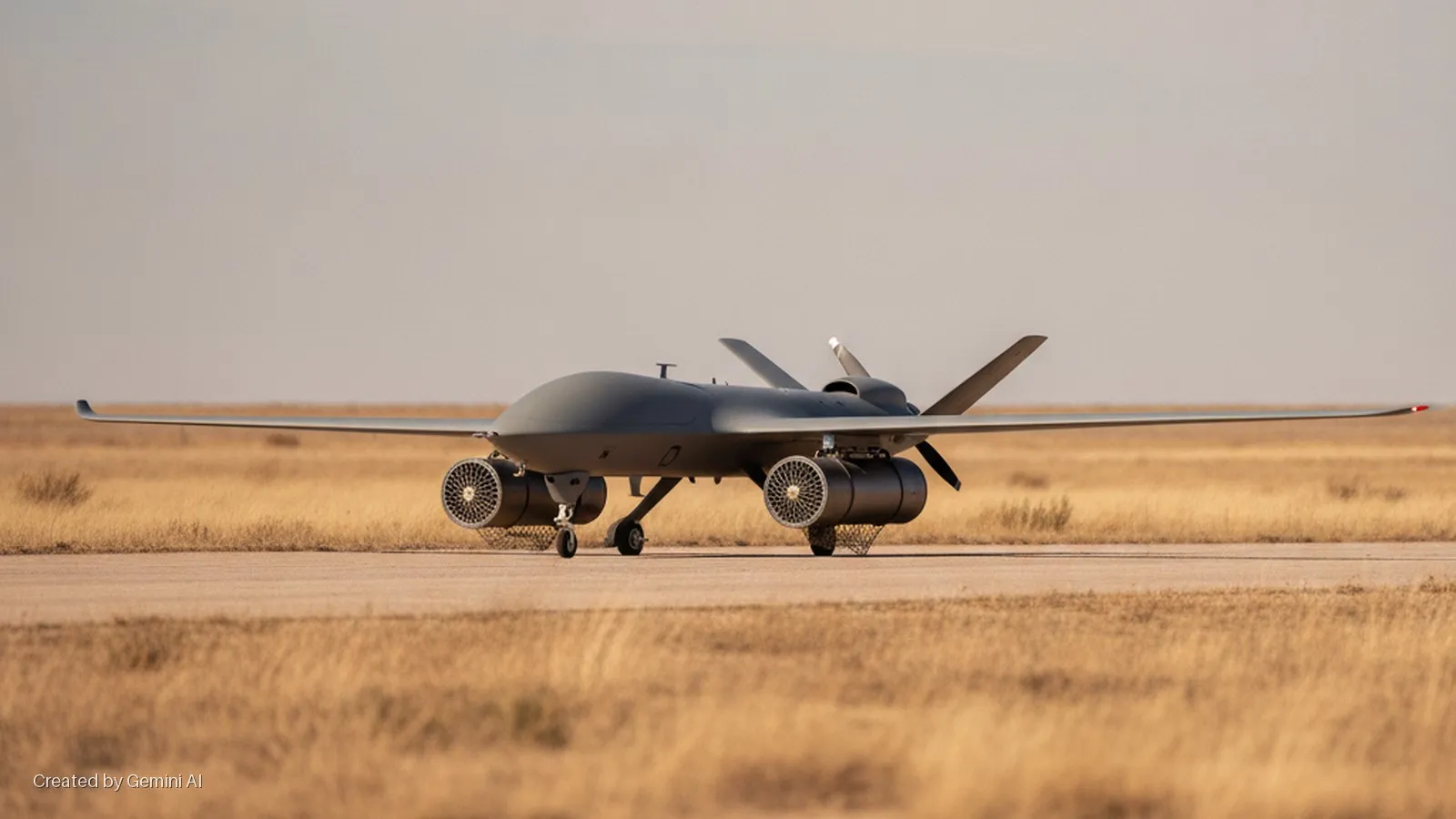
Tessera Defense and Homeland Security (NYSE American: HLSQ) has amended its investment agreement with Israeli firm M.E.A. Testing Systems (trading as Motomea), lifting its equity stake from 10% to 15% and extending a $475,000 convertible loan facility to fund the target's drone-related activities. The deal also grants Tessera an exclusive, perpetual, worldwide licence over Motomea's testing technology and know-how, alongside an option to acquire the majority shareholder's remaining interest at a price pegged to Motomea's audited 2027 results.
The transaction is structured partly in stock: 130,000 Tessera common shares have been issued for the 15% interest, with a further 65,000 shares pending NYSE American approval. The all-in consideration is modest by capital-markets standards, but the strategic logic is pointed. Tessera is positioning Motomea's testing capability as infrastructure for its broader AI-driven security platform rather than as a standalone asset.
Drone threats drive the testing imperative
Motomea brings more than 25 years of expertise in electric-motor and rotating-machine diagnostics. Its client base spans aerospace, automotive, energy, and transportation sectors, and it holds patents on what it describes as the first load-free inertial dynamometer, a system that evaluates motor performance through acceleration and deceleration cycles without conventional mechanical load rigs. Applied to drone propulsion, the technology lets operators stress-test electric motors before deployment, a capability that becomes operationally critical as unmanned aerial vehicles proliferate across both offensive and defensive roles.
"Drone threats are now a reality at every site we protect, and effective defence begins with rigorous testing," said Michael Oster, Tessera's chief executive. "MEA adds a critical testing capability to Tessera's AI-driven security platform, which connects predictive intelligence, sensing, analysis, decisioning and response."
The framing matters: Tessera is not simply acquiring a component supplier. It is folding motor-performance data into a detection-to-response loop, with the expectation that testing insights will harden upstream layers of its security stack over time.
Convergence of counter-drone tech and physical security investment
The deal sits within a rapidly accelerating capital narrative around counter-unmanned-aerial-systems (C-UAS) and physical security technology. Governments across NATO and the Gulf Cooperation Council have materially increased procurement budgets for drone detection and neutralisation since the conflict-driven acceleration of UAS use in 2022 to 2025. Private-sector critical-infrastructure operators, energy utilities, ports, data centre campuses, are following sovereign buyers, seeking integrated platforms that can detect, classify, and respond to aerial threats without relying on bespoke, site-by-site integration work.
Tessera's strategy reflects this landscape: it is aggregating specialist Israeli deep-tech into a unified platform, rather than developing proprietary subsystems from scratch. Israel's defence-tech ecosystem, anchored by decades of dual-use R&D, remains one of the few geographies where motor-testing IP, AI-inference engines, and sensor fusion capabilities sit in adjacent SMEs reachable at sub-$1m entry points. For a small-cap US-listed company, that is a structurally efficient model.
The convertible loan adds a further optionality layer. If Motomea's 2027 audited results meet or exceed internal targets, Tessera can convert the debt into additional equity ahead of exercising its full-acquisition option, compressing the ultimate purchase price. If results disappoint, the loan structure limits downside exposure. The arrangement is a template increasingly common in dual-use deep-tech roll-ups: staged commitment, technology access front-loaded, full-consolidation deferred.
Investors watching the physical-security convergence space should note that the real valuation question will arrive with Motomea's fiscal 2027 numbers. Until then, Tessera has secured the licence, the minority position, and the option without committing to a full acquisition price. The next material disclosure is likely to be whether NYSE American approves the additional 65,000-share tranche, and whether the convertible facility is drawn down ahead of the option exercise window.