
Telr and MoneyHash unite to simplify MENA payment orchestration
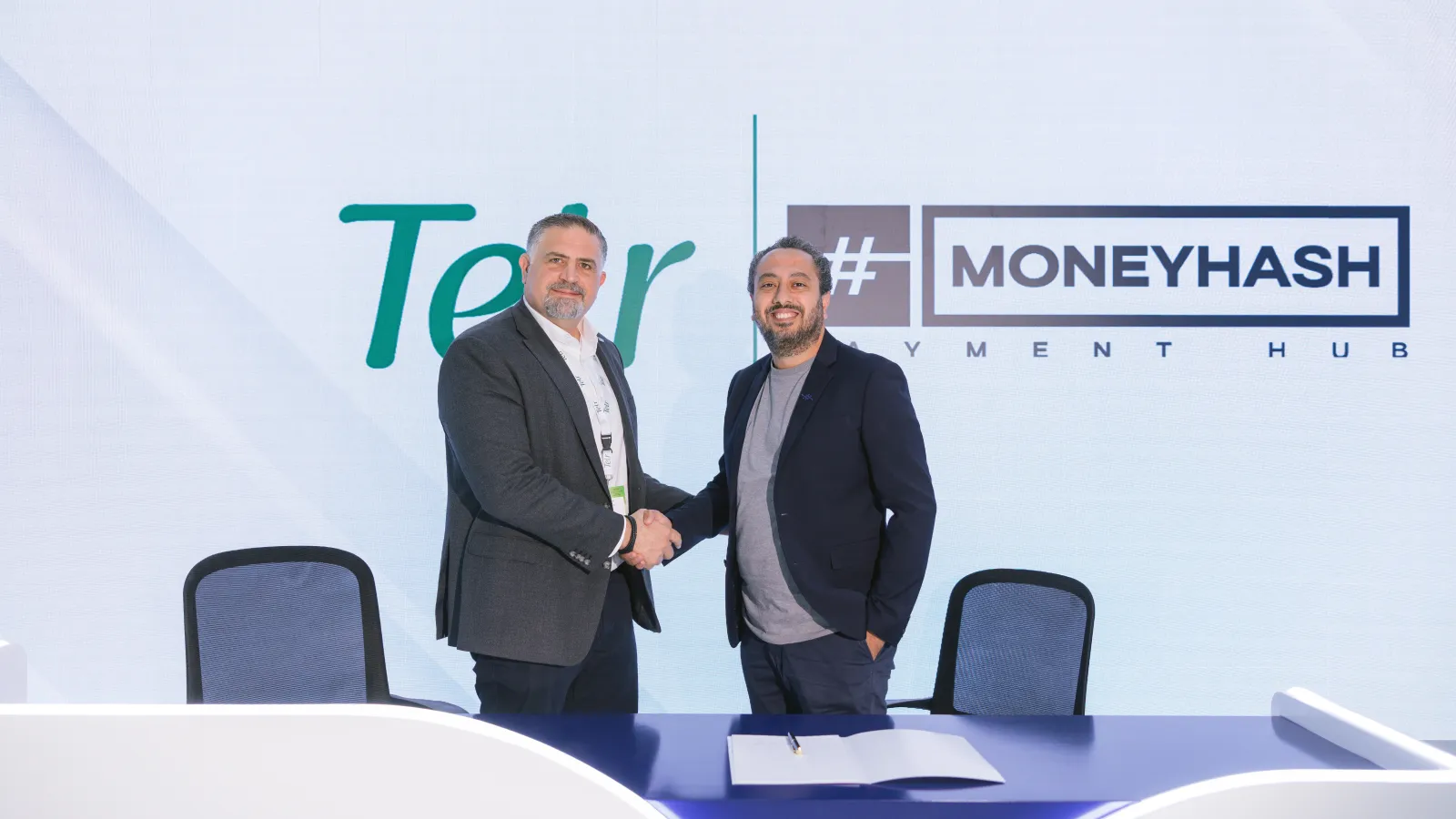
Telr, a UAE-regulated payments provider operating across the UAE, Saudi Arabia, Bahrain and Jordan, has struck a strategic partnership with MoneyHash, a payment orchestration platform positioning itself as the AWS of emerging-market payments infrastructure. The deal makes Telr's regional acquiring capabilities available through MoneyHash's unified API, so that businesses already on the MoneyHash ecosystem can add a regulated Gulf payment partner without building a separate direct integration.
The announcement was made at Money20/20 Middle East in Riyadh, an increasingly significant gathering point for the region's fintech and payments sector. Khalil Alami, Founder and CEO of Telr, and Nader Abdelrazik, CEO and Co-founder of MoneyHash, marked the collaboration publicly at the event, signalling both companies' intent to deepen their footprint in a market where digital commerce is expanding faster than payment infrastructure can keep pace.
What the integration actually does
For merchants, the practical effect is a reduction in integration overhead. Connecting to a new regional payment provider in emerging markets has historically required significant engineering resource: compliance checks, currency-routing configuration, and separate API buildouts for each acquirer. MoneyHash's orchestration layer abstracts this by offering a single connection point through which transaction routing, multi-currency processing, and provider switching can all be managed from a unified dashboard.
Telr brings to that layer a set of capabilities that matter specifically in the Gulf: PCI DSS Level 1 certification, NESA compliance, Central Bank of UAE licensing, and Saudi Central Bank (SAMA) authorisation. It supports more than 120 currencies across 30 languages, and its payment methods span major card schemes, digital wallets, Buy Now Pay Later, QR payments, and merchant financing. For a merchant scaling from the UAE into Saudi Arabia or Bahrain, those regulatory anchors are not cosmetic; they are table-stakes for market entry.
The macro read-across: orchestration as infrastructure
The deeper significance of this deal sits at the convergence of two trends reshaping payments architecture in the Global South. First, payment orchestration is rapidly displacing direct-acquirer relationships as the default infrastructure layer for digitally native businesses. The model, borrowed explicitly from cloud computing (MoneyHash's own AWS analogy is deliberate), treats payment providers as interchangeable compute nodes rather than locked-in partners. Second, the Gulf Cooperation Council is undergoing a structural shift in its digital payments landscape, driven by Vision 2030 in Saudi Arabia and parallel fintech liberalisation across the UAE, Bahrain and Jordan.
Together, these trends are drawing significant capital and platform investment into the region. Payment orchestration platforms with credible emerging-market coverage are becoming attractive infrastructure bets for investors who cannot gain clean exposure to individual regional acquirers. MoneyHash's positioning as a single API connecting global and regional providers mirrors what Stripe and Adyen built in Western markets, but calibrated for the regulatory fragmentation and currency diversity of MENA and beyond.
For cross-sector strategists, the implications extend beyond fintech. As Gulf sovereign wealth continues to fund digital commerce infrastructure, the ability to route payments seamlessly across jurisdictions becomes a prerequisite for the broader e-commerce, logistics and retail-tech build-out underway in the region. Merchants in sectors from travel to retail to B2B procurement increasingly require payment flexibility as a condition of regional expansion, not a feature added later. Partnerships like this one are, in effect, laying connective tissue for the GCC's wider digital economy ambitions.
The immediate next question for both companies is geographic scope. Telr's current footprint covers four markets; MoneyHash's platform already connects providers across a wider emerging-market geography. Whether the partnership evolves into a deeper commercial arrangement or remains a network integration will depend on how quickly merchant demand for Gulf-specific acquiring accelerates through the orchestration layer.