
Saudi Central Bank charts next phase of payments at Money20/20 ME
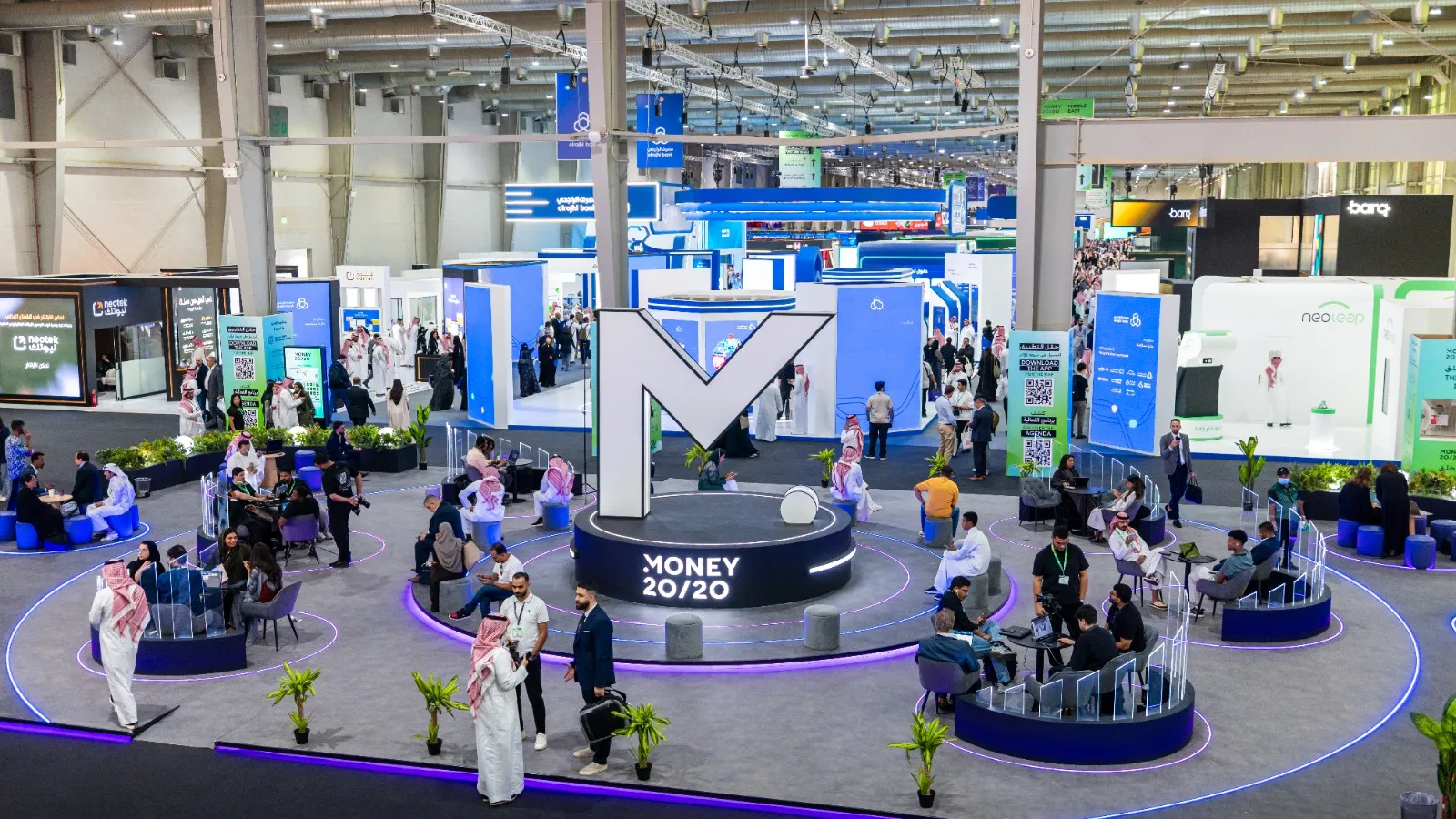
The Saudi Central Bank (SAMA) used the closing day of Money20/20 Middle East in Riyadh to announce two payments infrastructure moves that carry significance well beyond the Kingdom's borders: the enablement of Alipay+ payment acceptance for international visitors, and confirmed plans to allow Apple's Tap to Pay on iPhone for Saudi merchants. Taken together, the announcements position Saudi Arabia as a deliberate junction point between Eastern and Western digital payments rails, at a moment when Gulf states are competing aggressively to attract cross-border commerce and tourism revenue tied to Vision 2030.
SAMA Deputy Governor for Financial Innovation Nora M. Albakr framed the day's agenda around a principle that regulators elsewhere have struggled to articulate cleanly: that monetary stability and rapid financial innovation are not in tension. Her keynote pointed to SAMA's regulatory sandbox as the mechanism that makes this workable in practice. Supply chain finance solutions that passed through that sandbox have since generated activity exceeding SAR 1.4 billion, a figure that demonstrates the sandbox model's commercial yield rather than merely its regulatory prudence.
Capital moving into the Kingdom
Two investment announcements on the final day illustrated the depth of international appetite for Saudi fintech exposure. Vienna-based Quantic Financial Solutions committed to an institutional capital programme of up to SAR 750 million, partnered with Lendo, a Shariah-compliant debt crowdfunding marketplace, to direct working capital financing towards Saudi SMEs. On the venture side, European VC firm Speedinvest made its first Saudi investment, a SAR 15 million stake in Abwab.ai, an AI-powered credit intelligence and underwriting automation platform.
The Speedinvest move is worth noting for its cross-sector signal. European venture capital, which has been rebalancing its geographic allocation since the 2022 rate shock compressed late-stage multiples in Western markets, is now treating Gulf fintech as a legitimate primary destination rather than an exploratory bet. For macro investors tracking VC capital flows, the Abwab.ai deal marks a data point in a pattern: AI-native financial infrastructure companies in GCC markets are attracting institutional attention from fund managers who were not in the region two years ago.
Always-on capital and the AI accountability question
Two panel discussions captured the broader strategic tensions that financial institutions are navigating globally. BlackRock Managing Director Tony Ashraf articulated the structural consequence of 24/7 markets with directness: "When markets genuinely don't close and everything operates 24/7, that will have a fundamental impact on capital markets. As money and underlying assets move around the clock, it creates demand for 24/7 yield, and that convergence will be one of the key drivers of change across capital markets." The observation has immediate relevance for asset managers in any jurisdiction evaluating tokenised asset infrastructure or always-on settlement rails.
On AI, T57.AI founder Afzal Hussain Mohammed Nakheeb offered a formulation that financial regulators will find useful when drafting governance frameworks: "AI should advise us and provide the right information, but humans should use that information to make wiser decisions. We should not hand over decisions entirely to AI; there must be human involvement in evaluating the information, making the final decision and maintaining accountability." As regulators in the EU and UK finalise AI liability frameworks for financial services, the Gulf is moving towards a practical model of augmented decision-making rather than autonomous financial AI.
The event's MoneySurge competition concluded with Saudi platform Tanami, a Shariah-compliant private markets investment tool, taking the USD 200,000 Best in Show prize. Hong Kong-based Planto and Nigerian fintech Nearpays took the Fintech to Watch and Fintech for Good awards respectively, illustrating that the Riyadh event is drawing genuinely global founder cohorts rather than a regionally concentrated field. Money20/20 Middle East returns to Riyadh in September 2027.