
PureSky Energy closes $183.7m investment-grade community solar deal
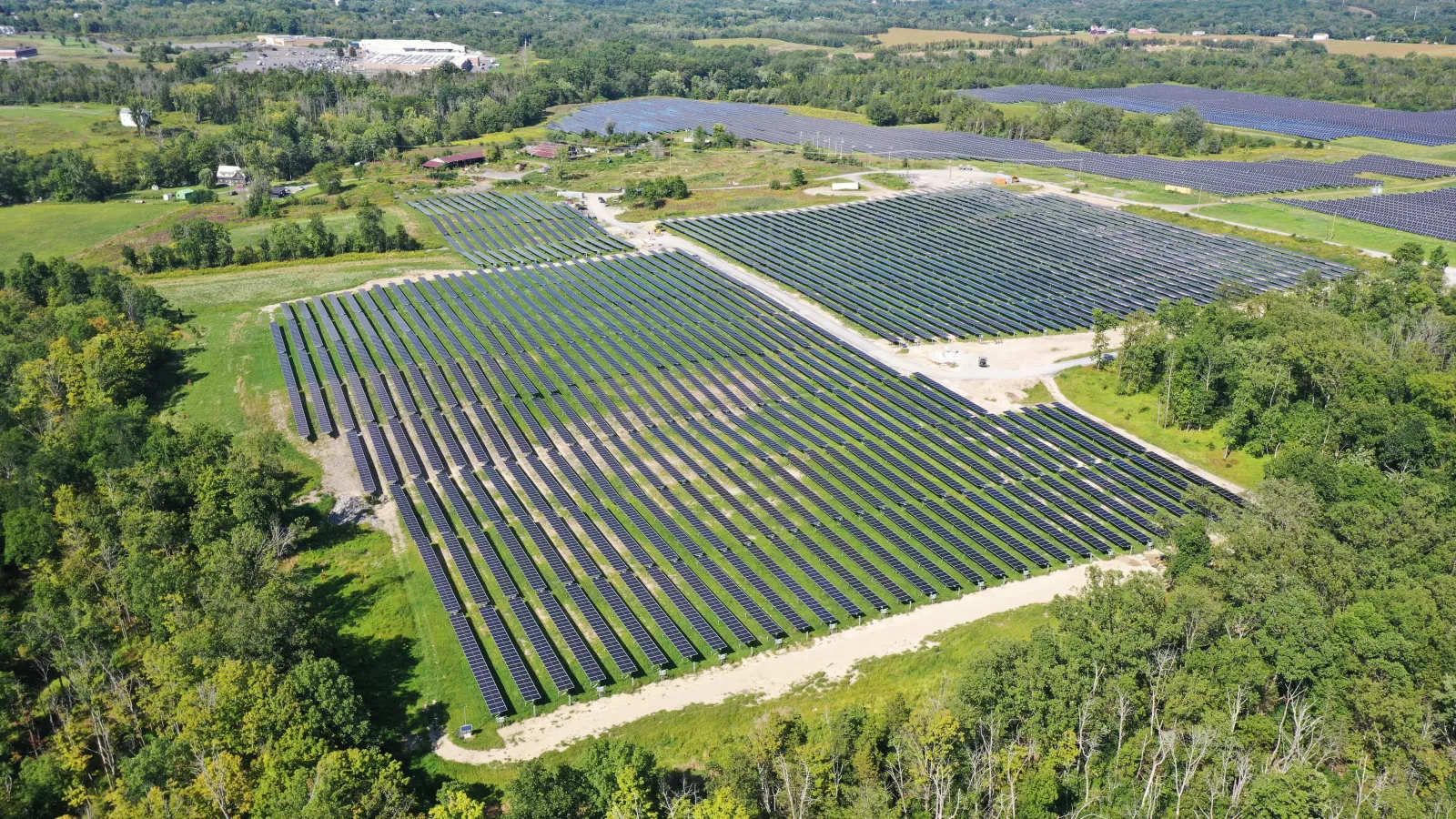
PureSky Energy has completed a $183.7 million investment-grade refinancing of its community solar portfolio, consolidating eight separate debt structures into a single vehicle spanning 211 MW DC of solar capacity and 58 MWh of energy storage across 43 operating assets in Massachusetts, New York, and Minnesota. The transaction, advised by Marathon Capital, was placed with PGIM, AB CarVal-managed funds, and Denham Capital, a trio of institutional names whose presence signals that distributed generation is crossing a credibility threshold with large allocators.
The investment-grade rating is the headline detail. Community solar has historically been financed project-by-project, at the mercy of individual state programme rules and merchant-power risk. Aggregating 43 assets into a single rated note structure changes the risk calculus: diversified cash flows across three regulatory regimes smooth out the variability that kept institutional bond desks at arm's length. PureSky's CFO Rami Khadra said the deal "eliminates near-term refinancing risk while continuing to invest in long-term growth," locking in long-term financing certainty for the next decade.
From project finance to infrastructure asset class
The structural shift here matters beyond PureSky's own balance sheet. Distributed solar, rooftop and community-scale generation that sits outside the bulk transmission grid, has long lagged utility-scale renewables in attracting investment-grade debt. Utility-scale projects benefit from long-tenor power-purchase agreements with creditworthy offtakers and established precedent in the ratings-agency playbook. Community solar sits in a messier space: shorter subscriber contracts, state-by-state programme rules, and a fragmented operational model that made underwriting difficult.
By internalising customer management and assembling a portfolio of sufficient scale, PureSky has demonstrated a route around that complexity. Ty Bowman, Managing Director at PGIM, pointed to the "integrated customer management platform" as a key underwriting factor alongside the diversified contracted cash flows. That operational detail, not just asset aggregation but platform maturity, is what moved the needle on the rating. It is an argument the broader distributed-energy sector will now seek to replicate.
Capital landscape and convergence implications
The wider investor context is relevant for cross-sector allocators. US power demand is rising faster than at any point in two decades, driven by data centre build-out, onshoring of energy-intensive manufacturing, and accelerating electrification of transport and heating. That demand surge is putting pressure on transmission infrastructure and pushing utilities and developers alike toward distributed-generation solutions that can be sited and permitted faster than new grid-scale plant. Community solar, which feeds directly into local distribution networks and serves subscribers without requiring new transmission lines, is structurally positioned to capture a share of that incremental demand.
For institutional capital, the PureSky deal offers a template. Private credit and insurance-company allocators that need investment-grade, long-duration fixed income are under-allocated to the energy transition relative to the scale of capital the transition requires. A rated, multi-state, operationally integrated distributed-energy portfolio fits their mandate in a way that a single project note does not. Alex Flamm of AB CarVal noted that "project-level financings on operating assets managed by scalable distributed energy platforms present interesting opportunities for private capital given the rising demand for power infrastructure across the US."
The second-order read-across touches both the real-estate and data-centre sectors. Community solar subscribers are largely residential and commercial tenants whose electricity bills are directly reduced by subscription, making distributed solar a quiet but growing factor in commercial property operating costs and, by extension, in the economics of the data-centre campuses now proliferating across the same Northeastern and Midwestern states where PureSky operates.
PureSky currently operates approximately 300 MW across 63 operational or under-construction sites and reports a large development pipeline in existing and new US markets. Whether the investment-grade refinancing template can be replicated at even greater portfolio scale, and whether ratings agencies will extend the same treatment to assets in states with younger community-solar programmes, will be the questions the sector watches next.