
Jackery enters Canada with HomePower backup series
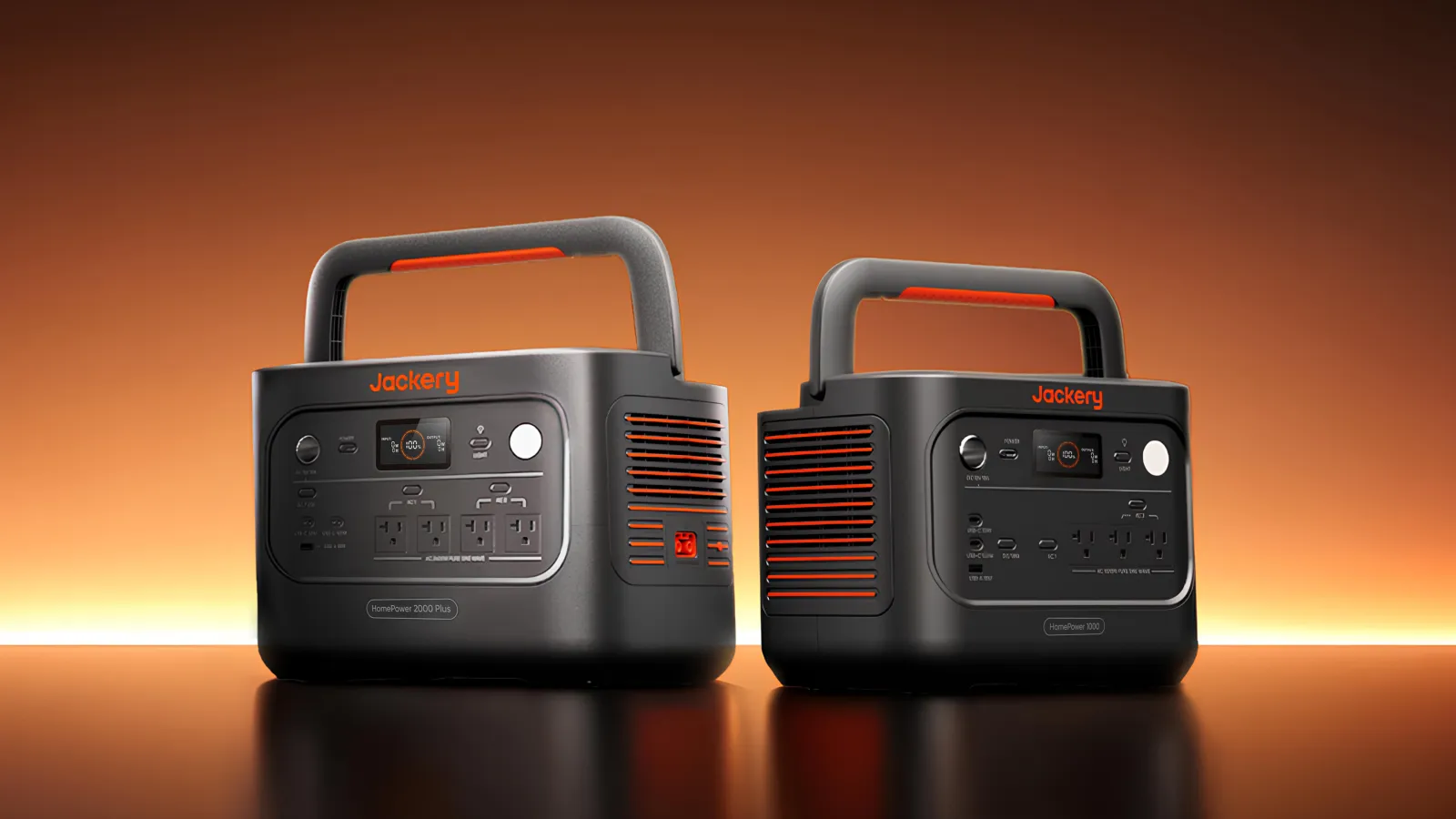
Jackery, the California-founded portable power brand, has formalised its entry into the Canadian market with the launch of two HomePower Series units: the HomePower 2000 Plus v2 and the HomePower 1000 v2. Both products are now available through Jackery's Canadian website and Amazon, priced at CAD $699 and CAD $1,599 respectively at launch. The move follows the series' US debut last month and marks Jackery's first localised Canadian operation, including dedicated customer service and a five-year warranty structure.
The timing is deliberate. Canada recorded more than 900 active fires burning approximately 28,000 square kilometres in the most recent wildfire season, compounding pressure on a national grid already under strain from ageing infrastructure and rising electricity demand. For Jackery, this is the market context that turns a consumer gadget into a utility-adjacent proposition.
From outdoor accessory to household infrastructure
The HomePower line is pitched at two distinct use cases that are converging in the minds of Canadian buyers. The 2000 Plus v2 targets households seeking whole-home coverage during outages: it delivers 2,400W rated output, a 4,800W surge ceiling, and a baseline 2,048Wh capacity that the company says can run a standard refrigerator for 48 hours. The unit supports up to 12kWh of expandable storage through stacked batteries and accepts up to 800W of solar input for a sub-three-hour recharge. An engineering revision has reduced weight by 21 pounds versus its predecessor.
The 1000 v2 is positioned at the remote-working professional. Its 1,024Wh capacity and 1,500W output can sustain a laptop for up to 57 hours beyond a typical grid outage, with a sub-10ms switchover that the company says is imperceptible to connected devices. The unit's LiFePO4 battery chemistry is rated for 6,000 charge cycles, which Jackery translates as a 16-year working lifespan. A 50-minute full recharge time is the headline spec.
"The launch of the HomePower 2000 Plus v2 and HomePower 1000 v2 marks the beginning of an expanding portfolio of power solutions that we will bring to Canadian households," said Steven Wang, Vice President of Americas and ANZ at Jackery.
Grid fragility as a capital thesis
The Disrupts-relevant question is not whether Jackery's specs are competitive, but what the Canadian launch signals about where distributed energy storage is heading as an asset class and infrastructure layer.
Jackery is entering a market where the legacy answer to grid unreliability has been petrol generators. Its pitch, a quieter, cleaner, software-managed alternative, sits at the intersection of consumer energy hardware, climate-driven infrastructure stress, and the accelerating always-on connectivity demands created by remote work and agentic AI workflows. The company's invocation of AI agents in its product materials, noting that automated workflows cannot tolerate unplanned power cuts, is a signal of how home energy brands are repositioning their value proposition against the broader AI productivity narrative.
At the macro level, the distributed home battery market is drawing increasing attention from energy utilities and grid operators who see residential storage as a potential demand-flexibility asset. In markets where vehicle-to-grid and home-to-grid programmes are maturing, portable battery units like Jackery's occupy an ambiguous but strategically interesting position: too small for utility-scale aggregation today, but potentially enrollable in virtual power plant programmes as software integration matures.
Canada's grid fragility story is also a geography-specific entry point. Provincial utilities in British Columbia and Alberta are under separate pressure from hydroelectric volatility and fossil-fuel transition timelines. For cross-sector investors watching the distributed energy storage space, a consumer brand scaling into Canada with localised warranty infrastructure and retail distribution is an early indicator of market readiness, even if the capital volumes are modest relative to grid-scale storage plays. The next test is whether Jackery expands its Canadian product portfolio toward solar integration and home energy management, which would move it closer to the territory occupied by Tesla Energy and Enphase.