
Casella and Waga Energy fire up landfill RNG plant in New York
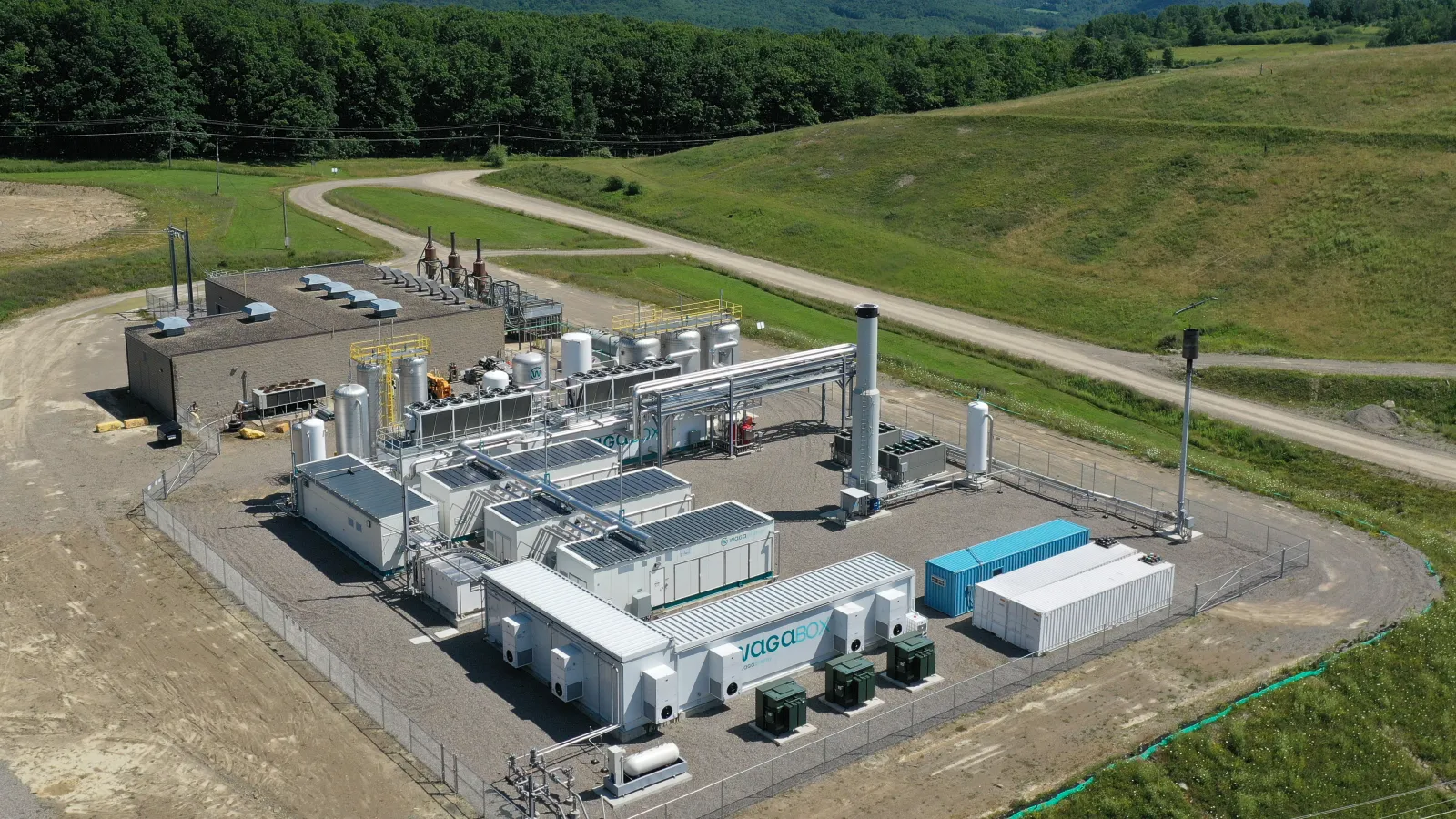
Casella Waste Systems and France-listed Waga Energy have begun operations at a renewable natural gas (RNG) facility at the Hyland Landfill in Angelica, New York, marking the second of three joint projects the pair have brought online this year. The plant uses Waga Energy's patented WAGABOX purification system to upgrade landfill gas into pipeline-quality gas, injecting output directly into the Eastern Gas Transmission and Storage network.
The Hyland facility has 3,000 standard cubic feet per minute of installed processing capacity, enabling it to produce up to 610,000 MMBtu, roughly 180 gigawatt-hours, of renewable gas annually. That makes it one of the largest single units in Waga Energy's US portfolio, which spans 36 operating plants across France, Spain, Canada and the United States, representing more than 6.5 million MMBtu of installed annual capacity. A further 19 units are under construction globally.
Waste infrastructure as energy asset
The deal structure is notable. Waga Energy funded and built the facility entirely with its own capital, and will own and operate it for 20 years; Casella and Waga share revenue from RNG sales. That model, an energy-technology company deploying balance-sheet capital into a waste operator's estate, reflects a broader shift in how landfill owners are monetising methane liabilities. For Casella (Nasdaq: CWST), a regional solid waste business operating primarily across the eastern United States, the Hyland project is the second of three RNG plants to come online this year, following the Chemung County facility.
The project is expected to avoid 47,000 tonnes of CO2-equivalent emissions annually, measured against US EPA standards for landfill gas energy. It is also expected to qualify for incentives under the Inflation Reduction Act, which has made US landfill-gas-to-RNG projects significantly more attractive to European energy-technology firms seeking dollar-denominated returns alongside IRA tax credits.
Cross-sector read-across: waste, energy and the IRA capital stack
The convergence angle here is capital allocation, not technology novelty. Waga Energy's model, French-listed, EPA-regulated, IRA-eligible, illustrates how the US clean-energy subsidy regime is pulling European clean-infrastructure capital across the Atlantic. The IRA's production tax credits for RNG and biomethane have created a dollar-cost-advantaged entry point for non-US operators willing to absorb construction risk in exchange for long-dated contracted revenue. That dynamic is now structurally similar to what happened in offshore wind a decade ago, when European utilities began acquiring US coastal lease rights.
For macro investors, the Casella-Waga model is also a signal about the next layer of the energy transition: the decarbonisation of gas grid infrastructure itself, not just electricity generation. As the EU accelerates biomethane mandates under its REPowerEU programme, and as the US IRA anchors domestic RNG economics, the addressable market for landfill-gas upgrading is becoming a transatlantic capital story. Waga Energy's 19 units under construction worldwide suggest the company is scaling ahead of that demand curve.
The broader implication for cross-sector strategists is the convergence of waste management, gas grid infrastructure, and clean-energy finance into a single asset class. Landfill operators like Casella are effectively becoming energy producers; energy-technology firms like Waga are effectively becoming infrastructure owners. The question for the next phase is whether that convergence attracts larger infrastructure funds, pension capital, sovereign wealth, that have historically avoided waste-sector complexity but are increasingly hungry for long-dated, IRA-backed cash flows in the energy transition space.