
Canada Bets on Nuclear Talent Pipeline to Power Its Energy Ambitions
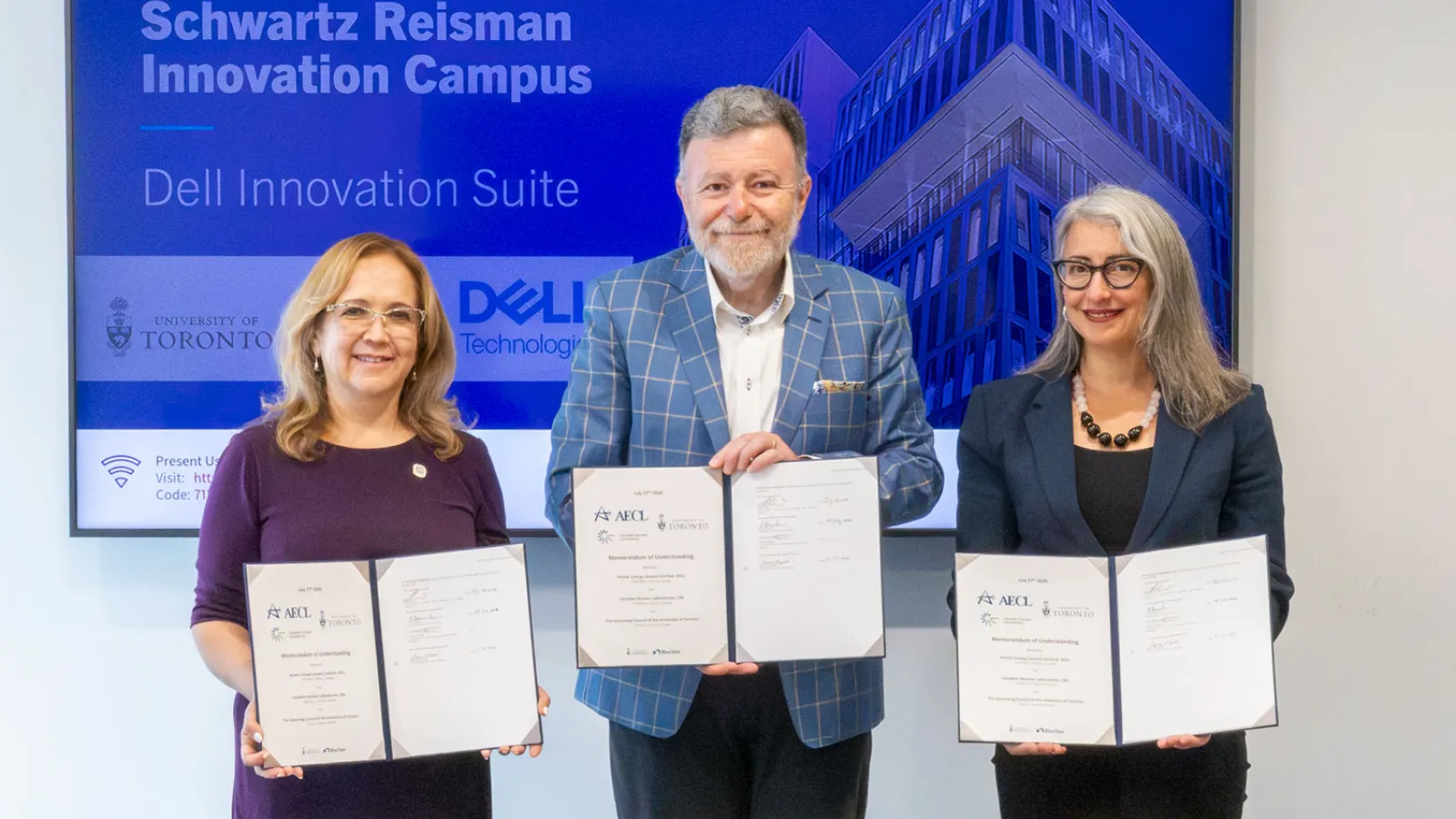
Canadian Nuclear Laboratories (CNL) and Atomic Energy of Canada Limited (AECL) have welcomed the University of Toronto as the tenth institution to join CNL's Academic Partnership Program, formalising the relationship at U of T's Schwartz Reisman Innovation Campus. The move is explicitly tied to Canada's freshly published federal Nuclear Energy Strategy, which calls for the construction of new large-scale and small modular reactors, expanded CANDU reactor exports, and the development of a national workforce capable of competing at the global level. The partnership signals that Canada's nuclear ambitions are moving from policy document to infrastructure and, critically, to the human capital required to deliver both.
The Academic Partnership Program, now in its fourth year, has already engaged more than 7,000 students across Canada through mentorship, research placements at the Chalk River Laboratories, and a competitive 16-week experiential learning programme. U of T's inclusion broadens the programme's disciplinary reach into materials science, engineering, business and social sciences, reflecting the recognition that building a nuclear industry requires more than physicists and reactor engineers. It requires project financiers, environmental scientists, social licence specialists and supply-chain professionals.
A Workforce Bet Underpinning a Broader Energy Pivot
The timing is not incidental. Canada's electricity demand is climbing sharply, driven by data centre proliferation, EV adoption and the electrification of industrial processes. Nuclear, which the federal government now explicitly frames as a climate-compatible baseload source, is being repositioned from legacy infrastructure to strategic national asset. The CNL-AECL academic pipeline is, in effect, a long-duration bet that Canada will have the technical workforce to build and operate the next generation of reactors before peak demand outpaces existing generation capacity.
"This is an incredibly exciting time for Canada's nuclear industry, as public and political interest in nuclear energy continues to grow, driven by climate targets and surging electricity demand, and supported by this ambitious new federal policy," said Dr. Amy Gottschling, AECL's Vice-President of Science, Technology and Commercial Oversight.
For U of T, the partnership supports the university's stated goal of elevating its nuclear programme, developing new courses and training tracks in nuclear technology, and opening student placement routes at Chalk River. Joint micro-credential courses aimed at both graduate students and practising industry professionals are also envisaged, indicating an intent to upskill the existing workforce rather than waiting a decade for a new graduate cohort to emerge.
Cross-Sector Convergence: Where Nuclear Meets the Digital Economy
The macro read-across extends well beyond Canada's borders. Globally, nuclear energy is being re-examined by governments and private capital alike as AI-driven data centre buildouts create electricity demand that intermittent renewables cannot reliably serve. Microsoft, Google and Amazon have each signed or announced power purchase agreements anchored to nuclear generation in the past 18 months. That pressure is accelerating interest in small modular reactors (SMRs), which several CNL partner universities are actively researching.
Canada's CANDU export IP, held by AECL, becomes a more commercially relevant asset in this environment. Countries seeking to diversify away from Russian and Chinese reactor technology are evaluating alternatives, and a credible national workforce pipeline is a prerequisite for any serious export proposition. The University of Toronto partnership, modest as a press release, is therefore a component of a broader sovereign-industrial strategy: build the talent stack domestically, then leverage it internationally.
For investors tracking the energy transition, the signal worth watching is not the academic partnership itself but what it presupposes: that Canadian federal capital is prepared to back nuclear at scale, and that tier-one research universities are now positioning nuclear as a career destination competitive with AI, fintech and biotech. If that narrative takes hold, the downstream effects on SMR project finance, uranium equities and clean-energy infrastructure funds could be material.