
Volatus Aerospace qualifies across all five Canada DDI drone streams
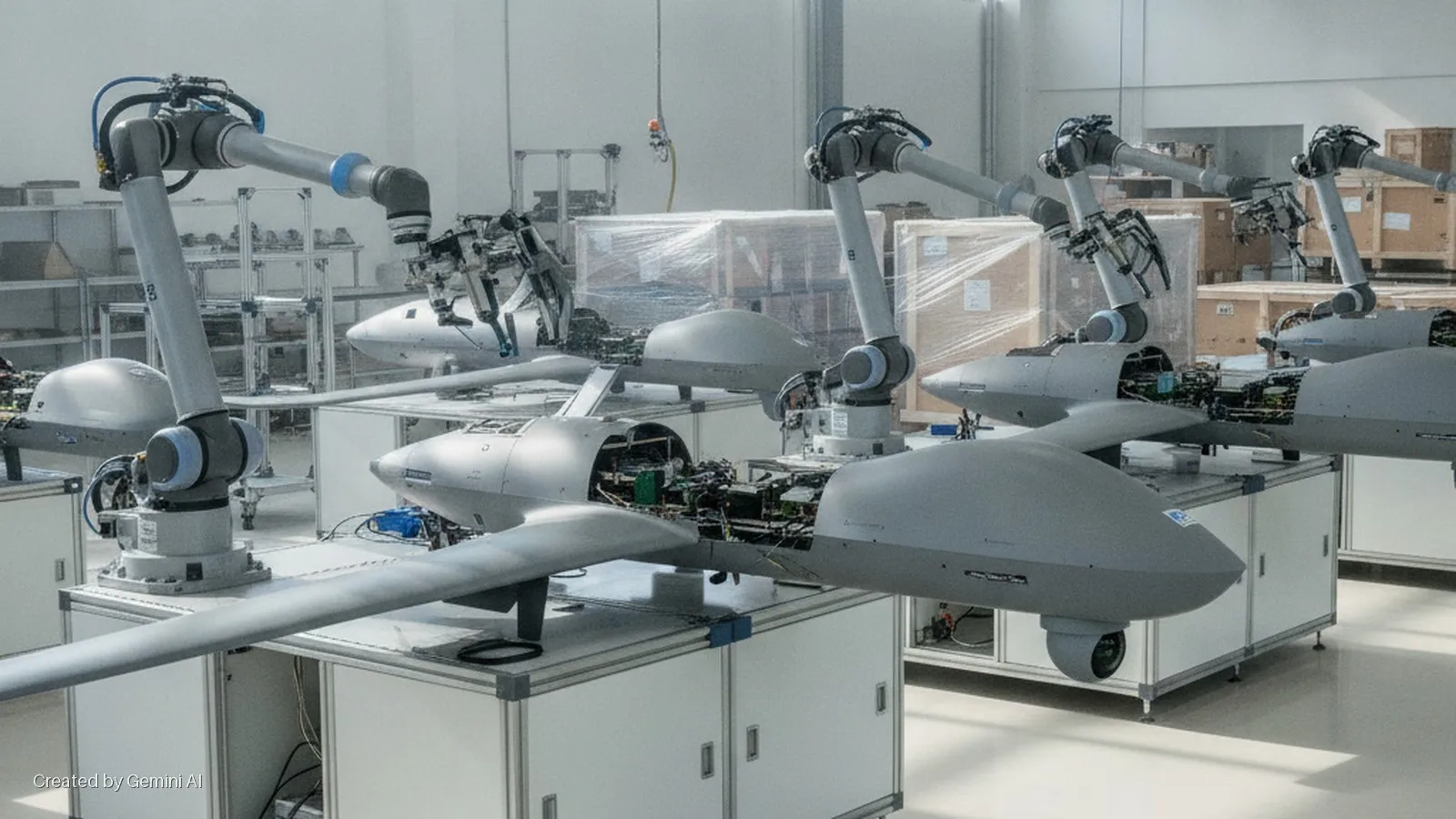
Volatus Aerospace, the TSX-listed Canadian defence and aerospace group, has secured pre-qualification across every stream of the Government of Canada's Defence Drone Initiative (DDI) Marketplace, positioning the Mirabel, Quebec-headquartered firm to bid on the full spectrum of uncrewed systems requirements issued to the Canadian Armed Forces and the Department of National Defence.
The DDI Marketplace spans five procurement streams: uncrewed and autonomous systems (UxS) and counter-UxS; communications and data systems; engineering and integration services; testing and training; and innovation and experimentation. Qualifying in all five is the equivalent of holding a master licence to compete across every capability layer the Canadian military is seeking to accelerate, rather than being confined to a niche sub-sector. The qualification follows Volatus' initial DDI selection, announced on 3 September 2026, and represents a broadening of the competitive scope available to the company.
Sovereign manufacturing as a strategic differentiator
Volatus is presenting its dual-site footprint as a structural advantage in a procurement environment increasingly shaped by sovereignty concerns. Its Innovation and Manufacturing Hub in Mirabel and its Operations Control Centre in Vaughan, Ontario, underpin what chief executive Glen Lynch describes as a "broad-based Canadian defence and aerospace platform." In Lynch's words, the full-stream qualification "positions us to compete not only for individual requirements, but also for opportunities requiring an integrated combination of aircraft, autonomy, engineering, systems integration, training and operational expertise."
That framing matters in today's defence procurement climate. The DDI Marketplace is explicitly designed as a streamlined mechanism to pull emerging technologies into the Canadian Armed Forces faster than traditional procurement cycles allow. For a mid-cap operator like Volatus (market capitalisation well below the tier-one primes), pre-qualification is the entry ticket that places it alongside larger competitors without requiring the company to win a single-contract bake-off first.
Cross-sector and geopolitical read-across
The DDI qualification has implications that extend beyond a single Canadian contractor's order book. Canada's move to formalise a pre-qualified drone supplier marketplace reflects a NATO-wide shift: allied governments are no longer content to source UAS capability ad hoc from a fragmented commercial market. The DDI model mirrors procurement experiments in the UK (the Defence and Security Accelerator) and Australia (the Advanced Strategic Capabilities Accelerator), each designed to compress the time between technology maturity and battlefield deployment.
For capital allocators tracking the defence-tech convergence, the more significant signal is the breadth of the DDI's five streams. Counter-UxS capability, in particular, sits at the intersection of drone hardware, electronic warfare, and AI-driven threat recognition, a cross-sector triad that is attracting sovereign wealth and institutional capital at pace across the Five Eyes alliance. Volatus' full-stream positioning means it can potentially integrate across that triad rather than supplying a single component.
There is also a supply-chain geography angle. Canada's insistence on pre-qualified Canadian suppliers for the DDI reflects anxiety about over-reliance on US and, indirectly, Asian drone hardware, a concern that has accelerated since the tightening of US export controls on certain dual-use UAS components. Domestic manufacturing capability, precisely what Volatus is emphasising with its Mirabel hub, is becoming a harder currency in allied procurement than raw technical performance alone.
Investors should note the standard caveat embedded in the release: DDI pre-qualification is a licence to compete, not a contract award. Revenue timing and contract scope remain contingent on future Canadian government requirements and competitive bidding outcomes. The company has not disclosed a pipeline value or a revenue forecast tied to the marketplace. That said, for a company of Volatus' scale, full-stream DDI qualification represents a meaningful de-risking of the business development cycle and a credible signal to allied market customers watching how Canada's drone sovereignty agenda matures.