
Parsons wins $184m Navy intelligence contract for tactical edge
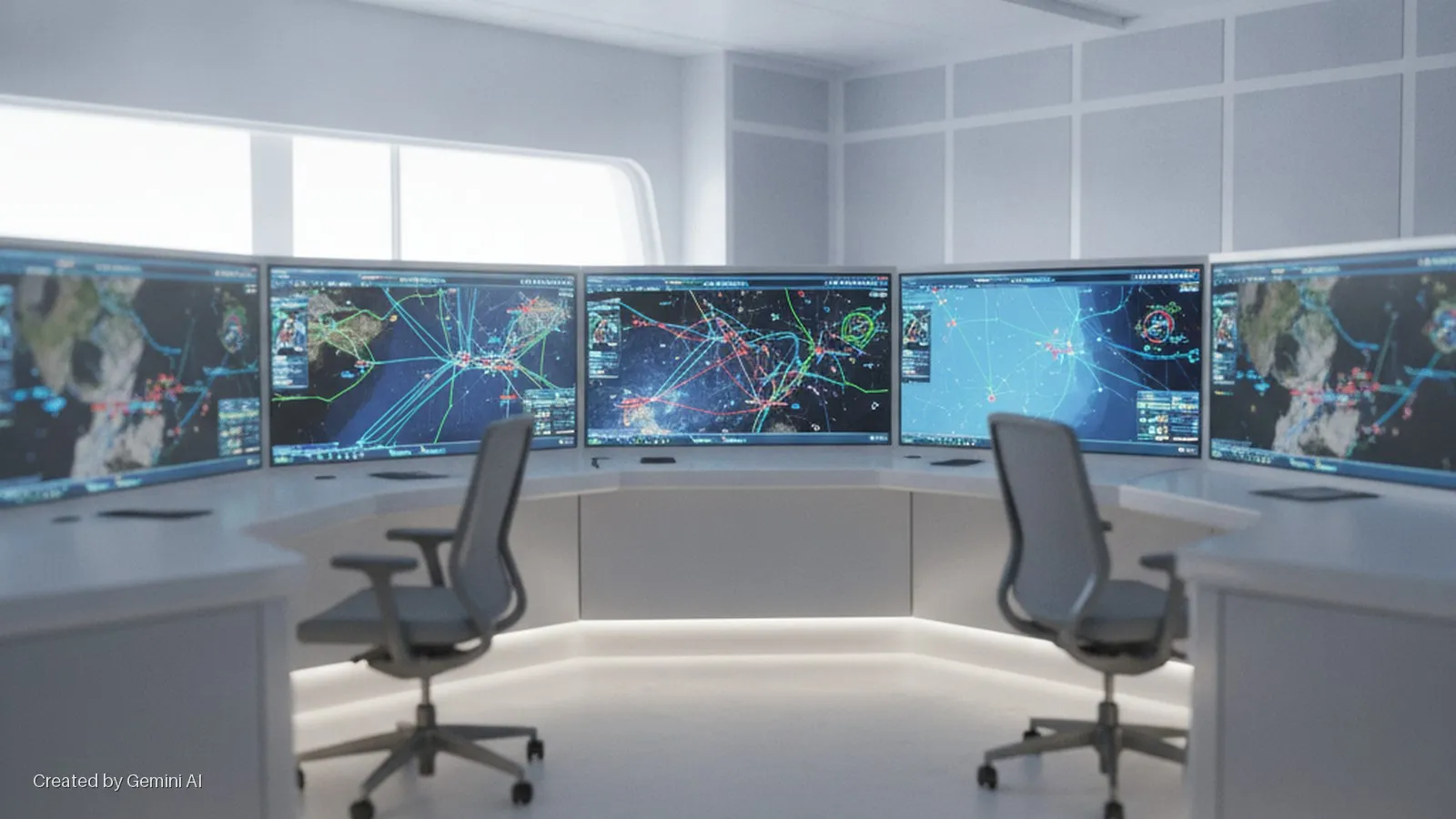
Parsons Corporation (NYSE: PSN) has been awarded a $184 million ceiling-value, indefinite-delivery/indefinite-quantity (IDIQ) contract to support the US Department of the Navy's Intelligence Carry-On Program (ICOP), the Chantilly, Virginia-based defence and infrastructure contractor announced on 15 June 2026.
The contract covers a broad scope of work centred on rapid capability delivery for warfighters operating in contested environments. ICOP itself is a ruggedised, portable workstation designed to improve battlespace awareness and operational readiness for military personnel at what the Pentagon calls the "tactical edge," the forward-deployed positions where connectivity, speed, and situational intelligence are most acutely tested.
Tactical edge hardware meets intelligence software
The award reflects a structural trend in US defence procurement: the migration of intelligence processing from fixed command-and-control facilities toward portable, operator-held platforms. The underlying logic is straightforward. Adversary electronic warfare capabilities have advanced rapidly enough that fixed infrastructure represents a liability in high-intensity conflict. Ruggedised carry-on systems let operators maintain intelligence feeds and battlespace pictures without dependence on rear-echelon networks.
Mike Kushin, Parsons' President of Defence and Intelligence, said the award "reflects the trust our customer places in Parsons to deliver adaptable, mission-focused solutions" and that the company is "proud to support capabilities that help operators perform more effectively at the tactical edge." The language is broadly promotional, but the contract structure carries its own signal: a single-award IDIQ with a $184 million ceiling suggests the Navy is consolidating this capability under one vendor rather than spreading it across a competitive task-order pool, which implies higher confidence in Parsons' delivery track record.
Convergence angle: defence-tech as an AI-ml and cybersecurity forcing function
The ICOP contract sits within a wider industrial dynamic that Disrupts readers in capital allocation roles will recognise. Portable intelligence platforms of this type increasingly depend on embedded AI inference for signal processing, pattern recognition, and threat prioritisation. The ability to run those workloads on ruggedised hardware, in degraded-network conditions and without cloud connectivity, is now a core design constraint that is pulling defence procurement directly into the edge-AI and semiconductor supply-chain debates.
That dependency has material implications beyond the Navy programme itself. Ruggedised edge-compute hardware capable of operating in denied or contested environments draws on the same advanced chip architectures, hardened memory systems, and thermal-management designs being commercialised for autonomous vehicles and industrial IoT. Defence contracts of this type therefore function as an indirect subsidy to the broader edge-compute supply chain, de-risking volumes for component manufacturers that serve both military and commercial markets.
From a capital-allocation perspective, Parsons' win also illustrates the durability of US defence-technology spending even as domestic discretionary budgets face pressure elsewhere. The company, which also holds positions in cyber, electronic warfare, space, and missile defence, is positioned as a multi-domain integrator at a moment when the Pentagon is explicitly prioritising all-domain connectivity. Investors tracking the defence-technology convergence with AI infrastructure will note that IDIQ contracts of this size tend to anchor a contractor's revenue visibility for three to five years, irrespective of broader federal budget turbulence. Parsons' backlog and contract structure give it a degree of insulation that pure-software defence-tech peers without established government clearance relationships cannot easily replicate.
The broader question for cross-sector analysts is how quickly the AI inference architectures being optimised for commercial edge deployments will find their way into ruggedised military form factors, and whether the defence procurement cycle is fast enough to keep pace with the underlying technology curve. That gap between commercial AI capability and fielded military hardware remains one of the defining tensions in defence-technology investment today.