
Qnetic builds world's largest flywheel test cell in Shanghai
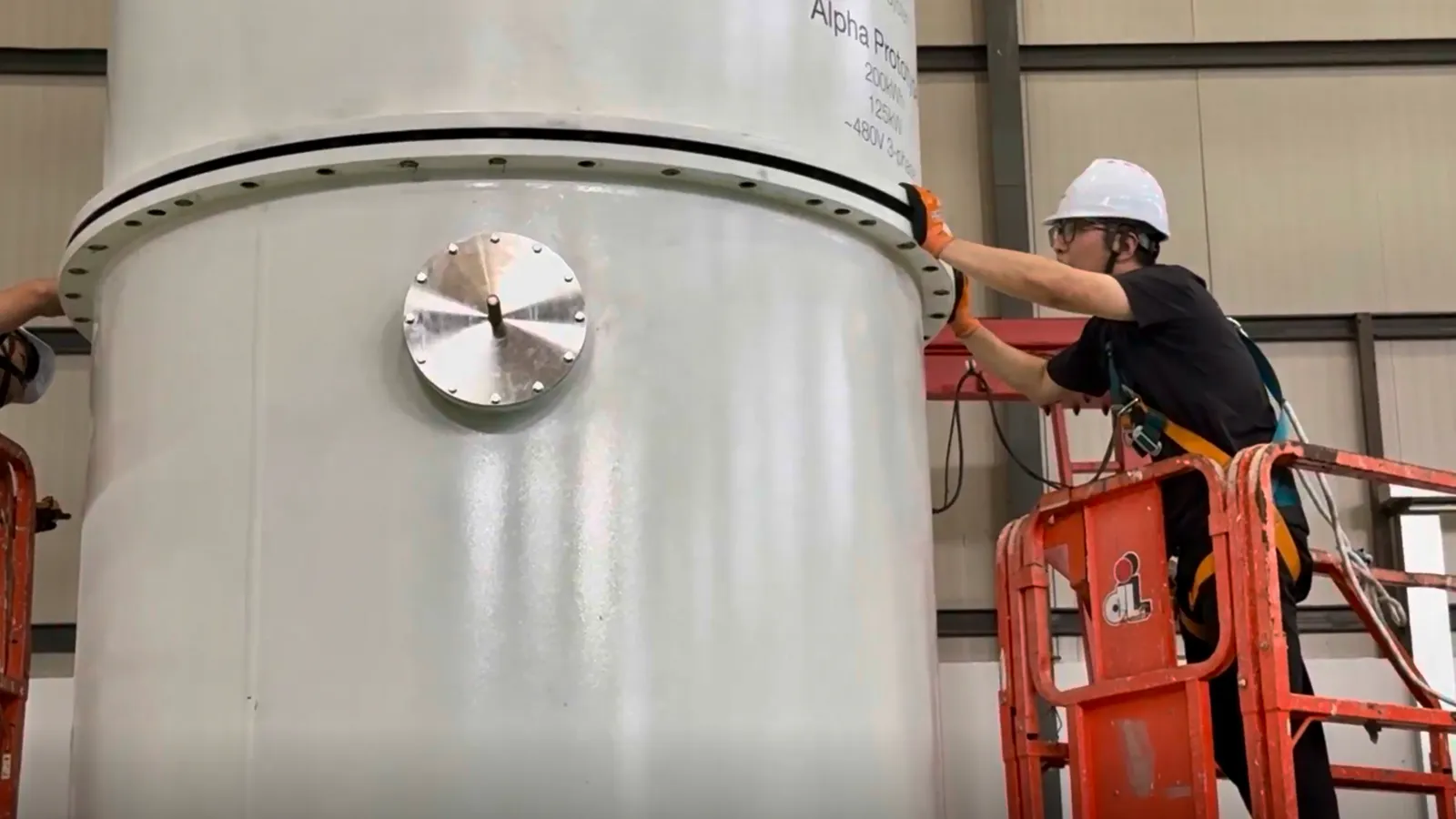
Qnetic, a New York-headquartered energy storage company, has broken ground on what it describes as the world's largest dedicated flywheel test cell, sited at its Technology Centre in Shanghai, while simultaneously beginning assembly of its first full-scale Pulsar prototype. The twin milestones push the company from R&D into the commercialisation corridor at a moment when grid operators, hyperscale data centre operators, and renewable developers are all hunting for storage solutions that sidestep the supply-chain and safety constraints of lithium-ion chemistry.
The Pulsar system stores 200 kWh by spinning a rotor at high speed inside a vacuum enclosure. When the grid calls for power, the rotating mass drives a generator to discharge energy with no electrochemical reaction involved. The practical upshot: no thermal-runaway fire risk, no dependence on lithium, cobalt, or manganese, and a design life measured in decades rather than the five-to-ten-year replacement cycles typical of battery installations. Qnetic says the system is targeting data centres, renewable time-shifting, grid balancing, microgrids, and industrial resilience, a deliberately broad commercial canvas.
Shanghai test cell: validating performance at scale
The test facility represents what Qnetic characterises as a "million-dollar-plus" investment in foundation and containment engineering. An unnamed partner firm specialising in spin-test technologies noted the unusual scope of the challenge: "In terms of scale, Qnetic's flywheel system involves significantly more stored energy than what we typically handle in spin testing. The scale and scope of the containment challenges are therefore quite unique and in a class of their own." Technical validation testing of the Pulsar prototype is planned once the facility reaches completion.
CEO Michael Pratt framed the moment as a transition rather than a product launch. "Building the world's largest flywheel test cell while bringing our first Pulsar system into validation demonstrates both the maturity of our technology and our confidence in its commercial potential," he said. Qnetic is concurrently running a retail crowdfunding round via DealMaker, which widens the investor base beyond institutional capital but also signals the company has not yet secured a large anchor round from a strategic or sovereign-wealth backer.
Convergence angle: storage as infrastructure, not just energy
The Qnetic story sits at the intersection of two fast-moving capital themes. The first is the data centre power crisis. Hyperscale operators and colocation providers are projecting enormous load growth from AI workloads, and regulators in several markets are pushing back on new grid connections. Long-duration, high-cycling storage that can flatten demand peaks without relying on rare-earth supply chains is emerging as a genuine infrastructure requirement, not a green-credentials add-on. Flywheel technology, largely sidelined by the cost curve of lithium-ion over the past decade, is re-entering the frame precisely because its economics improve relative to batteries as cycling requirements intensify.
The second theme is critical-minerals risk. Western governments and multilateral institutions have spent the past two years publishing strategies to de-risk battery supply chains from Chinese-controlled lithium and cobalt refining. A kinetic storage technology that bypasses that dependency entirely carries strategic appeal that extends beyond energy economics. It is not yet clear whether Qnetic has engaged with any of the US Department of Energy's long-duration storage programmes or allied procurement pipelines, but the technology profile fits squarely within the stated objectives of several such initiatives.
For capital allocators tracking the energy-infrastructure convergence, the near-term test is whether Qnetic's Shanghai validation results translate into a commercial pilot with a named utility or hyperscale customer. The crowdfunding route suggests the company is building public visibility ahead of that anchor deal rather than following it. The broader flywheel market remains lightly populated at commercial scale, giving first-movers a credibility window, but the window depends on delivering validated performance data that institutional buyers will scrutinise closely before committing grid-connected capacity.