
Middle East Banks Leapfrog Legacy Systems to Pioneer Cloud & AI
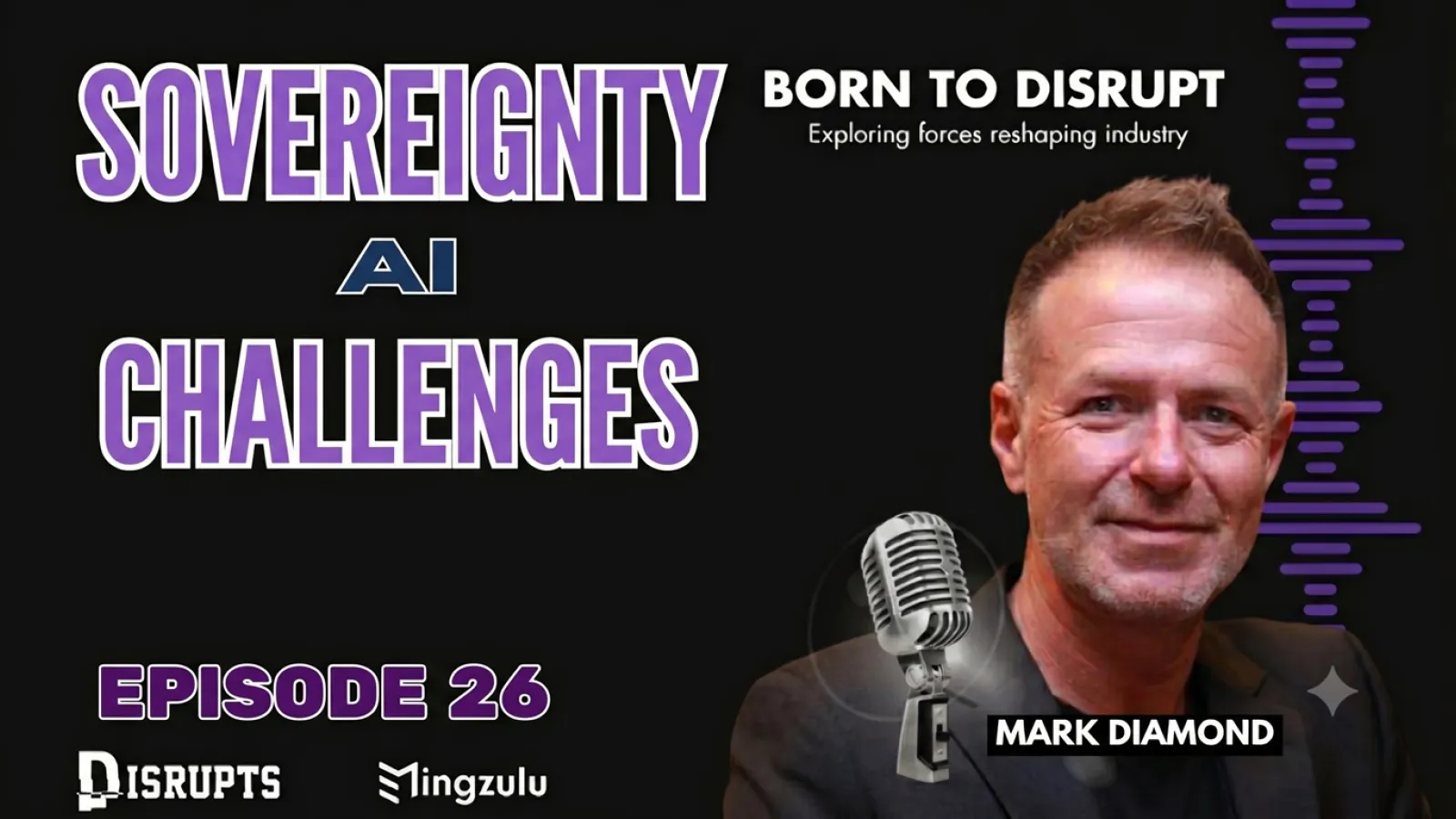
The Middle East financial sector is rapidly outstripping its Western counterparts by bypassing traditional core banking legacies in favor of cutting-edge sovereign cloud infrastructures and agentic artificial intelligence systems. This strategic acceleration is shifting the focus from digitizing old banking frameworks to building resilient, automated ecosystems from scratch.
Speaking on the Born to Disrupt podcast, veteran technology executive Mark Diamond, founder of The Qaspar Group and field chief technology officer for the Middle East and Africa at Oracle, outlined how regional shifts in regulation, political ambition, and technological trust are fueling an unprecedented wave of digital transformation across the Gulf Cooperation Council.
The concept of leapfrogging has transitioned from an industry buzzword into a concrete operational reality for regional financial institutions. Diamond noted that while major Western banks remain shackled to decades of core banking heritage and mainframe architectures that predate the internet, Middle East institutions benefit from a younger corporate history. The immense cost and existential risk of replacing core legacy frameworks in mature markets mean Western innovation is frequently bolted onto aging foundations. In contrast, the cultural and governmental dynamics in the Gulf encourage complete system modernizations, heavily reinforced by state-backed capital injections and comprehensive roadmaps like Saudi Vision 2030 and the digital strategies of the United Arab Emirates.
Operational resilience and data sovereignty have emerged as paramount concerns for regional chief information officers navigating complex geopolitical landscapes. Historically, regulatory bodies enforced rigid data sovereignty laws that restricted information entirely within national borders. However, Diamond explained that the region has reached an important inflection point, driven by a growing recognition of the need for robust disaster recovery during external crises. Regulatory mindsets are shifting toward allowing financial institutions to establish external data repositories outside their immediate borders to ensure uncompromised utility operations. This evolution marks a significant departure from previous isolationist policies, reflecting a pragmatic strategy to keep critical banking infrastructure alive regardless of localized disruptions.
This changing perspective requires a deeper understanding of where data physically resides and who manages it. Diamond highlighted the compliance challenges posed by the United States Cloud Act, which empowers foreign law enforcement to compel technology firms under its jurisdiction to provide data access, regardless of physical server locations. For a regional financial institution utilizing a global hyperscaler, this creates jurisdictional vulnerabilities. Consequently, the definition of a true sovereign cloud is moving beyond physical buildings to scrutinize the operational phase of data management. The industry is beginning to question whether sovereign clouds require regional citizens or autonomous intelligence agents to operate securely.
As financial architecture becomes more sophisticated, executive structures are also transforming. The rise of the chief AI officer across regional enterprises represents a direct evolution of the chief data officer rather than an entirely new corporate silo. Diamond emphasized that without comprehensive, clean, and well-labeled data lakes, any corporate artificial intelligence strategy is fundamentally non-viable. Instead of locking technology away in a legacy IT department, forward-thinking organizations are positioning the chief AI officer as the strategic epicenter of the business operating model, enabling financial institutions to transition directly into deploying highly integrated, automated solutions across multiple business divisions.
The true value of this architectural evolution manifests in the deployment of agentic AI, which utilizes autonomous software agents to manage complex processes without constant human intervention. In practice, these specialized digital assistants can continuously scan IT infrastructure to oversee risk analytics, monitor transaction thresholds, and execute automated failover procedures. Diamond, drawing on his past experience leading large-scale regional payments platforms at Network International and core transformations at alrajhi bank, commented that maintaining expansive physical network operation centers with human operators is becoming obsolete. By shifting to automated AI run-as-a-service structures, enterprises can dramatically reduce turnaround times and insulate systems from human error.
To execute this ambitious technological roadmap, regional leaders must address unique talent dynamics and rigorous governance structures. While many institutions aggressively recruit younger developers, Diamond advised that a successful operating model requires a multi-generational workforce that balances youthful innovation with veteran problem-solving wisdom. Experienced technology professionals are essential for managing accountability surrounding automated machine learning decisions. As agentic systems begin handling automated payments, credit assessments, and fraud alerts, executive leadership must remain capable of clearly explaining those algorithmic choices to regulatory authorities. Ultimately, establishing robust, transparent governance at the heart of AI deployment ensures that accelerated innovation does not compromise operational compliance or institutional trust.