
drivebuddyAI patents lane detection bridging autonomy and insurance
Roadzen's fleet-safety subsidiary drivebuddyAI has been granted a patent for a real-time automotive lane detection system, positioning the Nasdaq-listed insuretech group at a precise junction where autonomous driving hardware and insurance underwriting data converge. The announcement, timed to the company's showcase at InCabin USA 2026 in Detroit, signals that the race to own the sensor-to-policy data stack is intensifying.
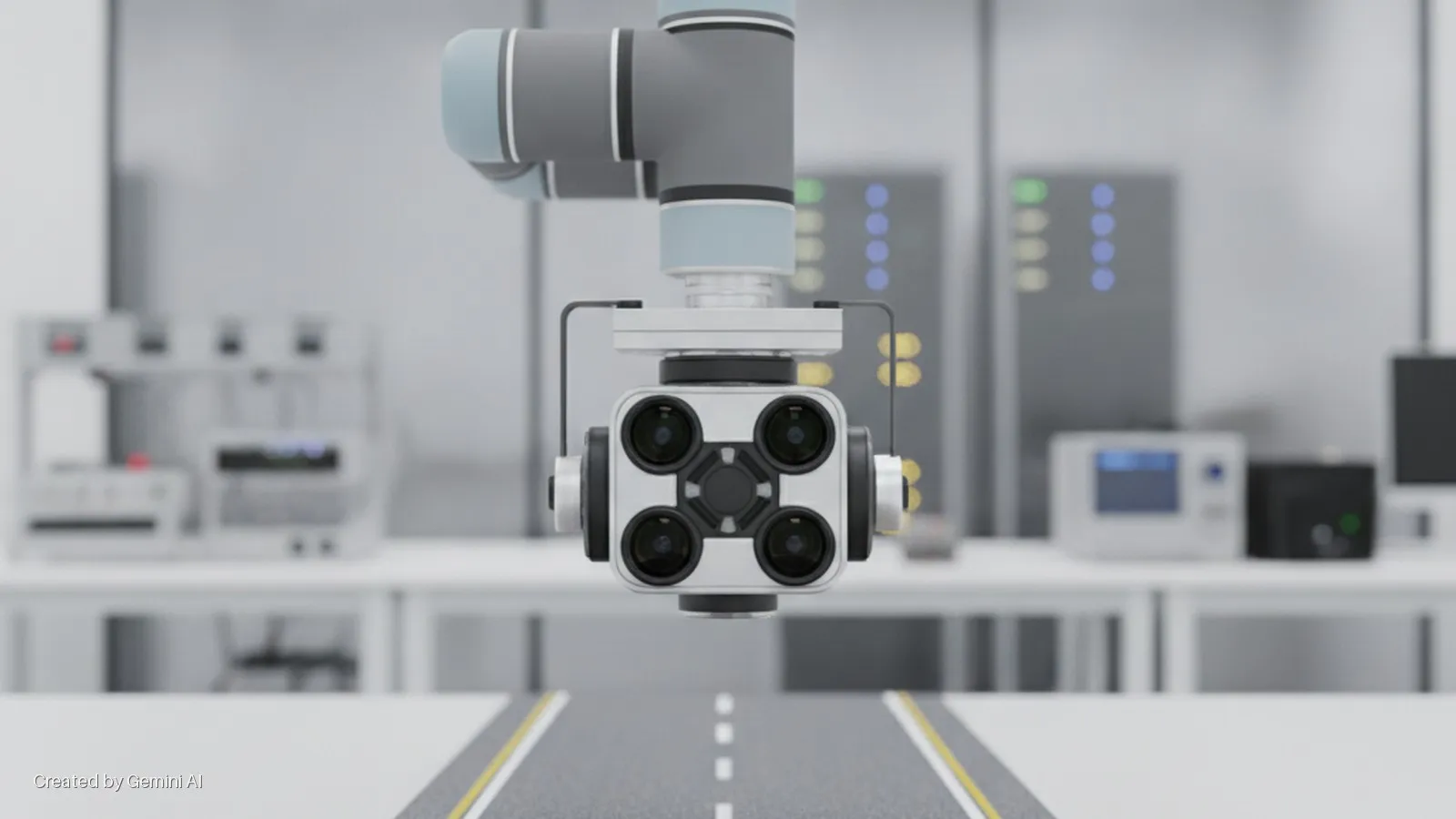
The patented system centres on what the company calls a Lane Region of Interest (ROI) Detection architecture. An AI evaluation module scores incoming video frames for lane visibility, geometry, vehicle positioning and lighting quality, discarding low-confidence frames before they can generate false alerts. Parameters adapt dynamically by vehicle class, a detail that matters commercially: fleet operators running mixed assets, passenger cars, heavy goods vehicles, buses, have historically needed separate systems for each. A dual-camera setup combines road-facing and driver-facing feeds into a single AI pipeline, enabling simultaneous environmental and driver-state monitoring.
Regulatory credentials as a market moat
Where the patent is notable for its engineering, the company's regulatory footprint may prove the more durable competitive advantage. drivebuddyAI says it is the only platform validated under India's AIS-184 standard and under both EU GSR 2144 and Euro NCAP, dual credentials that reduce the compliance burden for OEMs and Tier-1 suppliers targeting markets as different as Mumbai and Munich. Nisarg Pandya, Founder and CEO of drivebuddyAI, framed the company's training methodology as a deliberate choice: "India has some of the most complex and demanding driving conditions in the world. Building AI that performs reliably there means solving problems that most autonomy stacks haven't encountered yet."
That point carries strategic weight beyond road safety. AI models trained predominantly on well-marked US or European highways routinely struggle with the edge cases that define driving in high-density, infrastructure-variable markets. A validated system that handles monsoon conditions, unmaintained rural roads and high-density mixed traffic involving two-wheelers and pedestrians represents a dataset asset with export value to any autonomy programme targeting the Global South.
The insuretech read-across
For Disrupts readers tracking capital flows across the autonomy and insurance sectors, the Roadzen story illustrates a convergence dynamic that is still underappreciated. Traditional motor insurers price risk retrospectively, using claims history and telematics pings. The next competitive frontier is prospective risk scoring: understanding, in near-real time, how a vehicle is being driven, in what conditions, and how close it is operating to the boundaries of its ADAS envelope.
Accurate lane-boundary intelligence feeds directly into that prospective model. A fleet insurer with access to granular lane-departure frequency, near-miss events and adverse-condition exposure can price risk more precisely than any competitor relying on aggregated telematics. Rohan Malhotra, Founder and CEO of Roadzen, made the commercial logic explicit, describing accurate lane intelligence as "foundational to safer fleets, better risk data, and the autonomy systems that will define the next generation of mobility."
The broader investor landscape reflects growing appetite for companies that straddle both sides of this boundary. Embedded insurance platforms, ADAS data providers, and fleet telematics firms have all attracted sovereign and institutional capital over the past 18 months, as insurers seek to acquire the sensor-layer data they cannot build organically. Roadzen's strategy of building the safety-validation layer first, accumulating regulatory credentials and real-world training data before the insurance pricing models fully arrive, positions it as a potential data licensor or acquisition target as larger carriers seek proprietary driving-condition datasets.
The system is described as architecturally compatible with Level 2 and Level 3 autonomous driving implementations, with the company saying the design is intended to scale toward higher autonomy levels as regulatory frameworks evolve. That forward-looking framing should be read alongside the cautionary language in Roadzen's SEC filings: the path from ADAS compatibility to full autonomy integration remains subject to regulatory, commercial and technical variables that no single patent resolves.