
Bluevine: Banking the Founders Building US Companies From India


Bluevine, the US digital business banking platform for small and medium-sized businesses, has strengthened its focus on India to support India-origin businesses operating in or expanding to the US, backed by local investment across engineering, product, operations, risk and compliance.
Aditya Narula, general manager for India and general manager of global lending and credit at Bluevine, answered The Fintech Times' written questions on the India to US corridor and what cross-border SMB banking has to get right.
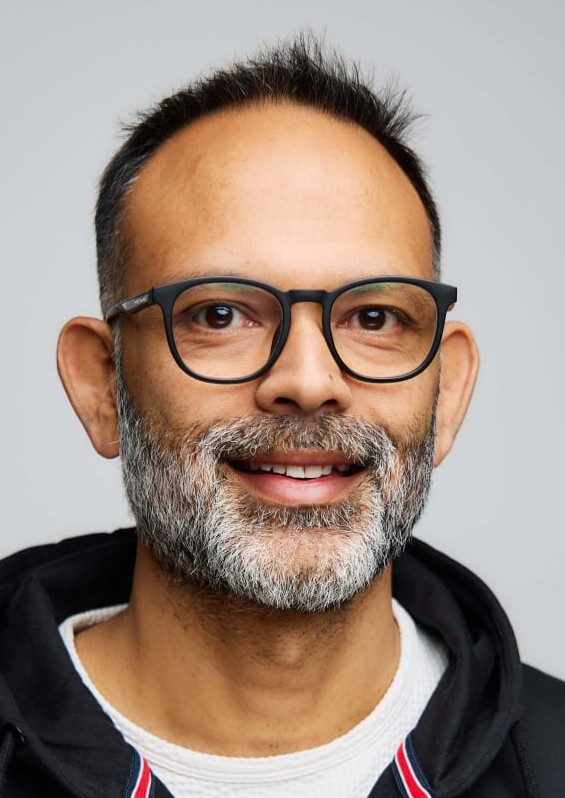
general manager,
Bluevine
Bluevine focuses on business banking for US SMBs and has been building support for India-origin businesses operating in or expanding to the US. What specific problems are those cross-border businesses hitting with conventional banking?
Conventional banking assumes the business and the owner sit in the same country. That assumption breaks down for how modern SMBs actually operate. Today, an Indian founder may incorporate in the US, serve US customers, hire employees, and raise capital there while continuing to build the company from Bengaluru or Mumbai. Yet accessing US banking has traditionally involved hurdles such as in-person branch visits, requirements for US addresses, SSNs, or other US-specific documentation, lengthy onboarding, and managing separate providers for banking and cross-border payments.
For a founder, that's more than a banking problem; it's time taken away from building the business. Every additional document, manual process, or week spent establishing financial infrastructure is time not spent acquiring customers, hiring talent, or bringing products to market. Our goal is to make everything seamless. Eligible international owners of US businesses can remotely open and manage a US business checking account through a digital-first experience, giving them access to the financial infrastructure they need to operate and scale in the US without unnecessary complexity.
What does a digital-first banking stack need to get right to make cross-border operations genuinely simpler for a small business, rather than just moving the friction elsewhere?
Access, payments, treasury, and day-to-day financial management need to live in one place. Too many businesses still juggle separate providers for banking, payments, FX, treasury, and expense management, and that patchwork becomes its own tax on growth. Cross-border payment platforms and business banking platforms solve different problems. Moving money is one piece of running a business. Founders need a primary banking relationship that covers checking, payments, cash management, and financial operations under a single roof.
How do you weigh the speed of onboarding against fraud and compliance controls when serving SMBs that operate across two regulatory regimes?
Speed and compliance aren't competing priorities for us. Good technology makes compliance faster and less visible to the customer, not less rigorous. Cross-border businesses need extra verification around identity, beneficial ownership, and business legitimacy. The answer isn't fewer controls; it's smarter automation of the controls that already exist. Bluevine's onboarding uses integrations such as with DigiLocker and Aadhaar as one of the ways to verify Indian business owners quickly, without lowering the bar for US compliance.
India is particularly interesting because we have invested locally across engineering, product, operations, risk, compliance, customer support, and go-to-market teams. That local presence helps us better understand Indian founders while maintaining the standards expected of a US business banking platform.
Where are you seeing the most demand, and how does the India to US corridor compare with your other cross-border flows?
India is one of our fastest-growing international markets and a core part of Bluevine's global expansion. Demand is strongest from SaaS companies, AI startups, IT services firms, digital agencies, and other export-led businesses serving US customers. Many of these founders are incorporated in the US earlier than previous generations did, simply because that's where their customers, partners, and investors already are. We're seeing roughly 5,000 India-origin US entities formed every month, and for many VC-backed founders, a US entity is now a Day 0 condition of the term sheet, not a later-stage decision.
What sets the India-US corridor apart is that these businesses are global from the first day of incorporation. They need financial infrastructure built for that reality, not international expansion bolted on after the fact.
What role do embedded finance and partnerships play in your roadmap for SMB banking?
Partnerships matter because SMB financial needs go well beyond a bank account. A growing business needs incorporation services, accounting software, payments, payroll, tax, and credit, often all at once. Our job is to connect those pieces so founders spend less time managing financial complexity and more time building the business. We see the future of SMB banking as an ecosystem. The business banking platform remains at the centre, while strategic partnerships and integrations extend its capabilities across the broader financial journey.
What is the biggest misconception larger banks have about serving SMBs?
That an SMB is just a smaller enterprise. It isn't. Enterprise banking was built for organisations with treasury teams, finance departments, and dedicated bankers. Most SMB founders are the CEO, CFO, salesperson, and operator, all in the same day. They don't need more products. They need fewer steps, faster decisions, and products that work together seamlessly. For an SMB, time saved is worth as much as money saved.
What is next for Bluevine over the next 12 months?
We are deepening the platform while expanding access for international business owners. As more businesses are built across borders from day one, there's a real opportunity to simplify how founders access and manage US financial infrastructure. That means evolving our banking platform, extending capabilities for international customers, and building out the partner ecosystem around them. The vision is simple: where a founder lives shouldn't decide the quality of financial infrastructure available to build a business in the United States. Our goal is for Bluevine to be the default banking layer for the India-US corridor, not just one option among many.