
Axipro's Ali Hayat on bootstrapping a compliance business


Axipro is a compliance and cybersecurity consultancy that takes companies through SOC 2, ISO 27001, GDPR, HIPAA and, increasingly, ISO 42001 certification, and then keeps them audit-ready between cycles. It was started with almost no money, has never raised outside capital, runs fully remote and now supports more than 300 clients across the US, the UK, Europe and the Middle East.
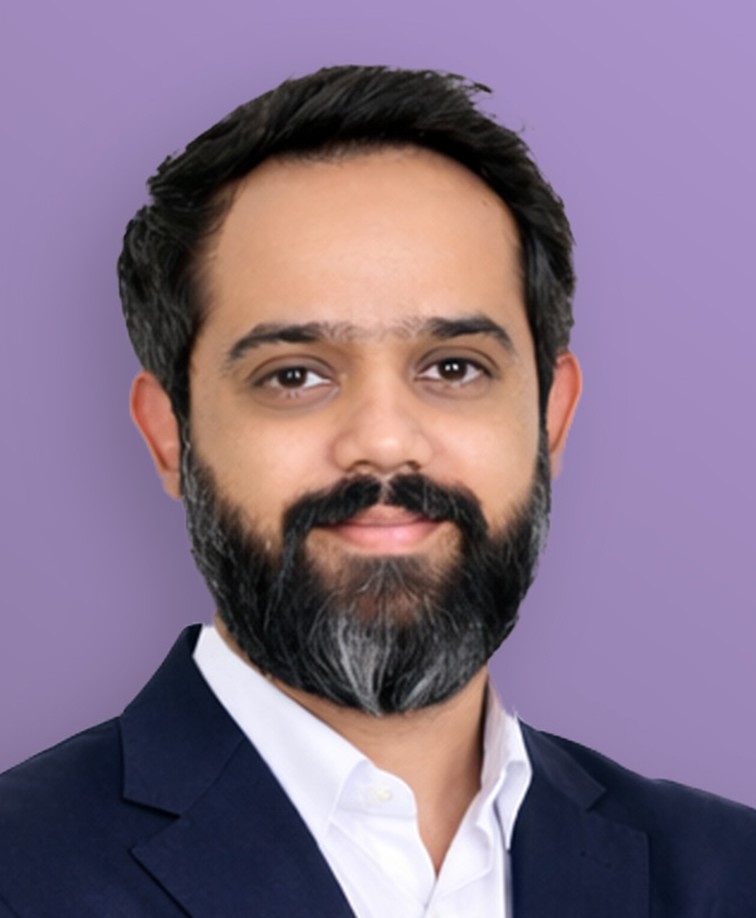
Founder & CEO,
Axipro
Its founder and chief executive, Ali Hayat, is a mechanical engineer by training who spent a decade in safety-critical oil and gas roles before working as a senior auditor. He told Disrupts what carried across from the plant to the audit, why bootstrapping turned from a necessity into an advantage, and where he sees businesses least prepared as compliance, cybersecurity and AI governance converge.
Most of Axipro's clients are SaaS and technology businesses that have reached the point where an enterprise customer will not sign without a SOC 2 report or an ISO certificate. “Compliance has suddenly become a sales blocker,” Hayat said, “and they need someone who has actually sat on the auditor's side of the table to get them through it properly and quickly.” The firm works alongside platforms such as Drata and Vanta and with audit firms, so that the tooling, the implementation and the audit fit together rather than running as three separate projects.
Hayat's route into compliance ran through quality, health, safety and environment roles at SABIC in Jubail, on Aramco projects, and with ADNOC and TotalEnergies in the UAE. “Working in oil and gas taught me that a procedure nobody follows is more dangerous than no procedure at all, because people trust it,” he said. “On a plant, the permit-to-work form matters much less than whether the valve is isolated before someone reaches into the pipe. Information security should ask the same thing about every control, and that question tends to disappear when compliance turns into box-ticking.”
Before founding Axipro he was a senior auditor at Insight Assurance, where, as he put it, companies would try to show him something that looked like security and he would try to find out what was really there. The lesson he took from safety-critical work was that risk is managed through discipline and repetition, and that last-minute effort rarely holds up. “We build client programmes so the controls still work on an ordinary Tuesday in March, months after the audit.”
Bootstrapping by necessity, then by choice
Axipro was not bootstrapped on principle. “When my child was born in 2022 I had about $200 to my name, so Axipro had to pay for itself from the first client, and each new hire had to wait until revenue could cover them,” Hayat said. Over time he came to see that as an advantage: with clients as the only people funding the company, any decision can be judged by whether it improves their audit outcome.
The cost has been speed. A funded competitor can hire ahead of demand, and Axipro cannot, so growing past 35 people has meant choosing each hire carefully and automating work a larger firm would throw headcount at. “What we gain is that nobody is pushing us toward a valuation,” he said. “Clients can usually tell when a firm needs to close them this quarter, and we have the freedom to care about where they'll be in three years.”
Running the business fully remote, with people across the Middle East, Europe, South Asia and Southeast Asia, means work often moves around the clock. Hayat's answer is that quality cannot depend on who happens to be in the office. Each framework has a standard methodology, and the firm's GRC lead reviews work before it goes in front of an auditor. “Because much of our team comes from audit and practitioner backgrounds, people know what ‘good enough for an auditor’ looks like, and it's higher than most clients expect,” he said. The discipline that makes a remote team work, clear ownership, written documentation and doing what you said you would do, is, he noted, exactly what an information security management system demands. “We try to run Axipro the way we'd tell a client to run theirs.”
Where businesses are least prepared
Asked where companies are most exposed as compliance, cybersecurity and AI governance converge, Hayat pointed to AI. “Most companies we speak to have employees using AI tools every day, often with customer data, and no policy covering it at all,” he said. “Leadership thinks they don't ‘do AI’ because they haven't built a model, while their teams are pasting contracts and code into chatbots.” Frameworks such as ISO 42001 and regulation such as the EU AI Act are, in his view, arriving faster than most governance programmes can adapt, and companies that wait for a customer or a regulator to ask will be scrambling.
The deeper mistake, he argued, is treating each framework as a separate project: SOC 2 one year, ISO 27001 from scratch the next, then GDPR, then AI governance, each with its own spreadsheets and consultants. “These frameworks overlap heavily. If you build one well-run set of controls and map everything to it, each new requirement becomes an extension rather than a rebuild. Businesses that understand that spend far less and are far more secure.”
Axipro's plan is to go deeper rather than wider: more AI governance and ISO 42001 work, continuous compliance services that keep clients audit-ready all year, and growth in the markets where it already has subsidiaries, in the US, the UK and Bahrain. Hayat has also begun angel investing and is looking at start-up opportunities in the Gulf.
His advice to another founder weighing up bootstrapping in a regulated market is that such markets reward it, because trust compounds slowly and cannot be bought. “You won't grow as fast as a funded competitor in year one, but you'll own every relationship and every decision,” he said. “Once you accept your limits, you can go beyond them. I started with very little, and knowing exactly what I couldn't do yet is what forced me to find the people, the partners and the systems that got us here.”