
BSA LAW's Shamma Al Falahi on the UAE's tax reset for tech firms


The UAE's federal corporate tax regime has moved from announcement to annual filing cycle, and for technology and financial services businesses that operated for years without a domestic tax obligation, the adjustment has been as much operational as financial.
Shamma Al Falahi, Partner and Head of Tax at BSA LAW, advises businesses on that transition. She says the headline rate was never the hard part.
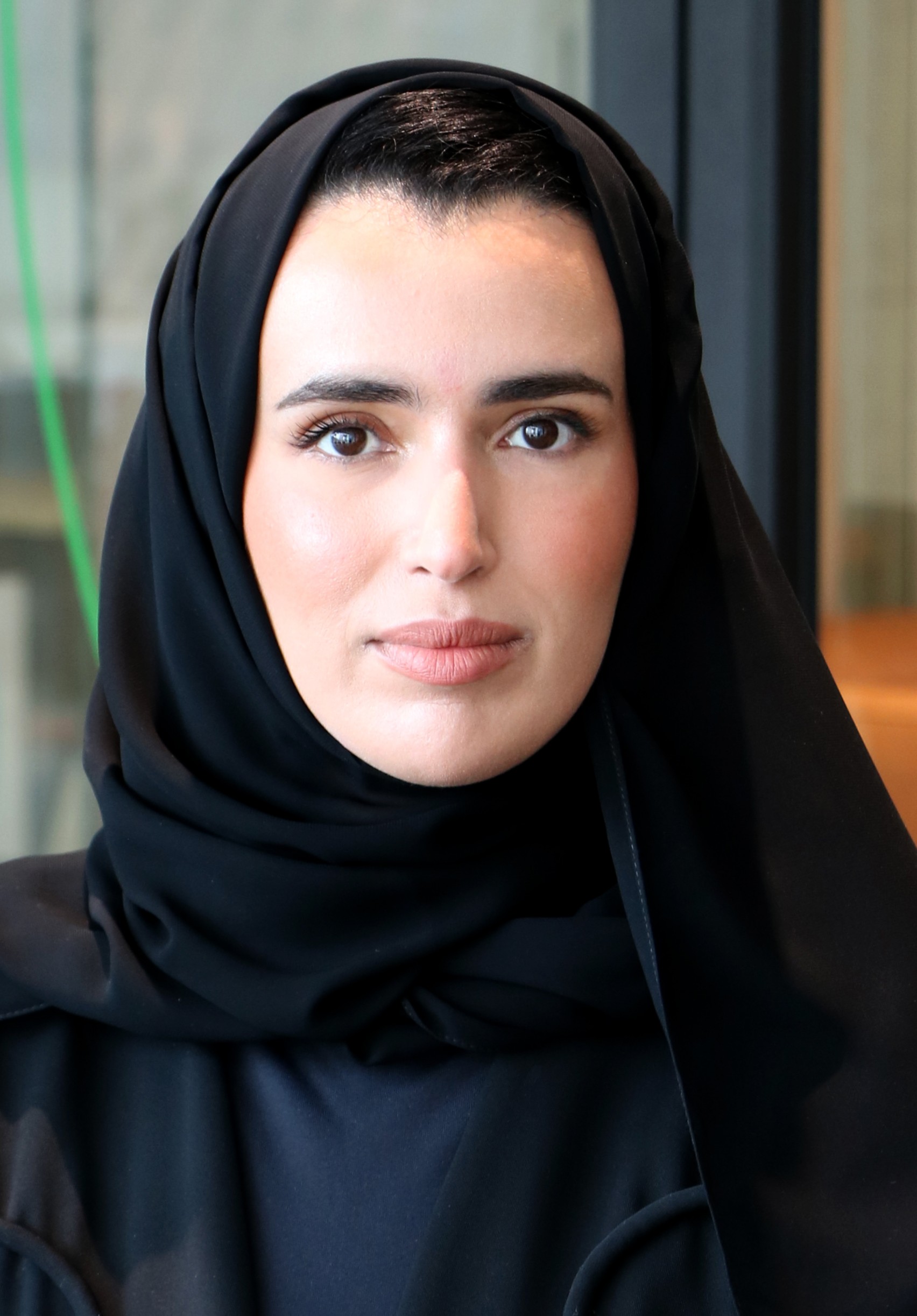
Partner & Head of
Tax, BSA LAW
“The biggest shift was not the nine per cent itself. Businesses operating in the UAE had long factored in the possibility of a federal levy,” she said. “What genuinely changed was the compliance infrastructure.” For the first time, every taxable person needed a Tax Registration Number, financial statements prepared under recognised accounting standards, and an annual return filed within nine months of the end of the tax period.
“For technology and financial services businesses, especially those that had operated for years without a domestic tax obligation, the hardest part was not paying the tax. It was constructing the compliance machinery from the ground up,” she said. Transfer pricing documentation, arm's length benchmarking and the seven-year record retention period all had to be built from scratch.
The free zone regime took longest to settle. The law set a zero per cent rate on qualifying income earned by a qualifying free zone person, but the detail on which activities qualify, the de minimis thresholds and the substance requirements arrived in stages. “Businesses waited months for clarity, and in practice I still see clients revisiting their initial interpretations as the Federal Tax Authority issues further guidance,” she said.
Where founders go wrong
The free zone or mainland decision is where Al Falahi says she spends most time unwinding mistakes. “The mistakes almost always come from the same place: founders treat the choice as a binary tax decision rather than a commercial one,” she said.
Substance is where founders most often trip up. A qualifying free zone person must carry out its core income-generating activities in the free zone, with adequate assets, staff and operating expenditure. The most serious errors, she says, come in the domestic permanent establishment analysis: a sales team, servicing office or customer-facing operation on the mainland can bring the profits attributable to it into the nine per cent regime.
“Founders who assumed the free zone wrapper would cover their entire operation discover, sometimes in their first filing year, that a significant portion of their income falls outside the zero per cent regime entirely,” she said. Her advice: “Start with where your customers are, where your people sit, and where value is actually created. The entity structure follows from that, not the other way around.”
Digital assets: regulation ahead of tax
Many digital asset and payments businesses have moved to the UAE. On the tax treatment of that activity, Al Falahi's answer is: “More settled than it was two years ago. Less settled than the industry would like.”
The corporate tax law is broad enough to capture virtual asset service providers, token issuers and payments businesses handling digital assets, and in Dubai the Virtual Assets Regulatory Authority (VARA) regulates virtual assets outside the DIFC. The uncertainty lies in the detail. The law has no bespoke provisions on how tokens are characterised, and there is no specific Federal Tax Authority guidance on staking rewards, liquidity mining yields, airdrops, or the minting and burning of tokens.
“For a payments business that holds transitory positions in stablecoins, the question of whether those positions generate taxable income or are simply settlement mechanics has no authoritative answer yet,” she said. “The honest position is that the regulatory framework is ahead of the tax framework.”
E-invoicing at scale
For payments platforms, the development to watch is e-invoicing. Any UAE-resident business whose taxable supplies and imports exceed AED 375,000 over a rolling twelve months must register for VAT, and a high-volume platform almost certainly will. The Federal Tax Authority is now introducing structured electronic invoicing, with invoices issued, exchanged and reported as machine-readable data through accredited service providers.
Al Falahi says that means three things for a payments business: invoicing systems that produce structured data rather than documents, an accredited provider, and built-in resilience, because penalties for failing to report system failures accrue daily. With Saudi Arabia's ZATCA already phasing in e-invoicing, “for any platform operating across the GCC, this is not a single-jurisdiction compliance project, it is a multi-country system build.”
Technology and the tax practice
Technology has changed her own work “more than I expected and less than some people predicted,” she said. AI tools now handle much of the first-pass contract review, and transfer pricing benchmarking has been heavily automated. “What used to be a junior associate spending half a day on a single agreement can now be a structured review completed in minutes, with the associate spending their time on the judgment calls rather than the extraction.”
The advisory conversation has not changed. “No tool replaces it. The tools make me faster at getting to the conversation, and better-prepared when I arrive.”
Her advice to those entering technical specialisms follows from that. “The routine work that used to be the entry point for a junior practitioner is being automated,” she said. “What the machine cannot do is sit with ambiguity.” The UAE's tax framework is new and still being interpreted, and questions such as how many employees is adequate for free zone substance depend on facts that do not fit a checklist. “Learn the technology, learn to use it well, but invest your real energy in developing the judgment that sits above it.”
A new generation of leaders
As an Emirati woman leading a tax practice, Al Falahi points to measurable structural change: the UAE Gender Balance Council, the requirement for women on the boards of listed companies, and leadership programmes across federal entities. Emirati women now lead tax practices and advise sovereign wealth funds, and in technology they are founding companies.
The deeper shift, she says, is in expectation. “When I was starting out, an Emirati woman in a technical tax role was an exception that people remarked on. Today, the young women do not see themselves as exceptions. They see a career path, and they expect to be judged on the quality of their work.”
What comes next
The change she says businesses should already be preparing for is the UAE's domestic minimum top-up tax under Pillar Two. “If you are not already preparing, you are late,” she said. Cabinet Resolution No. 142 of 2024 applies to multinational groups with consolidated annual revenue of EUR 750 million or more in at least two of the four preceding fiscal years, for fiscal years beginning on or after 1 January 2025.
“For technology and financial services groups that have used the UAE's zero per cent free zone rate as a core part of their global structure, this is a fundamental recalculation,” she said. The effective tax rate in the UAE may need to reach 15 per cent under the global minimum tax rules, with the top-up tax designed to close the gap. Alongside it, the rollout of the e-invoicing programme continues.