
Firefly Aerospace completes expanded cleanroom to scale lunar production
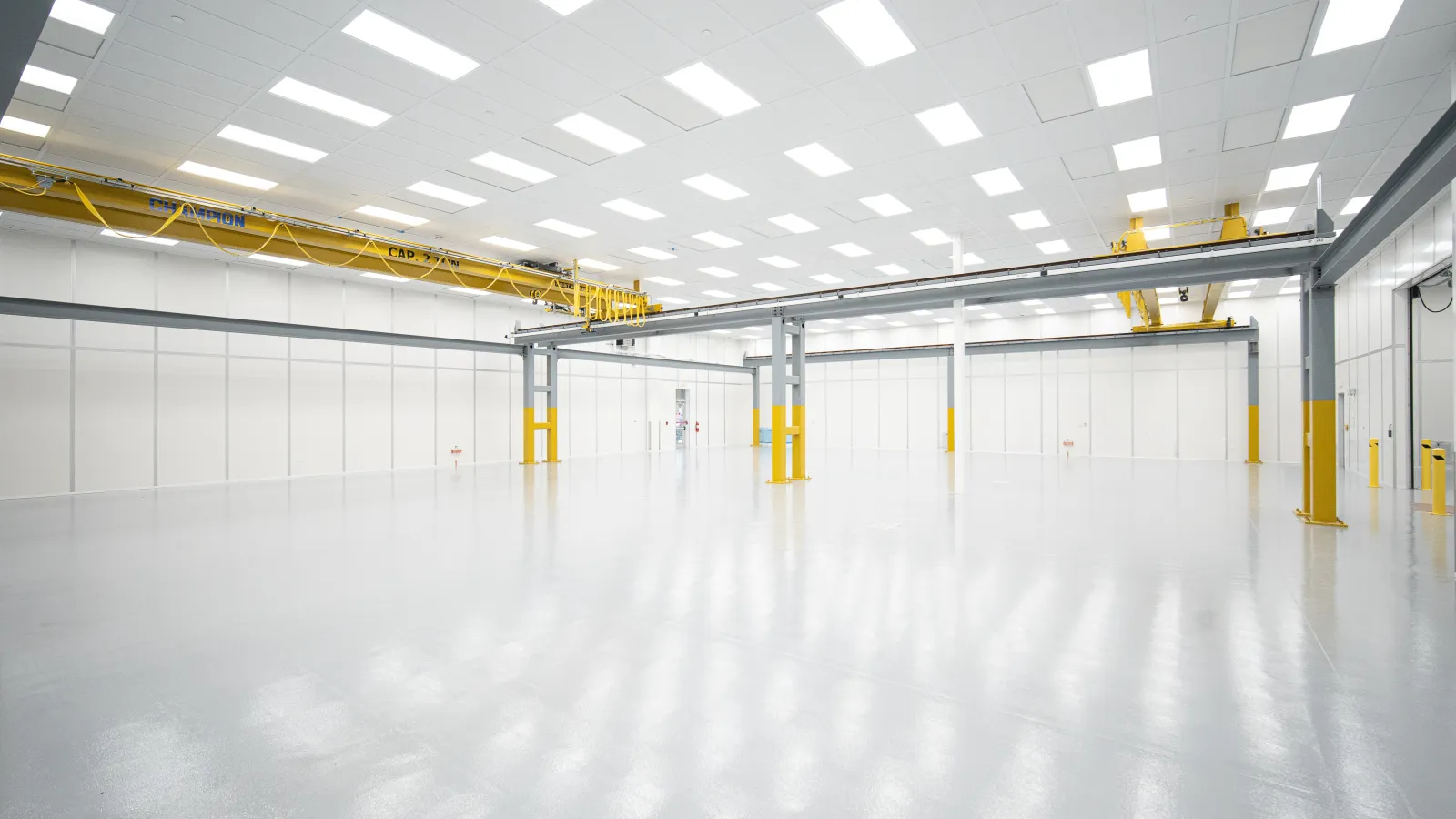
Firefly Aerospace has completed a new cleanroom facility at its Cedar Park, Texas campus, quadrupling its existing clean-assembly footprint and unlocking a dedicated production line capable of supporting up to 12 lunar landers and orbital vehicles at once. The ribbon-cutting, attended by NASA officials and representatives from the Texas Space Commission, marks the most tangible sign yet that the commercial lunar economy is graduating from milestone missions to repeatable, industrial-scale delivery.
The facility carries an ISO Class 8 rating, the contamination-control standard required for flight hardware assembly, integration, and testing. It was funded in part by a grant from the Texas Space Commission's Space Exploration and Aeronautics Research Fund, a state-level mechanism created specifically to anchor aerospace manufacturing in Texas and compete with Florida and California for a share of the growing civil and commercial space supply chain.
From proof-of-concept to production cadence
The expansion is timed to a material step-change in Firefly's order book. Following the successful Blue Ghost Mission 1 lunar landing, the company now holds contracts for five additional Blue Ghost missions alongside work on its Elytra orbital vehicle. Two further spacecraft contracts with the Defence Innovation Unit cover space domain awareness and deorbit services, adding a defence revenue stream alongside the NASA Commercial Lunar Payload Services business.
Ramon Sanchez, Firefly's COO, framed the build as infrastructure to match commercial ambition: "With support from the Texas Space Commission, we've built the infrastructure needed to meet growing demand for our in-space services and lunar delivery capabilities." The company is also developing a larger lander variant designed to carry heavier cargo, terrain vehicles, power systems, and surface infrastructure, a step that would position Firefly inside the logistics chain for sustained lunar presence rather than point-delivery missions.
The convergence play: defence, civil space, and sovereign manufacturing capital
What makes the Firefly story relevant beyond a facilities press release is the capital and policy architecture assembling around it. State-level sovereign-style grants of the kind the Texas Space Commission deploys are a relatively new instrument in the US space economy, sitting between federal procurement (NASA, the Pentagon) and private venture capital. They are, in effect, a form of industrial policy: Texas is underwriting manufacturing capacity in anticipation of a commercial lunar market that analysts expect to expand sharply through the 2030s as NASA's Artemis programme drives demand for surface logistics.
The defence angle deepens the convergence picture. Firefly's DIU contracts for space domain awareness and deorbit services tie its orbital vehicles into the military's growing interest in responsive, commercially procured space capabilities. That dual-use positioning, civil lunar delivery on one axis, defence-adjacent orbital services on the other, mirrors a broader pattern visible across the sector: Rocket Lab, SpaceX's Starshield programme, and Sierra Space are all navigating the same civil-defence convergence seam.
For cross-sector investors, the cleanroom expansion is a capital-efficiency signal as much as an operational one. Manufacturing throughput, measured in vehicles per year rather than mission-by-mission revenue, is the metric that separates a space-services company with genuine platform economics from one that remains a project-by-project contractor. Firefly's move to a 12-vehicle simultaneous assembly capacity, if utilised, would represent a structural shift in unit economics. Whether the manifest is deep enough to fill that capacity in the near term remains the open question; the company's forward-looking statements are careful to note that backlog realisation carries material risk.