
Viasat wins $307m USMC SATCOM contract for multi-orbit connectivity
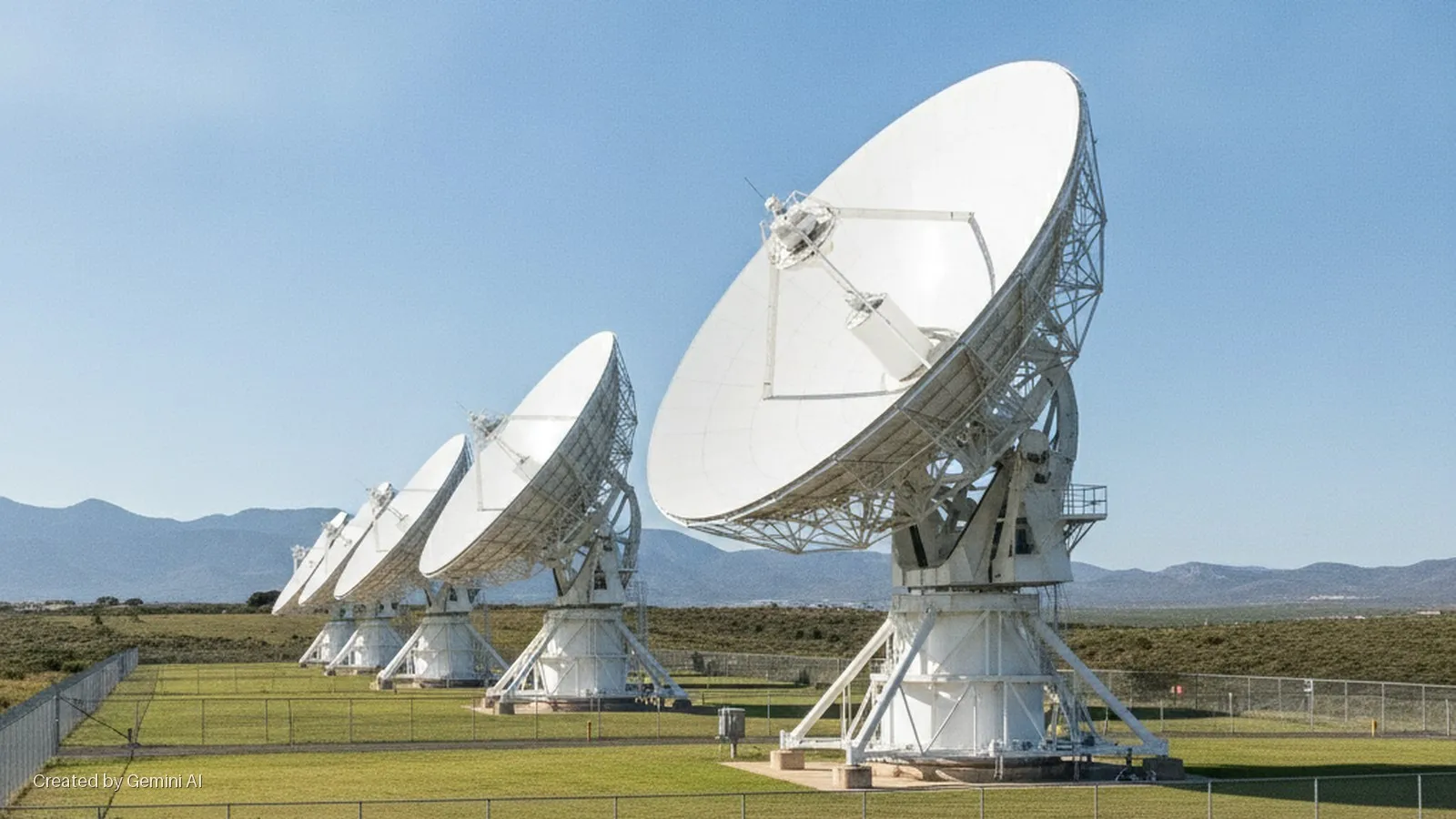
Viasat has secured the Marine Enterprise Commercial Satcom Satellite Services (MECS2) contract from the U.S. Space Force Commercial Satellite Communications Office, with an initial task order worth $42 million against a seven-year, $307 million ceiling. The award, channelled through Viasat's Inmarsat Government subsidiary, positions the Carlsbad-based satellite operator as the primary managed connectivity partner for the United States Marine Corps across land, air and sea operations.
The contract is structured as an Indefinite Delivery/Indefinite Quantity (IDIQ) vehicle, meaning the $307 million figure represents a ceiling rather than a guaranteed spend. That caveat aside, the scope is significant: Viasat will provide end-to-end global satellite services spanning L-, Ku- and Ka-bands, drawing on its ViaSat-3 next-generation satellite constellation alongside capacity from ecosystem partners to deliver resilient, multi-orbit coverage. Around-the-clock Network Operations Centre and Security Operations Centre support is included, covering bandwidth management, terminal inventory and cybersecurity monitoring.
Commercial space meets defence procurement
The structural story here sits at the intersection of commercial satellite infrastructure and military communications modernisation. The MECS2 contract is administered by the U.S. Space Force's Commercial Satellite Communications Office, a relatively young procurement vehicle designed to bring agile, commercially operated satellite capacity into defence workflows rather than relying solely on purpose-built government systems. That approach reflects a broader Pentagon shift: after years of satellite communications being dominated by dedicated military constellations at stratospheric cost, the Department of Defense has moved towards commercially managed, multi-orbit service agreements that can scale with operational tempo.
Viasat's ViaSat-3 constellation, the company's flagship high-throughput Ka-band network, is central to the pitch. The system is engineered to redirect capacity dynamically towards high-activity hotspots, a feature of direct relevance to expeditionary Marine Corps operations where bandwidth demand can spike unpredictably. Qasim Rana, Viasat's Vice President of Market Entry for Government, framed the award in explicitly forward-looking terms: "In the modern warfare environment, there is a critical need to maintain information dominance across the battlespace. We are excited to continue supporting this objective by providing a comprehensive enterprise solution that leverages Viasat's expertise and ecosystem to meet current USMC technology needs, as well as the ability to scale with new, integrated technologies and platform capabilities for the future."
Convergence: orbital infrastructure as strategic asset
For cross-sector investors and geopolitical risk analysts, the MECS2 award illustrates a structural convergence between the commercial space economy and sovereign defence posture. Viasat's 2023 acquisition of Inmarsat created one of the few operators capable of delivering truly global managed SATCOM with both geostationary and lower-orbit assets, terrestrial backhaul, and in-house security operations. That integrated stack is precisely what large-scale military contracts require, and it differentiates Viasat from pure-play low-Earth orbit (LEO) providers that lack the managed-service layer.
The broader capital landscape is worth noting. Defence-adjacent satellite operators have attracted sustained institutional interest as governments across NATO and the Indo-Pacific accelerate spending on resilient communications infrastructure. Viasat's position as both a commercial satellite operator and a managed-services provider for allied militaries gives it exposure to two converging spending cycles: commercial broadband demand (aviation, maritime, enterprise) and defence communications modernisation. The MECS2 win extends an existing relationship with the USMC, reducing incumbency risk and providing revenue visibility across a seven-year window. The open question for investors is whether the ViaSat-3 constellation, which has faced technical challenges since launch, can deliver the high-capacity performance underpinning the service-level commitments embedded in a contract of this scale.