
NIO and HERE expand European mapping deal for AI-assisted driving
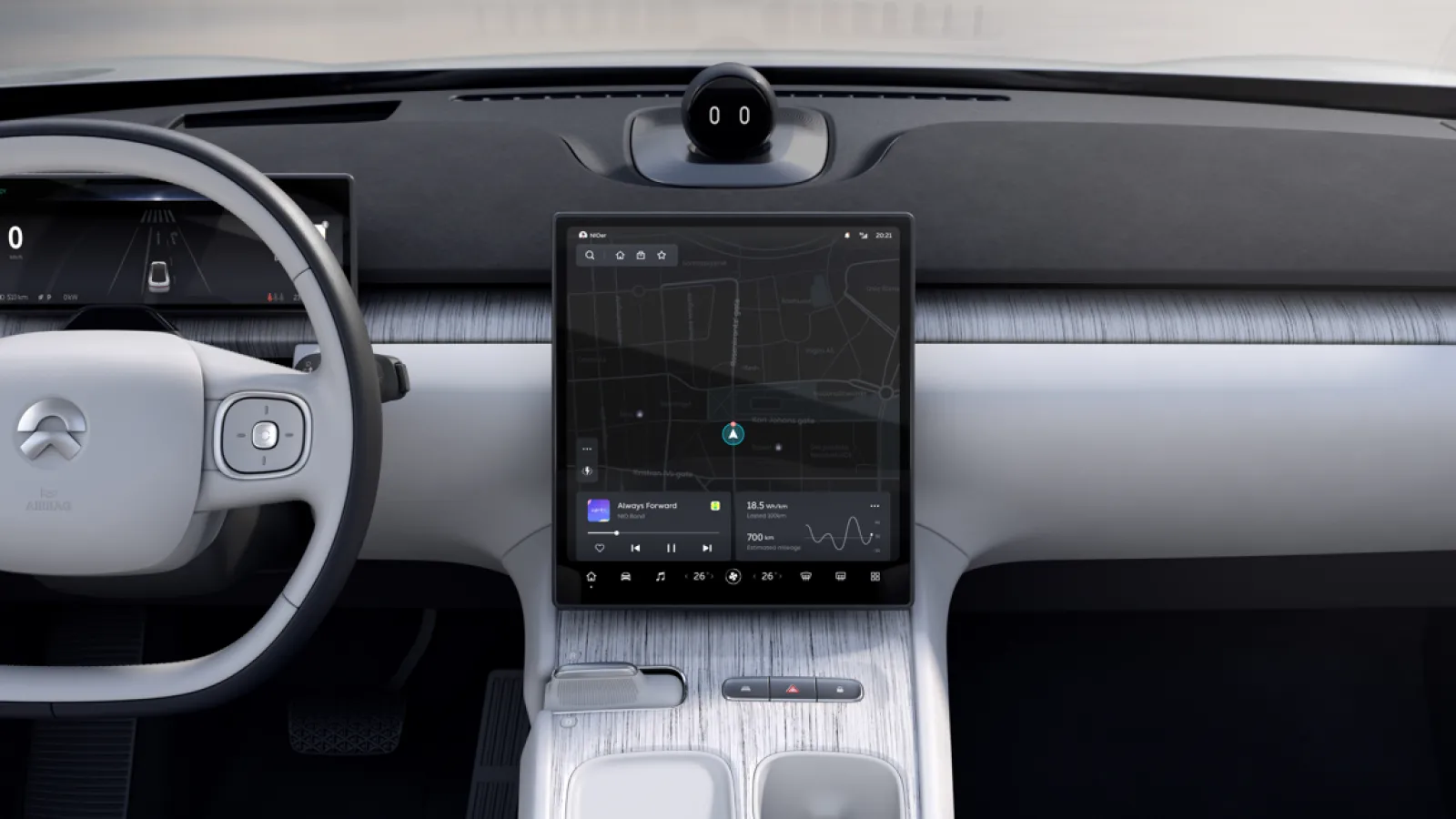
Chinese smart electric vehicle maker NIO and mapping platform HERE Technologies have expanded their European collaboration, extending location intelligence services from the entry-level Firefly model to NIO's entire European vehicle range. The deal, which covers the ET5, ET7, EL6, EL7 and EL8 models, brings continuously refreshed map data and lays the technical groundwork for next-generation assisted driving features, including NIO's Navigation on Autopilot (NOA) system.
The expansion signals an accelerating push by NIO to close the gap with European incumbents on software-defined vehicle capability, at a moment when premium OEMs from BMW to Mercedes are spending heavily on HD mapping and over-the-air update infrastructure. HERE will supply streaming map content, providing near-real-time updates on road-network changes, lane configurations, traffic regulations and points of interest across European markets.
From navigation tool to autonomous driving foundation
The strategic weight of the deal sits less in fresher turn-by-turn directions and more in what continuously updated maps enable further up the stack. High-definition, frequently refreshed map data is a prerequisite for any level of assisted driving above basic lane-keep: autonomous systems need to know not just where a road is, but whether a speed limit changed last Tuesday or a contraflow was introduced this morning. By adopting HERE's streaming map architecture now, NIO is effectively building the data substrate on which its AI driving model, the NIO World Model, can eventually be trained and validated for European conditions.
Chris Chen, NIO's Vice President of Global Business Development, framed the rationale directly: "By deepening our collaboration with HERE, we are providing drivers with more up-to-date map experiences today while strengthening the foundation for future innovations in intelligent navigation and assisted driving across Europe."
The Chinese EV internationalisation play
The broader context here is geopolitical as much as technical. NIO is one of several Chinese EV brands, alongside BYD, Xpeng and Zeekr, that have entered or are scaling in European markets while facing a shifting regulatory climate. The European Commission's additional tariffs on Chinese EV imports, which came into force in late 2024, have increased cost pressure on Chinese OEMs operating in the region, making every software and service partnership a more deliberate strategic choice.
For HERE, the deal reflects an equally clear commercial logic. The mapping company, majority-owned by a consortium of European automotive groups including BMW, Mercedes-Benz and Volkswagen, is expanding its customer base beyond its founding shareholders' own vehicle lines. Deon Newman, HERE's Senior Vice President for Asia Pacific, noted that Chinese automotive brands expanding globally "need reliable, fresh and scalable location intelligence to deliver the driving experiences customers expect." HERE is positioning itself as the neutral infrastructure layer for that internationalisation wave, regardless of the brand's country of origin.
This convergence between Chinese EV hardware ambition and Western mapping software incumbency carries wider implications for the automotive technology supply chain. As vehicles become increasingly software-defined, the competitive moat is shifting from powertrain engineering to data access, update frequency and AI model quality. For NIO, with R&D centres in Munich, Oxford and Budapest as well as its Chinese base, the HERE partnership is part of a deliberate effort to localise its technology stack for European regulatory and consumer expectations rather than simply transplanting a China-optimised system.
Capital allocators tracking the autonomous driving space should note that this type of B2B mapping-as-infrastructure deal is becoming a standard line item in the internationalisation budgets of Chinese OEMs. The competitive question for Western EV makers is whether their own mapping and AI driving stacks can iterate fast enough to maintain differentiation as Chinese brands systematically acquire the same location intelligence foundations across Europe.