
Maven Robotics raises $100M as Gulf capital backs physical AI
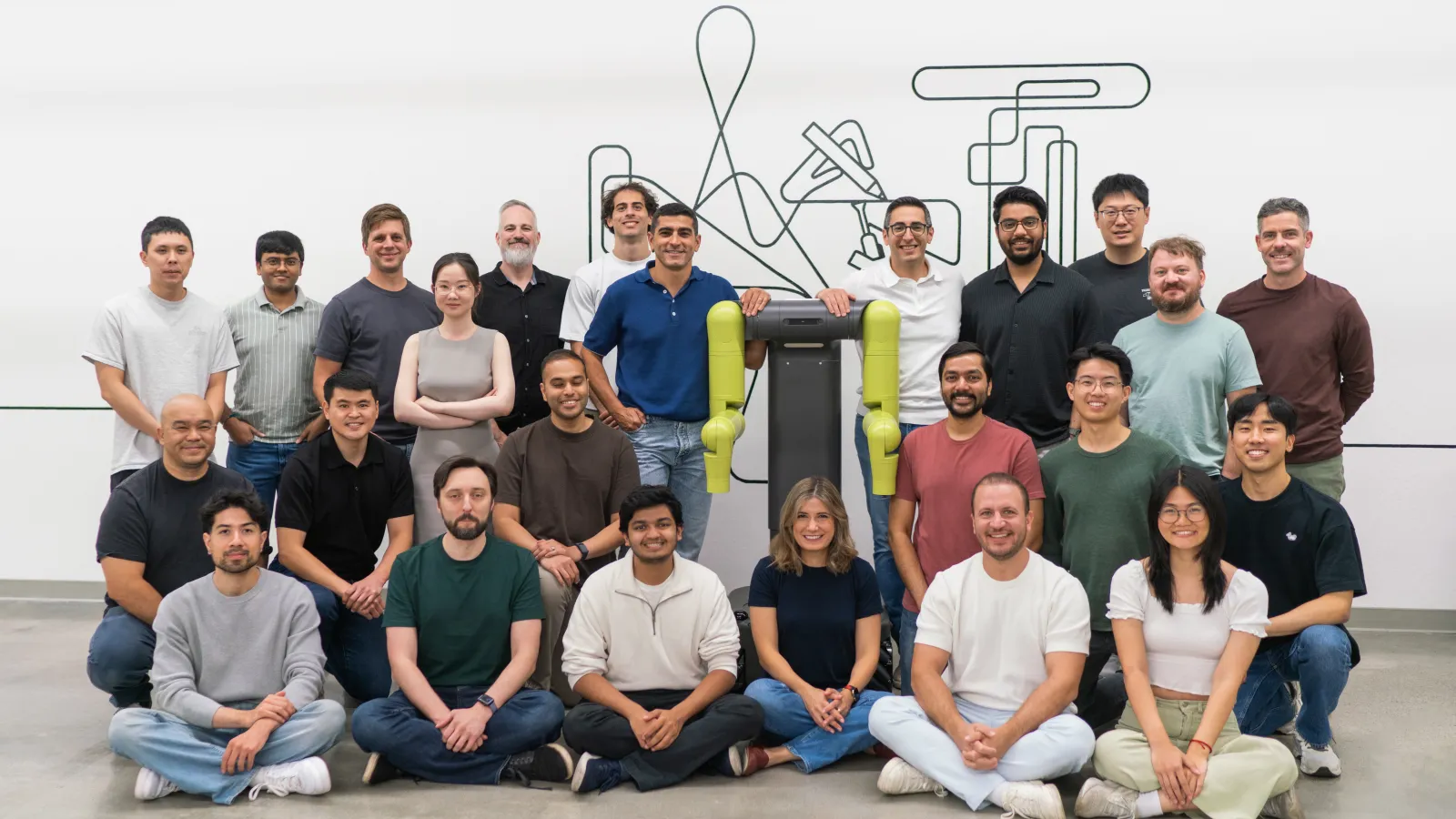
Gulf-based investors Shorooq and Presight, a G42 company listed on the Abu Dhabi Securities Exchange, have backed Maven Robotics in a $100 million Series A, channelling sovereign-ecosystem capital into one of the most capital-intensive frontiers of applied AI: autonomous industrial robots that work reliably in warehouses and manufacturing plants, not just in research labs.
The deal was made through the Presight–Shorooq AI Fund alongside co-investors RoboStrategy, LocalGlobe, Vine Ventures and XTX Ventures. Founded in 2024 and headquartered in Santa Clara, California, Maven builds wheeled, dual-armed robots designed to handle mixed-case palletising and tote management, workflows the company estimates address an $80 billion market. Its machines already operate at more than 99% reliability across customer sites, running up to sixteen hours a day. The new funding will finance a fleet of 250 third-generation robots and the design of a fourth-generation system, as Maven extends from palletising into broader materials handling.
Physical AI meets Gulf compute infrastructure
What distinguishes this deal from a conventional Silicon Valley robotics raise is the ecosystem that comes with the capital. Presight, through its parent G42, gives Maven access to one of the most significant AI compute and data networks outside the United States. For a company whose competitive edge lies in the data pipelines that allow hardware to learn from real-world operation, that access is more than a balance-sheet advantage.
"The first wave of AI reshaped how we work with information; the next will reshape how the physical economy runs, and that is a far larger prize," said Bilal Baloch, Partner at Shorooq. "What sets Maven apart is that Hamza and his team are not chasing a research benchmark, they are solving one industrial problem at a time, with the discipline and return-on-investment focus that real operators demand."
Thomas Pramotedham, Chief Executive Officer of Presight, framed the investment around operational proof rather than theoretical promise: "AI creates value when it works reliably in the environments where businesses operate. Maven is applying intelligence to the physical work of moving and handling goods, where performance is measured in operational results."
For Maven's founder, the backing matters as much for geography as for dollars. "We also see the region as a node from where we can take our robots global," said Hamza Derbas, Maven's CEO and co-founder, a line that signals ambition well beyond North American warehouse automation.
The convergence trade: sovereign capital chasing physical-world AI
The Maven deal is best read as a data point in a wider capital reallocation story. Sovereign-linked investors across the Gulf, from G42's various vehicles to Mubadala and ADIO, have spent the past three years building positions in the software layer of AI: foundation models, inference infrastructure, data centres. The Presight–Shorooq AI Fund's bet on Maven represents a deliberate pivot toward the physical layer, robots that translate trained models into industrial labour at scale.
This matters for cross-sector strategists for two reasons. First, it compresses the timeline for warehouse and logistics automation in markets where Gulf investors have enterprise relationships, potentially accelerating displacement of legacy manual operations across the GCC and beyond. Second, it signals that the Gulf's AI ambitions are maturing past compute infrastructure into operational deployment, which has direct implications for industrial-property developers, logistics operators and the broader supply-chain technology stack.
Maven enters a competitive market. Players including Boston Dynamics, Machina Labs and a cohort of well-capitalised Chinese robotics exporters are all targeting similar workflows. Maven's claim, backed by the release, is that its real-world reliability data and founding team's experience with autonomous-systems data pipelines give it an edge that newer entrants cannot quickly replicate. That thesis will be tested as the third-generation fleet scales.
The broader question for investors watching this space is whether physical AI can achieve the same compression of development cycles that software AI has delivered over the past three years. If it can, the capital flowing from Gulf sovereign ecosystems into robotics is likely early, not late.