
HSBC Kuwait and Tap Payments team up on merchant acquiring
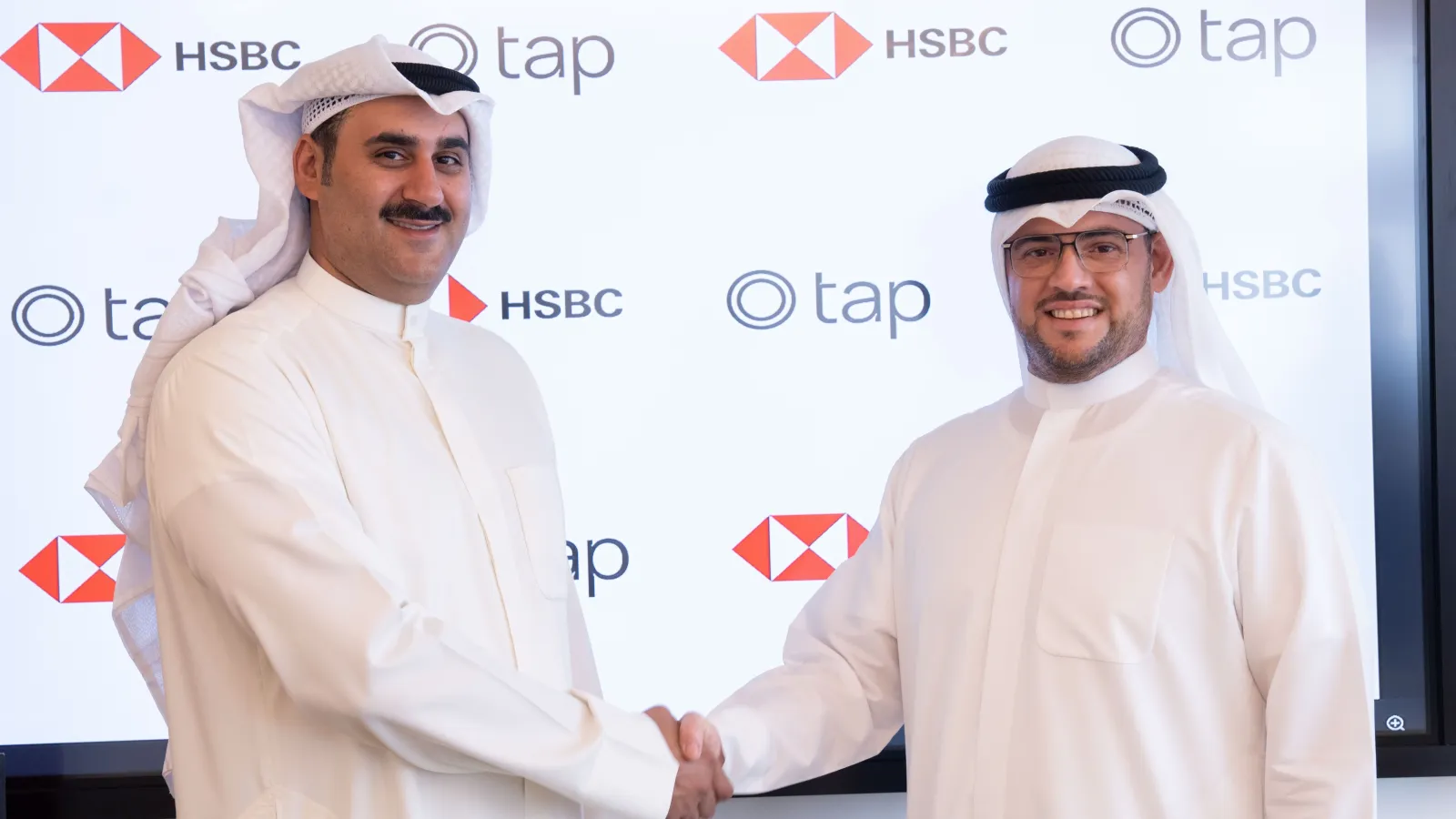
HSBC Kuwait and Kuwait-founded fintech Tap Payments have announced a merchant acquiring partnership that will allow HSBC's corporate clients in the country to accept card payments through Tap's payment infrastructure. The deal is framed around reducing reliance on cash and cheque collections, still common in Gulf corporate treasury operations, while consolidating transaction reporting and simplifying settlement cycles.
The proposition requires no significant new software investment from the client side, plugging into existing business systems through Tap's API layer. Clients gain a single-interface view of transaction data across collection channels, a pain point that has historically made reconciliation labour-intensive for mid-market and enterprise treasury teams across the GCC.
Gulf banks accelerate digital payments infrastructure
Kuwait's financial sector has been a relative latecomer to the regional payments modernisation wave. Saudi Arabia's Vision 2030 programme set ambitious targets for cashless transactions, and the UAE's central bank has pushed hard on its AANI instant-payments network, leaving Kuwait-focused corporates with fewer integrated options than their regional peers. This partnership directly addresses that gap, giving HSBC's Kuwait client base access to infrastructure that Tap has already deployed across multiple MENA jurisdictions.
Ahmed Al Murad, Chief Executive Officer of HSBC Bank Middle East Limited in Kuwait, said the collaboration brings together "HSBC's global expertise and Tap Payments' local fintech strengths" to help companies improve efficiency through simpler collections and stronger receivables management.
Tap Payments, founded in Kuwait in 2014, holds regulatory licences across the MENA region and has positioned itself as the region's embedded payments layer for businesses that need locally compliant infrastructure without building it themselves. Its model, regulatory coverage plus API-first product design, mirrors the playbook used by Adyen and Stripe in Western markets, adapted for GCC licensing complexity.
Cross-sector read-across: treasury tech and the GCC digitisation race
The strategic significance of this deal extends beyond payments processing. As Gulf sovereign wealth funds and regional development banks continue to direct capital into non-oil economic diversification, the demand for sophisticated treasury and receivables infrastructure among corporate clients is accelerating. HSBC's MENAT footprint, nine countries, USD 83 billion in regional assets as at end-2025, gives it a distribution advantage over pure-play fintechs, but legacy corporate banking platforms have historically struggled to compete with nimbler fintech rails on user experience.
Partnerships of this structure, where a global bank white-labels or co-distributes a fintech's payment infrastructure, are becoming the dominant model for GCC payments modernisation. Incumbent banks avoid the multi-year cost and regulatory overhead of building acquiring infrastructure from scratch; fintechs gain access to the enterprise client relationships that direct sales would take years to replicate. The pattern is visible across the region: Mastercard and Saudi Payments' SADAD integration, and Emirates NBD's tie-ups with regional B2B payment platforms, reflect the same institutional logic.
For investors tracking GCC financial infrastructure, the more consequential second-order question is whether deals like this accelerate consolidation in the MENA fintech acquiring space. Tap operates in a competitive field that includes Network International, Checkout.com (which holds a MENA licence), and a cluster of locally licensed PSPs. A banking-distribution anchor from HSBC could materially shift Tap's enterprise market share, and raise its profile ahead of any future capital event.