
Ethio telecom's 2028 plan bets on fintech scale and 5G to reshape East
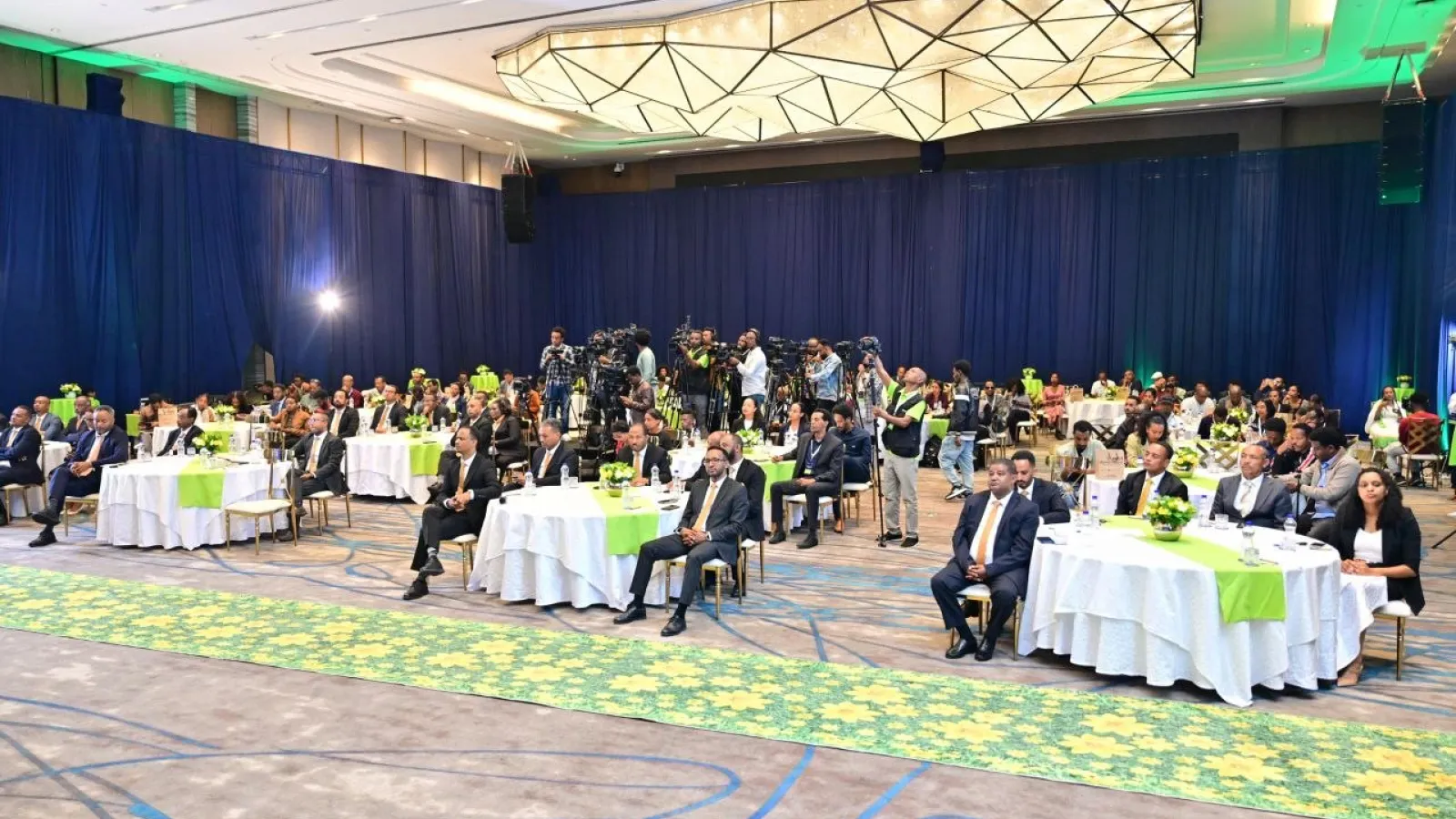
Ethio telecom has unveiled the second year of its Next Horizon: Digital and Beyond 2028 strategy, setting out a sweeping plan to pivot from connectivity provider to diversified technology platform, and in doing so, positioning Ethiopia as a regional digital hub at the intersection of telecoms, fintech, and cloud infrastructure.
The numbers are striking for a sub-Saharan operator. The company says it is targeting total annual revenue of ETB 295 billion (approximately USD 2.5 billion at current rates) for the 2026/27 budget year, a 36.7% increase on the prior year. Projected EBITDA sits at ETB 154.4 billion, implying a margin of roughly 52%. Digital and adjacent businesses, spanning fintech, cloud, and e-commerce, are forecast to contribute 26.3% of total revenue, signalling that the TechCo transition is no longer aspirational language.
telebirr: from mobile wallet to financial operating system
The centrepiece of that pivot is telebirr, the company's mobile money platform, which is being scaled into what the plan describes as an "all-in-one financial ecosystem." Active-user transaction volumes are projected to reach 4.99 billion during the year, with total transaction value rising to ETB 7.4 trillion. Microcredit disbursement is planned to grow 69.6% to ETB 35.4 billion, and digital savings balances by 40.9% to ETB 26.42 billion. With a merchant network targeting 569,300 and an agent network of 452,800, telebirr is approaching the distribution density that made M-Pesa transformative in Kenya, and doing so across a population of more than 120 million.
The macro read-across matters beyond East Africa. As dollar-denominated mobile-money platforms struggle with currency volatility across the continent, a state-backed operator with a captive distribution network and a 52% EBITDA margin has structural advantages that private fintech challengers cannot easily replicate. Investors allocating to African digital infrastructure should note that Ethio telecom's model, sovereign ownership, national mandate, cross-sector platform ambition, represents a distinct archetype from the venture-backed super-app plays attracting attention in Lagos and Nairobi.
5G, cloud and the infrastructure convergence
On the network side, the plan sets out a doubling of 5G-covered towns from 33 to 73, a near-doubling of 5G site capacity from 1.41 million to 2.70 million subscribers, and a significant 4G expansion that would lift population coverage from 82% to 95%. International gateway capacity is being lifted from 4.3 Tbps to 5.2 Tbps, with content-delivery integrations from Google, Meta, Netflix, and Cloudflare forming part of the buildout. A cross-border fibre link through Kenya, targeting 25% completion this year, points toward Ethiopia's ambition to become a transit hub for East African data traffic.
Cloud infrastructure is scaling in parallel: GPU and NPU capacity is set to jump from 16 accelerator cards to 268 AI servers, and elastic compute capacity more than doubles. Those figures are modest by hyperscaler standards, but in the context of a market where sovereign cloud capacity is scarce, they represent meaningful positioning ahead of anticipated enterprise and government demand.
The convergence angle here is the compounding effect of infrastructure layers. A state operator that simultaneously controls last-mile mobile access, the dominant payments rail, a growing cloud platform, and an international fibre route is assembling a stack that few private players anywhere in the emerging world can match. That concentration creates opportunity, and regulatory risk, in equal measure.
For cross-sector strategists, the Ethio telecom plan is best read as a case study in state-directed digital convergence: a single entity attempting to compress decades of infrastructure build-out, financial inclusion, and platform-economy development into a three-year window. Whether execution matches ambition will depend heavily on foreign-currency availability (the company flags FX constraints as a primary risk), equipment supply chains, and the pace of private-sector competition as Ethiopia's telecoms market continues to liberalise. A second licensed operator remains in the market, and the regulatory environment is still settling. The 22% net profit margin target assumes considerable macro stability that the country's recent history does not guarantee.