
Dreame Group targets European homes with 3D printers and action cameras
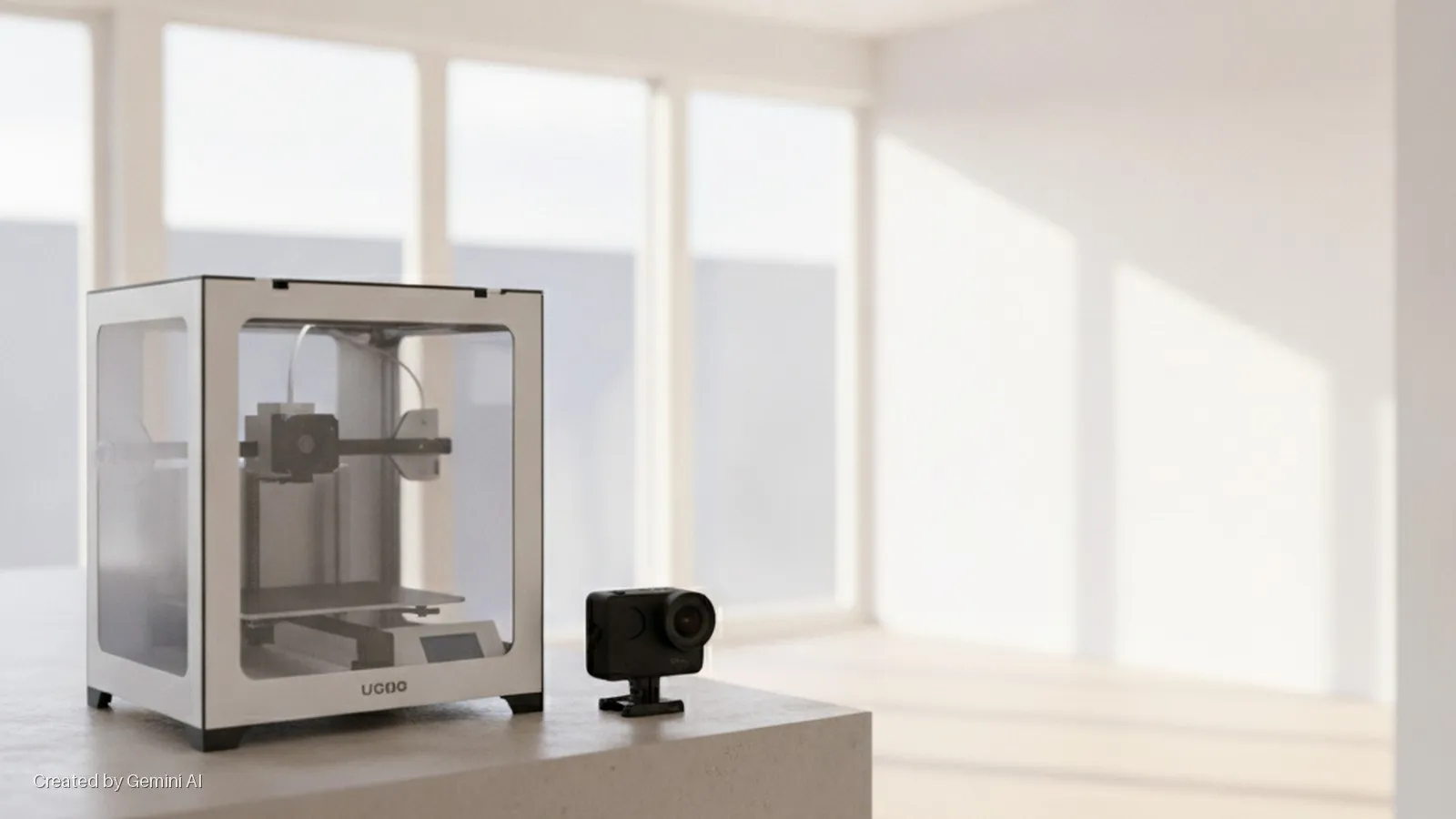
Dreame, the Chinese consumer-robotics brand that claimed the top spot in Europe's robotic vacuum market in 2025, arrived at IFA 2026 in Berlin with two sharply divergent product launches: a range of 3D printers and a line of action cameras. The move is less about floor care and more about a calculated expansion of its connected-home ecosystem into categories that have historically been dominated by specialist Western brands such as Bambu Lab, GoPro and DJI.
The company also unveiled a new corporate identity, Dreame Group, bringing its sub-brands MOVA and NAVEE under a single technology holding structure. The rebranding is designed to signal engineering scale and R&D depth to both retail partners and potential capital markets audiences as the group eyes further international expansion.
A growth story built on European retail density
The numbers Dreame is presenting to IFA visitors are striking. The company reports 91% year-on-year revenue growth in the first half of 2026, following 103% growth across the full year of 2025. It claims a 39.5% market share in Western European robotic vacuum sales, with particularly strong positions in Belgium (68%), Switzerland (49%) and Italy (44.2%). More than five million European households now own at least one Dreame product, and the company says it operates through more than 10,000 physical retail outlets globally, with 23 European flagship stores expected to be open by the end of 2026.
Those retail-density figures matter because they illustrate the distribution infrastructure Dreame is leveraging to introduce each new product category. When a consumer purchases a robot mop in a Dreame flagship in Amsterdam, they are also being exposed to the brand's evolving garden-care, kitchen, and now 3D-printing range. The physical store network functions as a cross-category conversion engine, a model that Dyson has used to good effect across cleaning, hair care and air purification.
The convergence angle: smart-home platforms as the new battleground
Dreame's expansion is best understood not as a series of discrete product launches but as a platform play. The company is attempting to replicate, on a faster timeline, what Apple did with the App Store or Amazon did with Alexa: establish a trusted hardware beachhead in the home and then extend that trust laterally across every connected device a household might need.
This matters for cross-sector investors because the smart-home platform race has significant implications beyond consumer electronics. The data generated by a household fleet of Dreame devices, from vacuum navigation maps to 3D-print job logs, represents a proprietary dataset with potential value in AI model training, insurance underwriting and energy-demand forecasting. Chinese consumer-tech groups have demonstrated, through Xiaomi's ecosystem model, that hardware margin is less important than platform lock-in and the data layer it enables.
The European market is also a regulatory testing ground. Brussels has signalled stricter data-localisation requirements for connected home devices under the evolving EU AI Act and the Cyber Resilience Act. Dreame's decision to accelerate its European flagship store network, rather than rely purely on third-party retail, suggests the company is investing in the brand legitimacy and compliance infrastructure needed to weather that scrutiny. For capital allocators assessing Chinese consumer-tech exposure, the speed at which Dreame navigates EU product-safety and data-governance frameworks over the next 18 months will be the real indicator of long-term platform viability.
The IFA announcements carry the hallmarks of a company preparing for a more formal capital markets moment, whether a Hong Kong listing, a strategic raise, or a partnership with a European retail conglomerate. The new Dreame Group corporate structure consolidates IP, brand and revenue in a single entity that is considerably easier to present to institutional investors than a loose family of product lines. Whether the 3D printers and action cameras achieve meaningful market share is almost secondary; what matters is that they demonstrate ecosystem breadth to the next round of backers.