
Enlight lifts 2026 guidance as storage-led portfolio hits $2.3bn run
Enlight Renewable Energy, the Tel Aviv and Nasdaq-listed utility-scale developer, reported Q2 2026 revenues and income of $210 million, up 55% year on year, and raised its full-year guidance range for revenues to $790–$820 million and adjusted EBITDA to $565–$585 million. The results confirm that a strategy built on pairing solar generation with battery storage, spread across the US, Europe and MENA, is translating into durable cash generation rather than one-off asset sales.
Net income for the quarter reached $31 million, up from $6 million a year earlier. Adjusted EBITDA rose 67% to $160 million, though the company notes that stripping out a $17 million gain from a follow-on Sunlight portfolio stake sale, the underlying figure was $142 million, still a 50% increase. Operating cash flow for the quarter came in at $84 million, up 37%. The US segment was the standout, with Q2 revenues of $80 million against $34 million in Q2 2025, a 133% jump driven by projects that entered commercial operation at end-2025 and by growing domestic-content tax-credit income under the US Inflation Reduction Act.
Storage as the structural bet
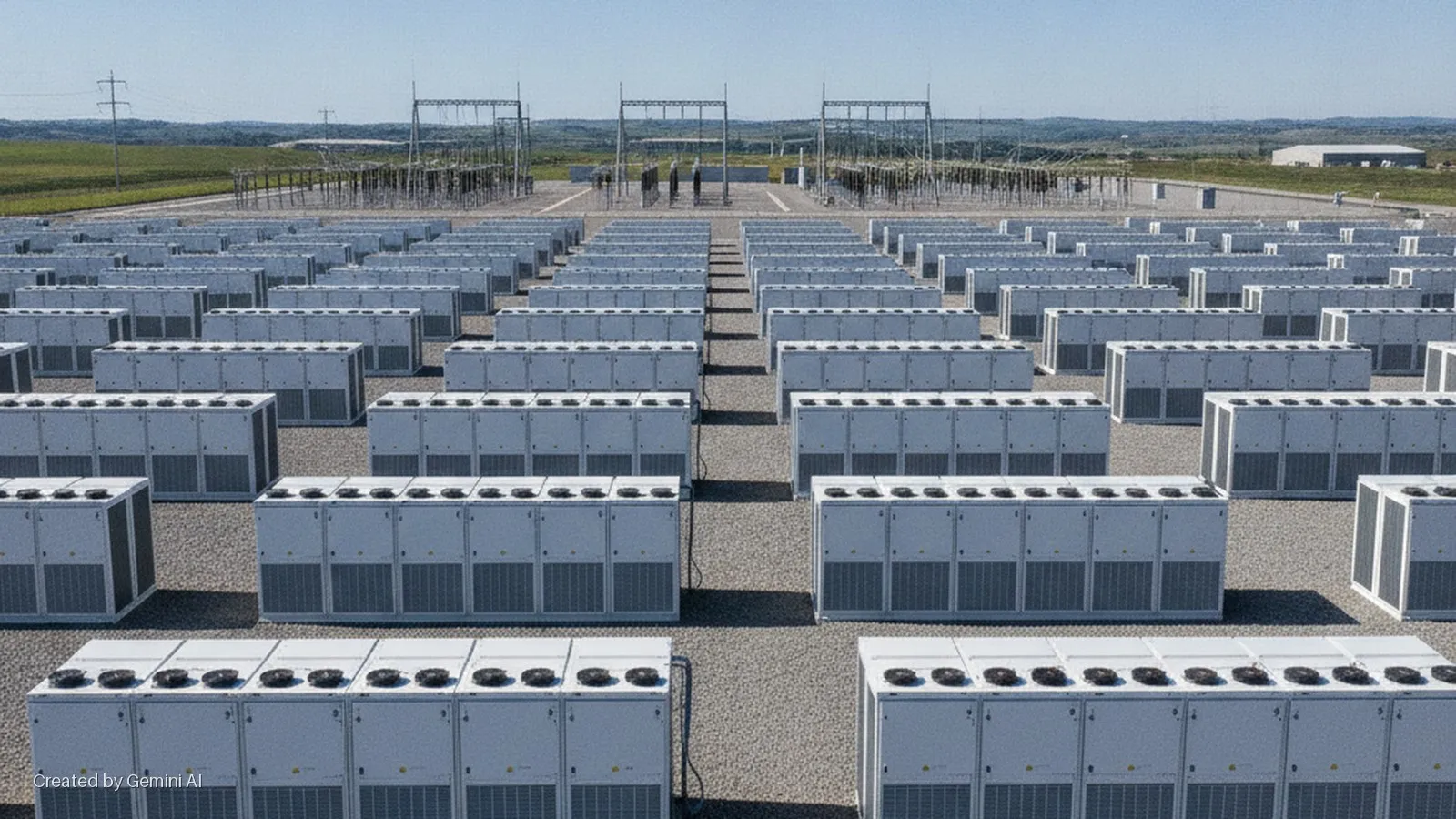
The portfolio review accompanying the results underlines how decisively Enlight is weighting its construction pipeline towards energy storage. Of the 4.5 factored-gigawatt (FGW) under-construction component, roughly 42% is storage capacity. In the pre-construction bucket, that share rises to 77%. During the quarter, Enlight commenced construction of two battery projects in Finland totalling 902 MWh, citing the country's data-centre build-out as the demand rationale. A further 881 MWh project broke ground in Germany. The strategic logic is explicit: storage commands higher unlevered returns (the Finnish projects are projected at 19–20%) than comparable solar-only assets, and co-location with generation increasingly satisfies grid operators looking to contract dispatchable renewable capacity.
The single largest financing event of the quarter was the closing of a $2.6 billion facility for the CO Bar complex in Arizona, the company's largest-ever single project financing and structured across seven global financial institutions. CO Bar encompasses 1.2 GW of solar and 4 GWh of storage across five phases, with total project costs expected at $2.9–$3.0 billion and tax-equity proceeds estimated at $1.5 billion. With the Crimson Orchard project in Idaho adding a further $304 million in project finance, Enlight secured approximately $3.7 billion in financing sources in the first half of 2026 alone.
Convergence read-across: storage, data centres and grid infrastructure
The capital scale here matters beyond the renewables sector. Utility-scale battery storage is rapidly becoming the interface layer between intermittent generation and the always-on power demands of AI data-centre clusters. Enlight's explicit reference to Finland's data-centre ecosystem as a siting rationale for new storage assets reflects a broader dynamic: hyperscaler and co-location operators are signing long-term power agreements that require not just renewable electrons but guaranteed dispatchability. That requirement is pulling renewable developers toward storage-heavy portfolios and is reshaping where project-finance capital flows.
For macro investors, the structural picture is a NASDAQ-listed, dual-currency platform (Tel Aviv debentures, dollar project debt) that is compounding its operating base at what the company says, the company says, will be a 41% CAGR between 2024 and 2028, reaching a $2.2–$2.3 billion annual revenue run rate when the current mature portfolio is fully operational. Approximately 53% of that mature capacity sits in the US, where IRA tax-credit monetisation is already contributing $44 million per quarter and is expected to represent 28–30% of total revenue run rate by end-2027. The geopolitical risk dimension is real: Enlight's MENA segment, which generated $77 million in Q2 revenues, includes Israeli operations subject to ongoing conflict-related uncertainty, a material risk factor the company flags explicitly. European exposure to electricity price volatility and currency movements also contributed positively in Q2 but remains a two-way driver. At a net-debt-to-EBITDA ratio of 5.5x and equity-to-balance-sheet of 57%, the balance sheet is levered but within covenant headroom.
CEO Adi Leviatan said the CO Bar financing "highlights Enlight's execution and financing capabilities and reflects the confidence of our financial partners." The next key catalysts are the Q4 2026 commercial-operation dates for Country Acres (US, 403 MW solar / 688 MWh storage), Gecama Solar in Spain and two smaller European projects, together expected to add materially to the operating run rate heading into 2027.