
nanoSkunkWorkX raises $2m to solve AI chip packaging's heat crisis
nanoSkunkWorkX (nSWX), a Kuala Lumpur-based deep tech startup co-founded by a former NASA principal investigator and an MIT-trained systems strategist, has closed a US$2 million seed round led by Singapore frontier tech VC Tin Men Capital. The raise brings in the company's first Singaporean institutional backer, alongside existing investors Gobi Dana Impak (a fund seeded by Malaysia's sovereign wealth vehicle Khazanah Nasional) and Kumpulan Modal Perdana. The capital will fund semiconductor partner qualification, scale the company's interface-engineering platform, and advance hydrogen and diagnostics programmes across Asia.
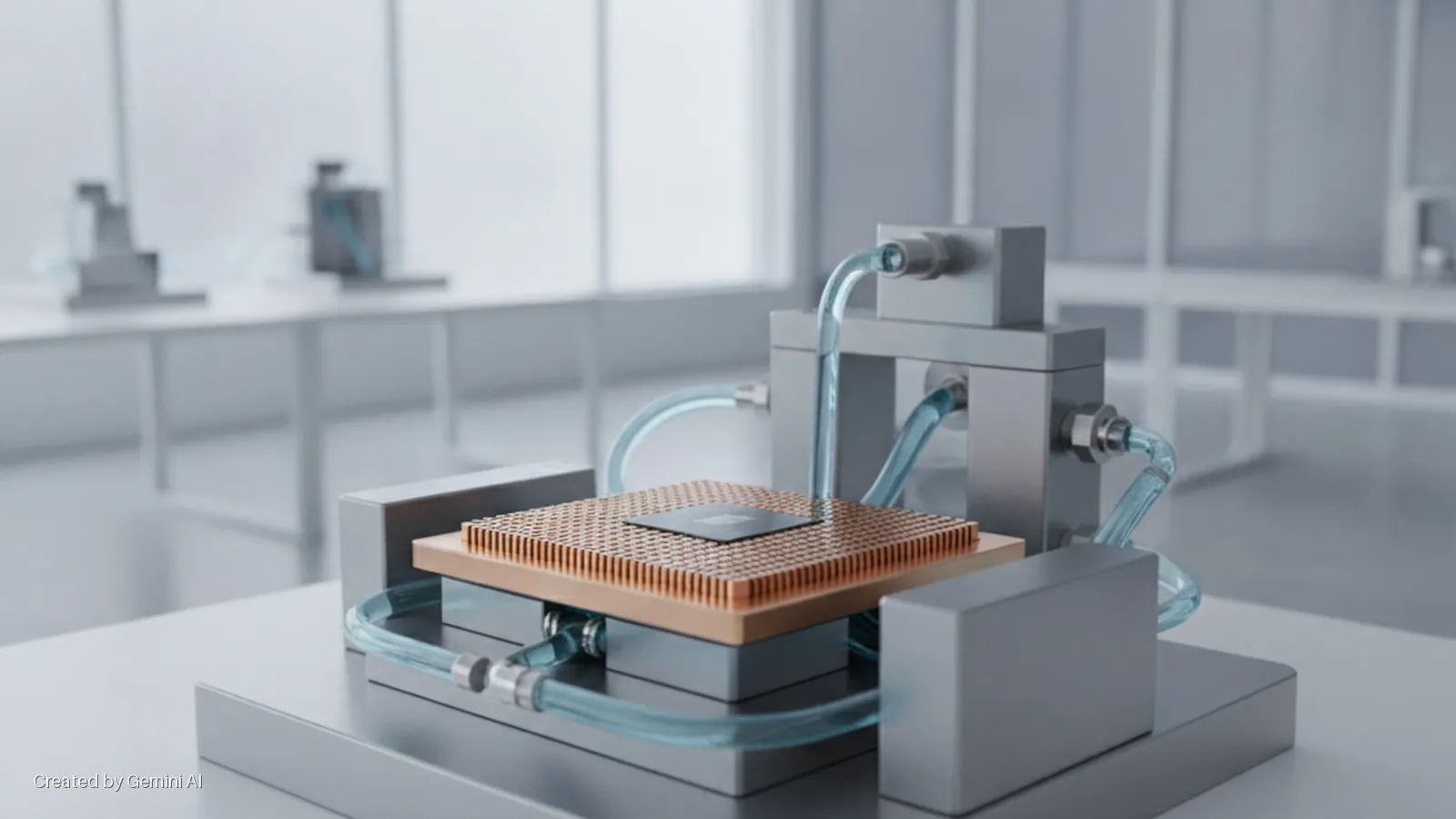
At the centre of the raise is a materials science bet with direct consequences for the economics of global AI infrastructure. As AI chip packages grow denser, the copper interconnects inside them struggle to carry more current and shed more heat without throttling performance. nSWX's lead product, nSD-I, deploys proprietary graphene-copper thin-film interfaces designed to improve both thermal and electrical conductivity without requiring chip manufacturers to replace copper or overhaul existing production lines. Peer-reviewed work presented at IEEE EPEPS 2025 suggests the company's graphene-copper films can move heat across their surface more than twice as effectively as a standard copper baseline, with performance retained after use in pre-qualification test components.
Solving at the boundary, not the blueprint
Co-founder and CTO Dr Amani Salim frames the thesis in terms of where engineering losses actually occur. "At scale, performance breaks at the boundaries between materials. Heat, charge, and signals concentrate where one material meets another, and that is where many critical losses in modern systems occur," she said. "Our thesis is that improving a small, critical interface can unlock much larger system gains while preserving the materials, equipment and manufacturing base already around it."
This is a significant commercial proposition for a sector under acute pressure. Advanced packaging has become one of the primary battlegrounds in AI chip design, as TSMC, Intel Foundry and Samsung race to stack dies more densely while keeping thermal envelopes manageable. A drop-in interface improvement that does not require retooling existing fabs sits in a strategically attractive position: it reduces adoption friction and accelerates qualification cycles.
The company's platform, named SUSANNE, is not limited to semiconductor packaging. In green hydrogen, nSWX is using the same interface-engineering approach to improve charge transfer efficiency in electrolysers and reduce reliance on expensive platinum-group metals. Its diagnostics platform is advancing under a paid joint R&D agreement with the U.S. Navy's Naval Medical Research Unit Indo Pacific (NAMRU INDOPAC) for biosensor development. These are three separate high-stakes sectors, each facing a version of the same fundamental physics problem, which is how to move energy or signals more efficiently across material boundaries.
Southeast Asia's deep tech capital moment
The funding geography is as notable as the technology. Malaysia processes roughly 13 per cent of global chip assembly, testing and packaging, and ranks as the sixth-largest semiconductor exporter. The country is actively building institutional capital behind that manufacturing base: Khazanah has allocated an initial RM1 billion (approximately US$247 million) through its Dana Impak mandate for strategic investments in AI and semiconductor technologies. nSWX's cap table, spanning Malaysian state-linked capital and a Singapore frontier VC, is a working example of how that sovereign appetite is beginning to meet private-market deal flow.
Tin Men Capital managing partner Jeremy Tan described the startup as "a rare team that understands the physics, has built with exceptional capital efficiency, and engages customers at the senior technical level required to actually deploy," adding that the cross-border backing "shows what regional capital can do for frontier technology emerging from Southeast Asia."
For macro investors tracking the AI infrastructure supply chain beyond the hyperscaler balance sheets, nSWX illustrates a broader structural dynamic: the next margin-compression opportunity in AI compute may not come from bigger chips or faster fabs, but from incremental materials science improvements that compound across millions of packages. Southeast Asia, with its deep manufacturing base and growing sovereign capital mandate, is positioning itself as the geography where that transition gets proved out.