
Critical Metals Corp advances European Lithium court process
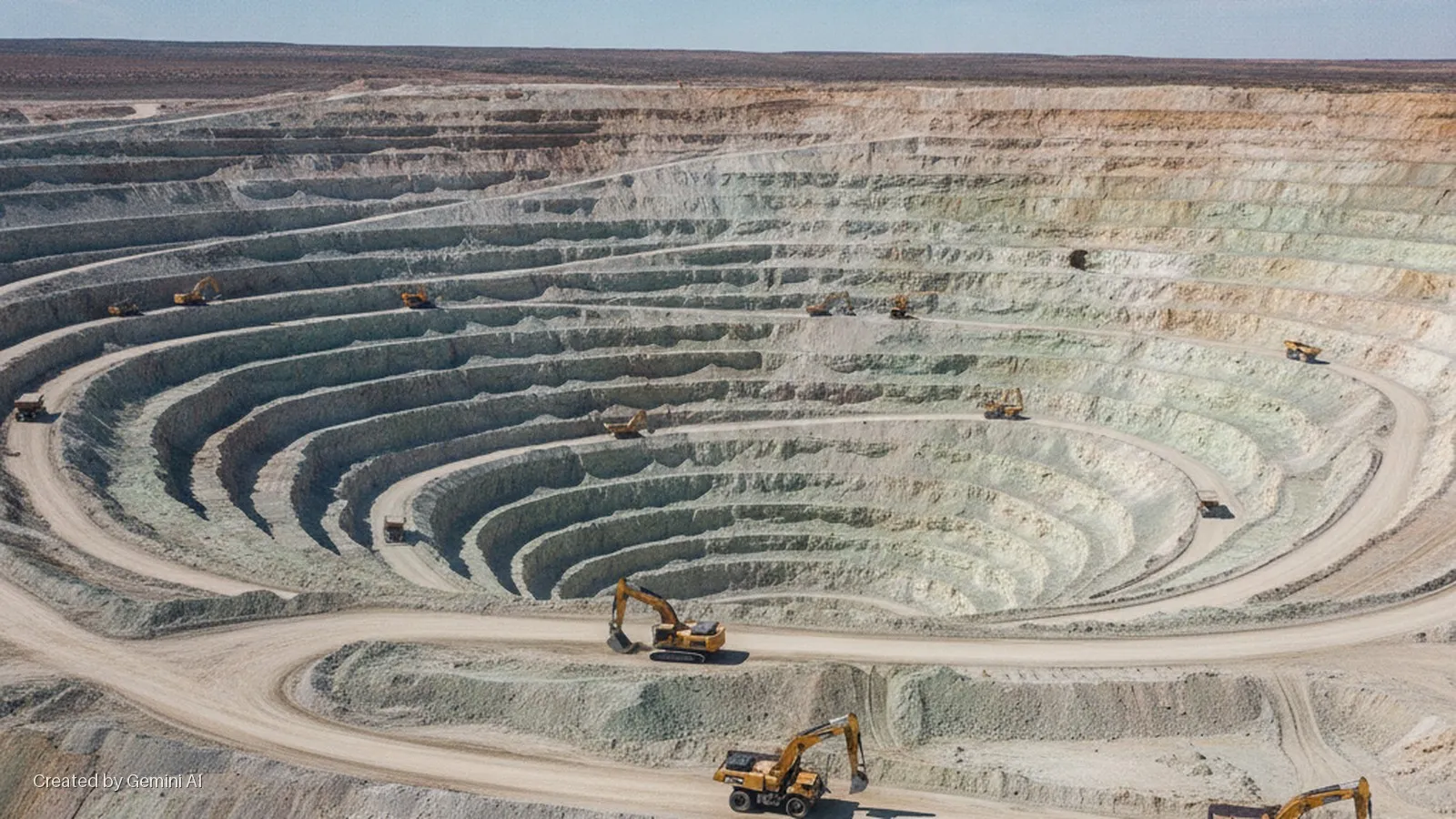
Critical Metals Corp (Nasdaq: CRML), a New York-headquartered mining development company, has confirmed that the Scheme Booklet for its proposed 100% acquisition of European Lithium Limited has been lodged with the Australian Securities and Investments Commission, with a first court hearing set for 15 September 2026. The deal, structured as dual court-approved schemes of arrangement under Australian corporate law, would bring the Wolfsberg Lithium Project in Carinthia, Austria, fully under the CRML umbrella.
The procedural update is modest in isolation, but the strategic backdrop is anything but. European Lithium's Wolfsberg project carries the distinction of being the first fully permitted lithium mine in Europe, a status that has become acutely scarce as the EU accelerates its Critical Raw Materials Act targets and scrambles to reduce dependence on Chinese and South American lithium supply chains.
Why Wolfsberg matters at the macro level
The timing of this deal sits squarely inside one of the most consequential supply-chain realignments of the decade. European automakers and battery gigafactories, many of which have committed to domestic sourcing under EU regulatory pressure, face a structural shortage of locally produced lithium. The company says Wolfsberg already has offtake and downstream partners in place, positioning it as a near-term production asset rather than a speculative exploration play.
Mike Hanson, board director of Critical Metals Corp and chair of the Special Committee overseeing the transaction, described the ASIC lodgement as "an important step forward," adding that both companies are making "steady progress toward completion." Scheme meetings are expected in mid-October 2026, with implementation targeted for early November, subject to shareholder, optionholder, and court approvals.
Cross-sector capital and geopolitical read-across
For the cross-sector investor, the more significant framing is where this acquisition sits within the broader Western critical minerals architecture. CRML's flagship asset, the Tanbreez rare earth deposit in southern Greenland, is one of the world's largest rare earth concentrations and benefits from year-round deep-water shipping access to the North Atlantic. Adding a permitted European lithium producer to that portfolio transforms CRML from a single-asset rare earth play into a diversified critical minerals platform spanning two of the most strategically contested resource categories: rare earths for defence and next-generation electronics, and lithium for the battery supply chain underpinning both the clean energy transition and electric vehicle production.
That dual positioning is increasingly attractive to sovereign wealth funds and institutional allocators who are being pushed, by both regulatory mandate and geopolitical risk management, to back Western-aligned critical mineral supply. The EU's dependency on non-Western lithium sources remains structurally high; a fully permitted, infrastructure-connected Austrian mine with established offtake agreements is a rare asset in that context.
The deal's multi-jurisdictional complexity, spanning Nasdaq, the ASX, the Frankfurt Stock Exchange, and the Supreme Court of Western Australia, also reflects how capital markets are adapting to resource nationalism: transactions of this type must now navigate at least three sovereign regulatory frameworks simultaneously, a structural feature of critical minerals M&A that is unlikely to simplify as geopolitical tensions persist.
Investors will watch the mid-October scheme meetings as the next substantive milestone. If approved, a November 2026 implementation would give CRML a producing-ready European lithium asset ahead of what most battery-supply analysts expect to be a tightening lithium market in 2027.