
Lumana and Convergint bring AI video intelligence to legacy cameras
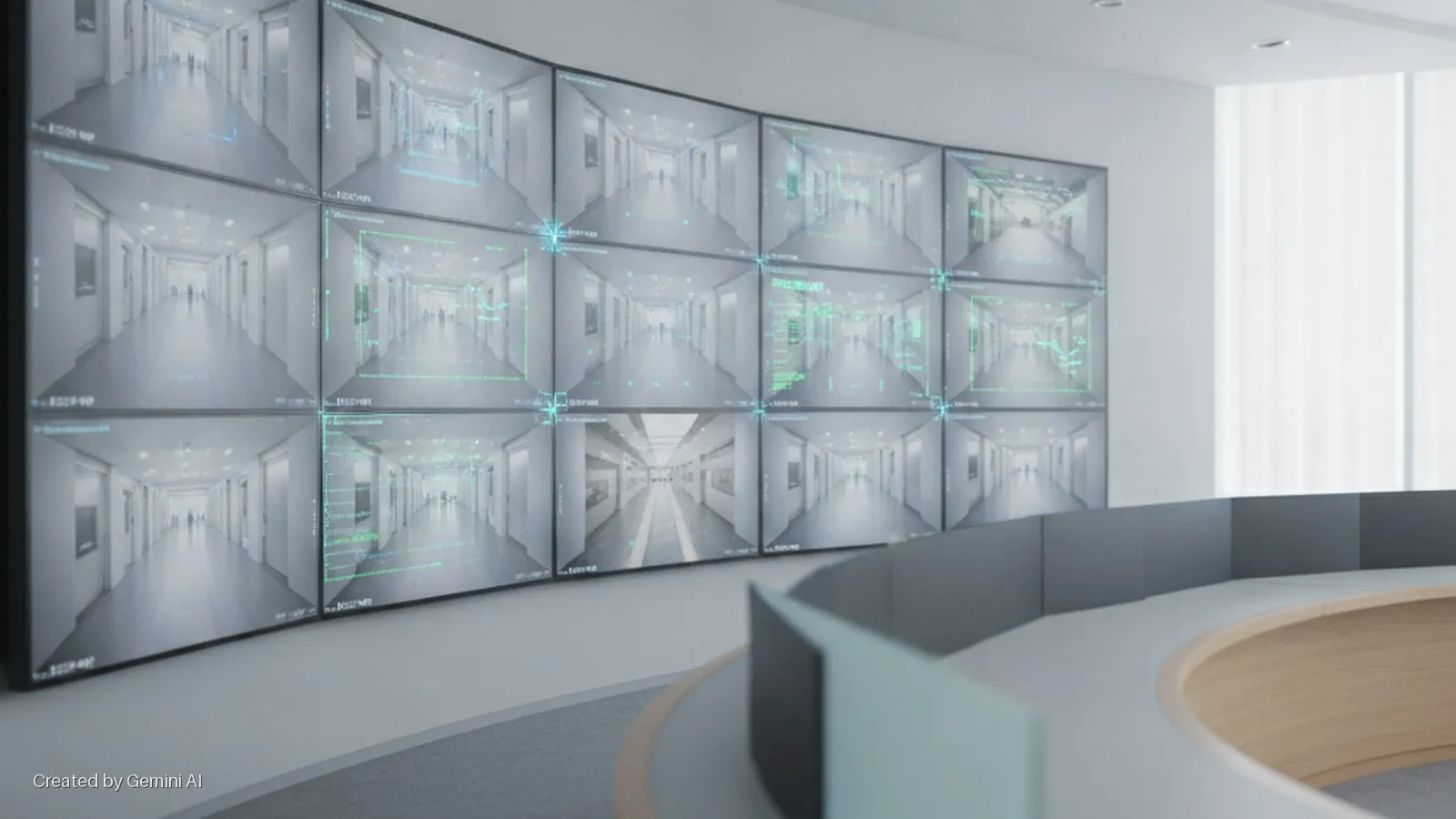
Lumana, a US-based AI video security provider backed by Wing Venture Capital, Norwest, and S Capital, has formed a global distribution and integration partnership with Convergint, the independent security services integrator with more than 11,000 colleagues across 200-plus locations worldwide. Under the arrangement, Convergint's Technology Centres will design, deploy, and service Lumana's AI video platform across enterprise, mid-market, and public sector customers, without requiring those customers to replace a single camera.
The strategic logic is straightforward: most organisations carry significant sunk investment in IP camera infrastructure, yet the company says the overwhelming majority of recorded footage is never reviewed by a human. Lumana's platform addresses that latency by converting passive recording devices into what the company describes as AI agents, capable of monitoring for specific events, surfacing operational insights, and accelerating incident investigations. The underlying model, VIA-1, is trained continuously on each deployment environment.
From passive infrastructure to active intelligence
Lumana's architecture is worth examining for what it reveals about the broader direction of physical security technology. Rather than a cloud-first or on-premises-only model, the platform uses a distributed hybrid-cloud design: video analysis runs locally to minimise bandwidth and latency, while flagged incidents are escalated to the cloud for deeper review and remote management. The result is a compliance posture broad enough to satisfy SOC 2 Type II, ISO 27001, GDPR, HIPAA, and NDAA requirements simultaneously, a deliberate play for regulated verticals including healthcare, higher education, and government.
Sagi Ben Moshe, Co-Founder and CEO of Lumana, framed the rationale clearly: "The combination of our AI video security platform with Convergint's field engineering expertise gives enterprise and public sector customers a seamless path to transform their video security into actionable intelligence so they can see, understand and act on threats in real time, all without replacing their existing hardware."
The partnership model is also notable for how it packages go-to-market risk. Lumana, as a venture-backed startup, gains instant access to Convergint's installed customer base across critical infrastructure, data centres, financial institutions, and healthcare, verticals that typically demand long proof-of-concept cycles and deep regulatory reassurance before any new vendor clears procurement. Convergint, for its part, expands the AI-enabled options it can position against competing integrators.
Convergence angle: AI layered on legacy physical infrastructure
The Lumana-Convergint deal sits within a fast-moving structural trend: the retrofitting of legacy built-environment infrastructure with AI inference at the edge. The same logic that drives AI overlays onto existing CCTV networks is also reshaping building management systems, industrial sensor arrays, and logistics camera grids, sectors where the cost of hardware replacement is prohibitive but the appetite for operational intelligence is growing.
For cross-sector investors, the pattern is instructive. Rather than requiring greenfield capital expenditure, the more scalable near-term AI infrastructure opportunity may lie in software and services layers that activate data already being generated but never analysed. Lumana's camera-agnostic positioning, and Convergint's vertical depth in regulated industries, represent one template for that model. The broader question, as AI video platforms proliferate across retail, manufacturing, and public sector, is where liability and data-governance frameworks will settle, particularly as GDPR and HIPAA obligations interact with always-on AI inference running across thousands of camera endpoints. That regulatory clarification will likely determine how quickly enterprises in the EU and UK move from pilots to enterprise-wide rollouts.