
Arada KSA launches with AED49bn land bank to build Saudi communities
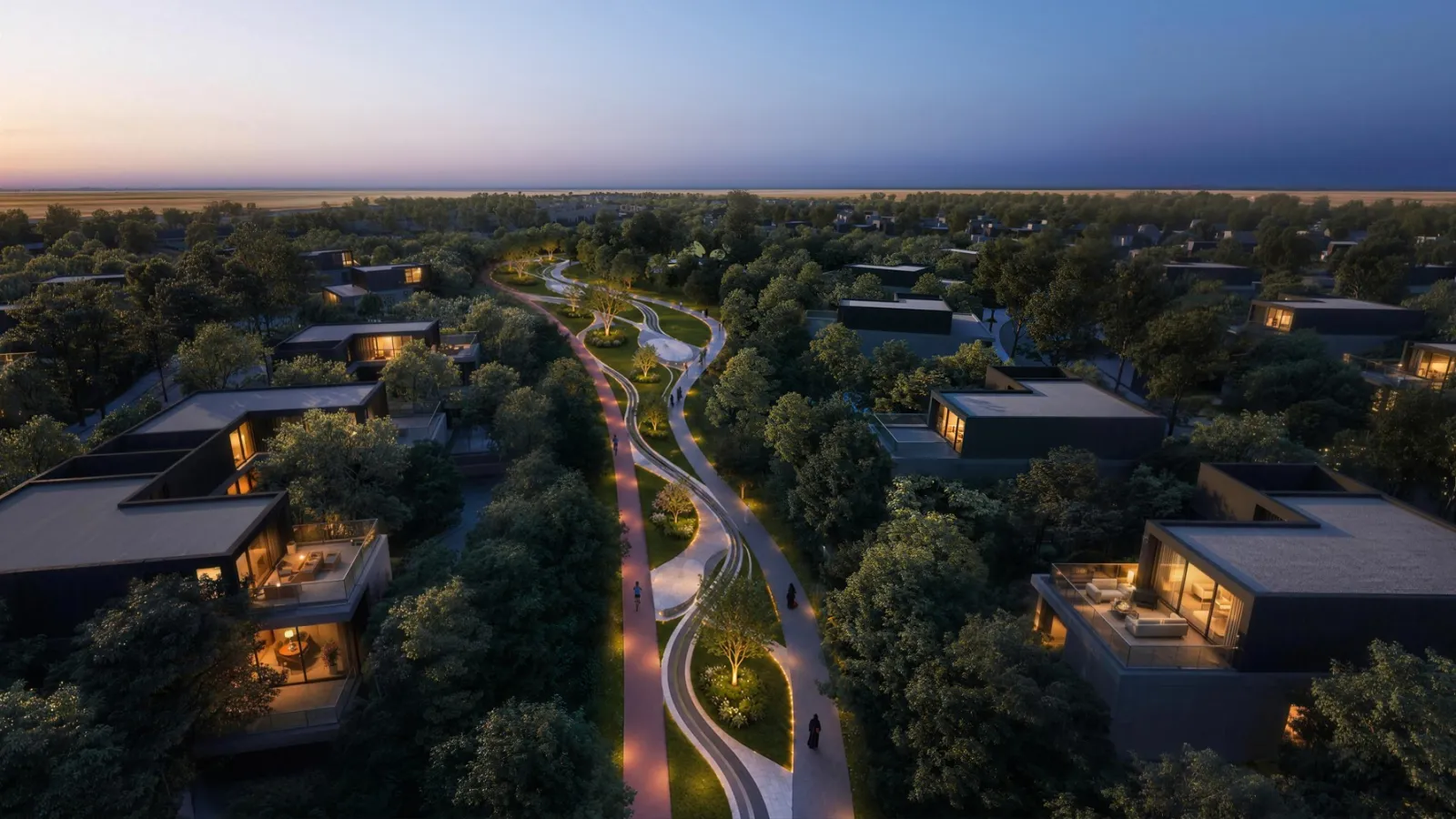
Arada, the UAE-based master developer, has established Arada KSA, a new real estate development company formed in partnership with Saudi community and lifestyle group XTOPIA. The joint venture enters the market with access to a 10 million square metre land bank valued at AED49 billion, spanning Riyadh, Jeddah and Makkah, and signals a decisive step in the cross-border reallocation of Gulf property capital that Vision 2030 is actively orchestrating.
Mohammed AlDhabaan, Chairman of XTOPIA, has been appointed Chairman of Arada KSA. His appointment reflects a common structural logic in Saudi market entry: an internationally credentialled developer anchors the delivery capability, while a locally embedded partner navigates the regulatory, land and governmental relationships that determine pace to market. The arrangement also mirrors how sovereign-directed economic programmes like Vision 2030 tend to channel inward investment, preferring joint vehicles with domestic participation over pure foreign-ownership structures.
A flagship project and a regulated capital structure
Arada KSA's first project is a AED14 billion residential master plan in the Al Rimal District of north-eastern Riyadh, described as one of the largest private real estate announcements in the Saudi capital in recent years. The development covers roughly 2.5 million square metres and will deliver an estimated 3,500 villas and townhouses alongside a school, retail, a community centre and sporting facilities. Construction and sales are both scheduled to begin in 2027.
Notably, the project will be funded through a Capital Market Authority-regulated investment structure managed by a licensed financial company. That financing architecture matters beyond the deal itself: it signals that Saudi Arabia's real estate capital markets are maturing in step with the country's physical development ambitions, offering institutional and retail investors regulated exposure to master-planned community assets, a product class that has historically been accessible mainly through opaque private channels or direct property purchase.
The convergence of sovereign capital, lifestyle infrastructure and urban policy
For cross-sector strategists, the Arada KSA launch is worth reading beyond its property headline. The Al Rimal project explicitly supports the Quality of Life Programme, one of Vision 2030's delivery arms, and is aligned with the Royal Commission for Riyadh City's Green Riyadh initiative, which targets a 16-fold increase in per capita green space by 2030. That alignment is not incidental: in Saudi Arabia, private real estate capital and sovereign urban policy are increasingly operating as co-investors, with developers who embed public-programme goals gaining preferential access to strategic land parcels at scale.
Arada's own trajectory illustrates the momentum. The company now reports a global project pipeline valued at AED185 billion across five markets, with a portfolio of more than 70,000 homes in the UAE, the United Kingdom, Australia, Syria and now Saudi Arabia. That geographic spread reflects a deliberate internationalisation strategy, but the Saudi entry is the most consequential leg: the Kingdom's residential market is the largest in the Arab world, and Vision 2030's housing targets, combined with a young, rapidly urbanising population, are drawing capital from developers that previously concentrated in the more saturated Dubai and Abu Dhabi corridors.
For investors tracking Gulf real estate allocation, the structural read-across extends into adjacent sectors. Large-scale master-planned communities require sustained investment in education, healthcare, retail and logistics infrastructure, all sectors that Arada explicitly lists within its vertically integrated operating scope. XTOPIA's own portfolio, which spans food and beverage, fitness and destination management, suggests Arada KSA is not simply a housing developer but a lifestyle-infrastructure platform, the kind of vertically integrated urban operator that sovereign wealth funds and long-duration institutional investors have been actively seeking as an alternative to single-asset real estate exposure.
The question for capital allocators is whether the regulated CMA investment structure for Al Rimal becomes a template, and, if so, how quickly the Saudi real estate capital markets can absorb the volume of deals that Vision 2030's build-out will require.