
BRAC Bank goes live with Finastra trade finance platform
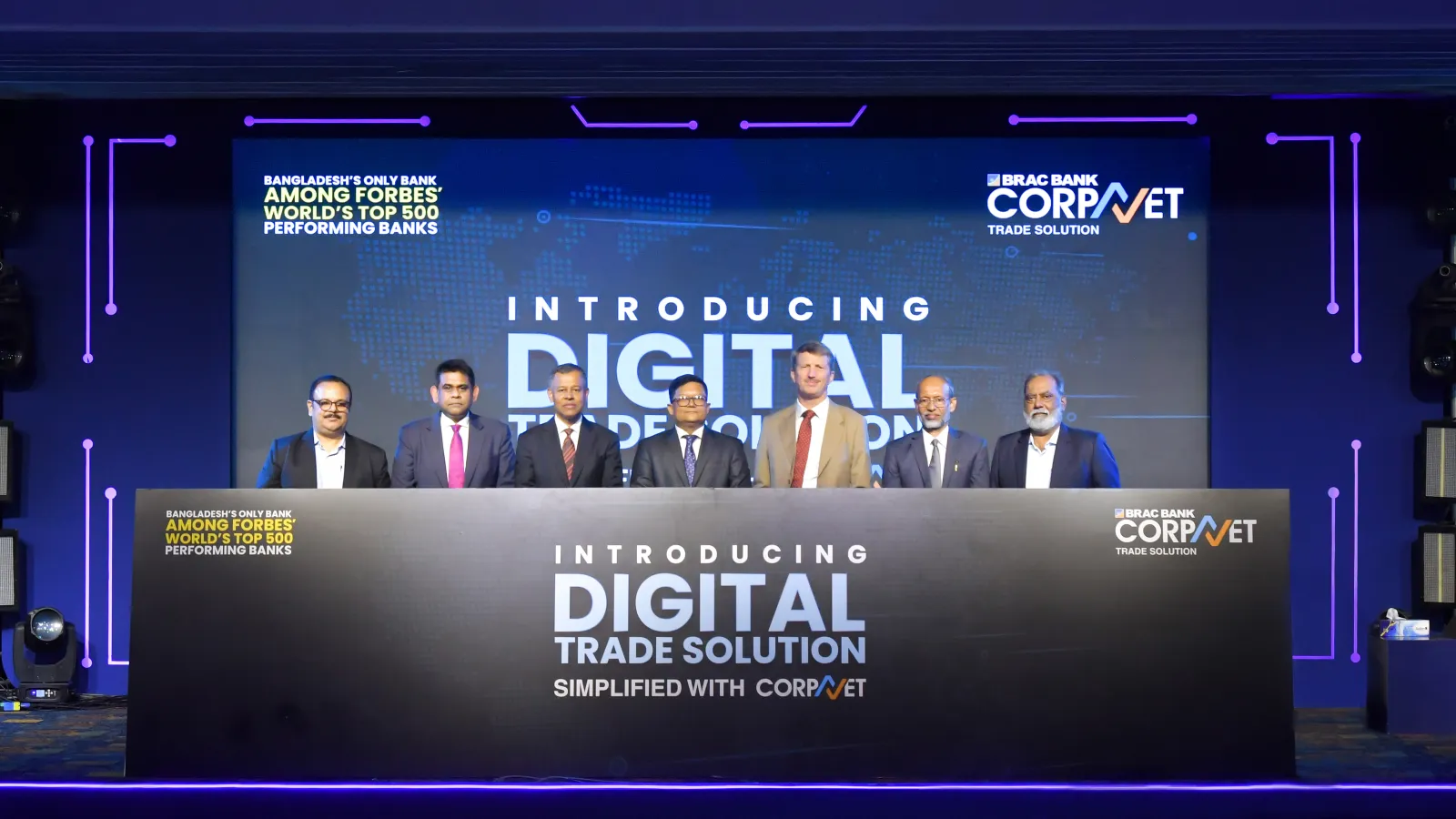
BRAC Bank, Bangladesh's most capitalised private commercial bank, has gone live with Finastra's Trade Innovation, Corporate Channels and Conpend Trade AI suite, replacing fragmented manual workflows with a unified digital platform for its corporate trade finance clients. The deployment, confirmed on 21 October 2026, positions the Dhaka-headquartered lender to process higher transaction volumes with less friction as Bangladesh's export-led economy continues to attract manufacturing investment redirected from China.
The move is strategically timed. South and South-East Asia are absorbing a significant share of global supply-chain diversification capital, with Bangladesh's ready-made garments sector alone accounting for roughly 85% of the country's export earnings. As Western buyers and their sourcing intermediaries demand faster, more transparent trade settlement, the banks facilitating those flows face pressure to modernise or lose corporate wallet share to regional rivals with newer infrastructure.
Digitising the trade lifecycle
The Finastra platform addresses three operational pinch-points that older trade finance systems routinely fail on: straight-through processing rates, real-time visibility for corporate clients, and compliance with the ISO 20022 messaging standard and Swift SR2026 requirements. The latter two are not optional upgrades. SWIFT's SR2026 mandate effectively sets a hard deadline for correspondent banking infrastructure, making technology refresh a compliance necessity as much as a competitive one.
Conpend's Trade AI layer adds document-checking automation to the stack, reducing the manual review burden on letters of credit and guarantees. Trade finance document errors remain a significant source of discrepancy costs across the industry, and AI-assisted checking is increasingly the standard response. Finastra's EVP for Lending, Andrew Bateman, noted that banks are seeking technology that "simplifies operations while delivering a better customer experience", a framing that understates the regulatory compulsion also driving adoption.
The convergence angle: fintech infrastructure meets supply-chain geography
For cross-sector investors, the more interesting read-across is what a cluster of similar deployments signals about capital allocation across emerging-market banking infrastructure. Finastra, backed by Vista Equity Partners, is one of a small number of software vendors with the scale to serve tier-one banks in frontier and emerging markets simultaneously. As supply-chain diversification pushes manufacturing activity into Bangladesh, Vietnam, India and the broader Global South, the banks serving those economies face a technology upgrade cycle that is compressing. Fintech infrastructure vendors positioned in those corridors stand to benefit from a wave of modernisation spending that mirrors, at a smaller scale, the core-banking replacement cycle Western banks ran through in the 2010s.
There is also a sovereign-level dimension. Bangladesh's government has made digital financial infrastructure a pillar of its economic development agenda, and BRAC Bank's S&P and Moody's credit ratings give it access to international capital markets on terms most domestic peers cannot match. A modernised trade platform strengthens the bank's correspondent banking relationships and its ability to onboard multinational corporate clients, both of which have direct implications for Bangladesh's foreign-exchange earnings and its broader integration into global trade networks.
BRAC Bank's Managing Director and CEO, Tareq Refat Ullah Khan, framed the deployment as part of an ambition to become "the most preferred trade bank in Bangladesh." Whether that aspiration translates into measurable market-share gains will depend on how quickly the bank can demonstrate improved processing times and reduced discrepancy rates to its corporate clients. The next meaningful data point will be BRAC Bank's transaction volume and efficiency metrics in its next set of published results.