
DrizzleX raises $6.8m to make water waste a real estate value lever
DrizzleX, a California-based water intelligence platform targeting multifamily and commercial real estate, has closed a $6.8 million Series A-2 round led by Israel Investment Fund Group. What distinguishes the raise is its investor base: a significant share of the capital came from DrizzleX's own customers, property owners who used the platform first and then wrote cheques once they saw the impact on their net operating income.
The arithmetic driving that decision is straightforward. At a five per cent capitalisation rate, a dollar of operating expense avoided translates into twenty dollars of asset value. Water and sewer bills, the company notes, are often the largest uncontrolled expense line in a multifamily building served by a single master metre, making them an invisible drag on valuations that most operators have historically accepted as fixed costs.
Fixture-level intelligence, portfolio-scale returns
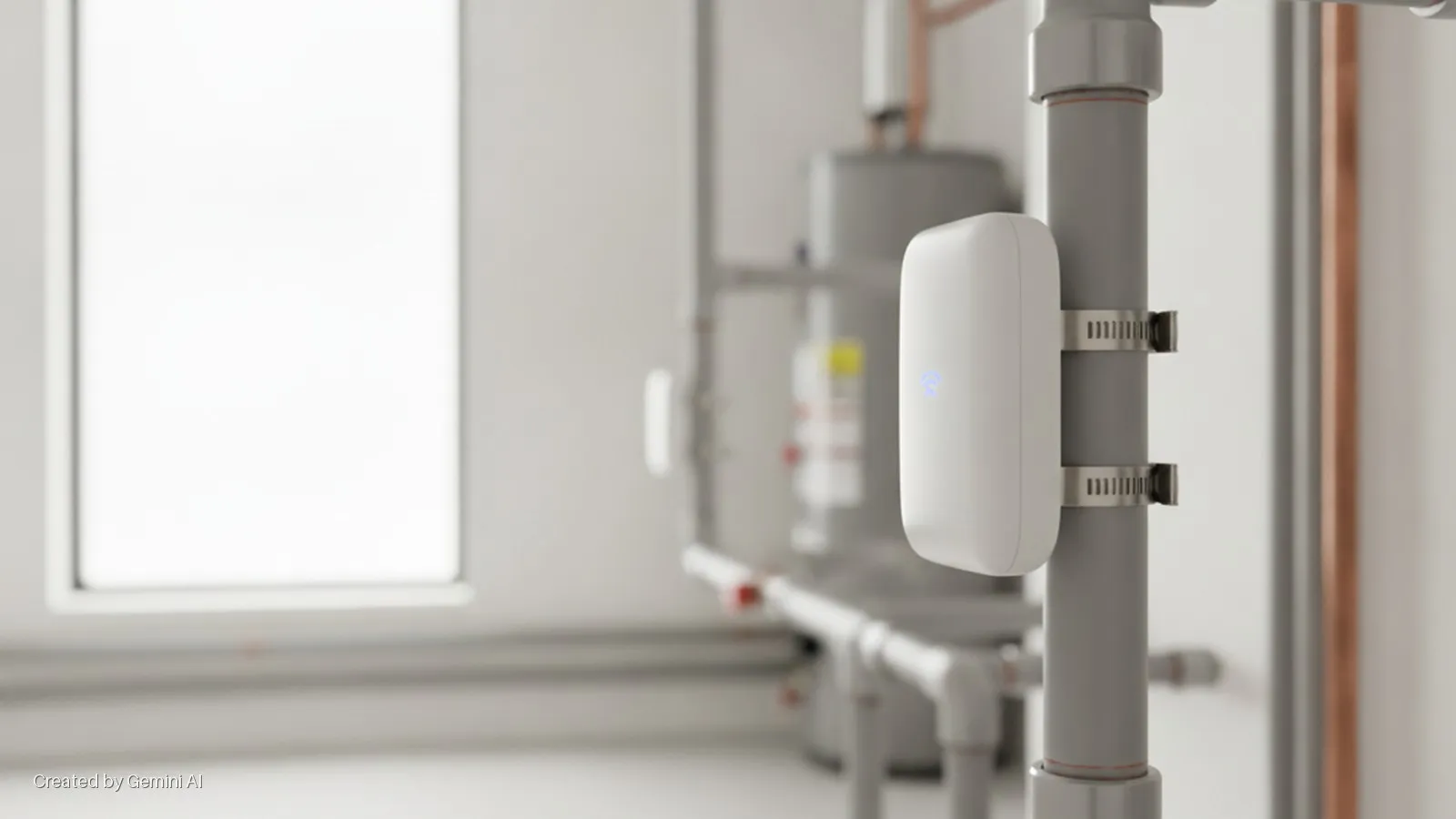
DrizzleX's core product is a patented micrometer that clips onto any fixture, from toilets and showers to sinks and appliances, without pipe cutting, permits, or a plumber. Each device measures flow minute by minute, runs on an internal battery, and operates entirely off the building's power and Wi-Fi infrastructure. A full apartment can be instrumented in roughly fifteen minutes by a maintenance team. The software layer then ranks every detected anomaly by potential cost, routes urgent alerts to management, and confirms whether a repair has genuinely resolved the issue by checking whether flow has returned to baseline.
The platform also supports tenant water billing where regulations permit. With a micrometer on every water point in a unit, each apartment becomes fully sub-metered, meaning residents pay for actual consumption rather than an estimated share of a building-wide bill. DrizzleX says properties using the system have cut water consumption by between 20 and 40 per cent, with hardware and subscription costs recovering in two to eight months. One Los Angeles portfolio with DrizzleX across more than 2,000 units is saving approximately 25 per cent on water costs, adding close to one million dollars annually to the bottom line.
"Owners don't buy water technology. They buy increased NOI," said Esther Altura, CEO and co-founder. "Every wasted gallon has an address, and every dollar saved is worth twenty in the value of the asset."
The funding will be deployed across sales and go-to-market expansion, hardware manufacturing improvements, and integrations with leading property management platforms.
The convergence angle: proptech meets sustainability economics
The DrizzleX raise reflects a maturing convergence between operational real estate technology and sustainability-linked asset management. As ESG-aligned capital increasingly prices physical-asset risk, water efficiency is shifting from a compliance checkbox to a direct valuation input. European institutional landlords have faced regulatory pressure on water reporting for several years; in the US, California's tiered pricing structures and drought-driven utility tariff increases are accelerating the commercial case for sub-metering at speed.
For the broader property technology investment landscape, the DrizzleX model represents a notable structural variant: customer-led funding rounds, where the investor and the end-user are the same party, compress the typical adoption risk that plagues early-stage hardware plays. Customers who have already seen a positive return validate both the product and the unit economics in a way that external venture capital cannot replicate.
The wider implication for cross-sector investors is that real estate's historically low technology-adoption curve is being shortened not by top-down mandate but by direct NOI pressure. As interest rates keep acquisition yields tight and asset values sensitive to even modest cost improvements, platforms that convert previously uncontrolled operating expenses into measurable, monetisable data are structurally well-positioned. Water is the first expense line DrizzleX addresses; the fixture-level data it accumulates creates an obvious foundation for broader building efficiency and preventive maintenance products. Sovereign wealth and infrastructure-focused funds that have been rotating into climate-resilient real assets should note that the commercial case here requires no green premium: the returns are conventional, the ESG credentials are a secondary benefit.