
CSG unveils armoured vehicles and air defence system at Eurosatory 2026
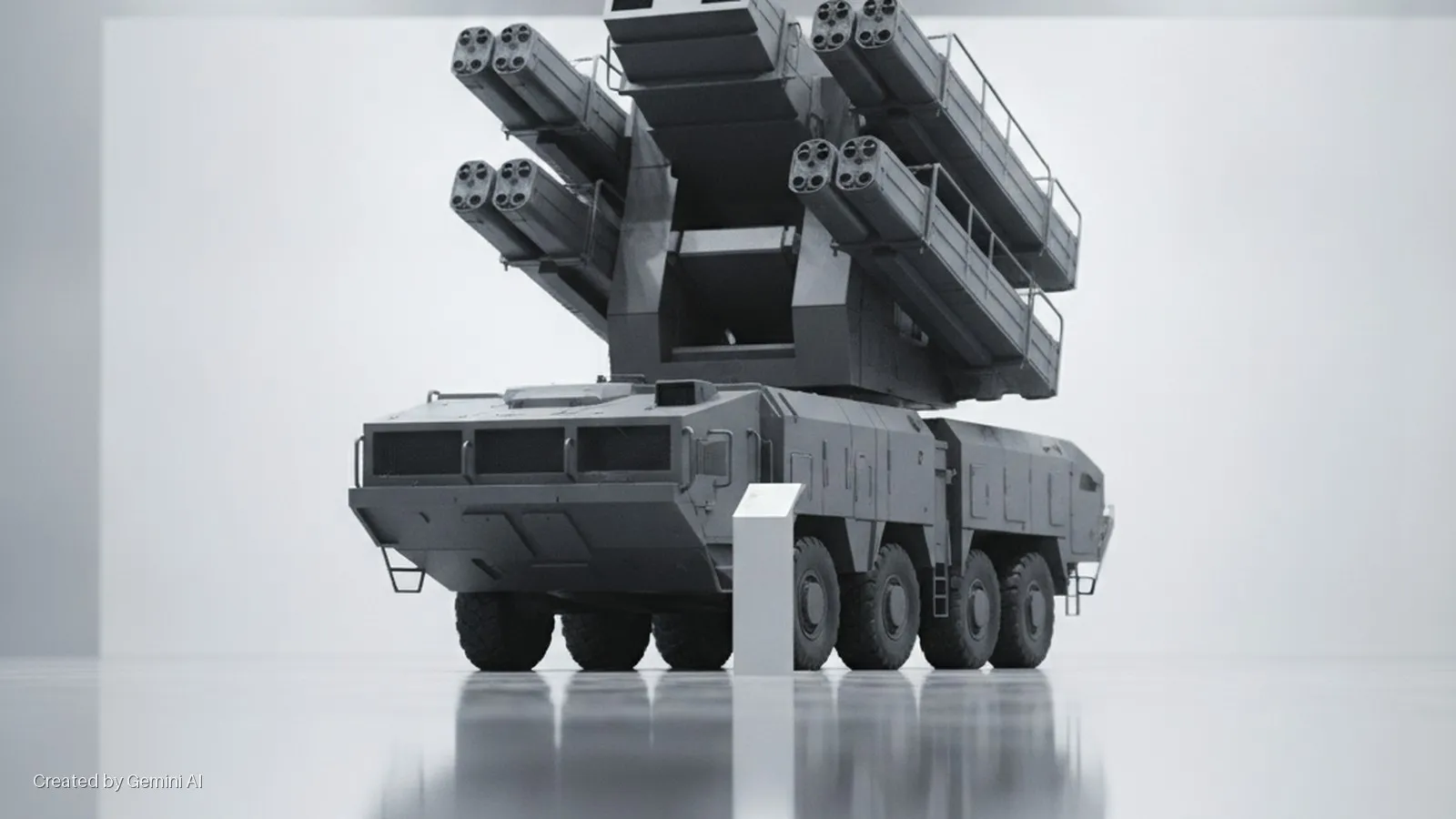
CSG, the Czech industrial and technology group, arrived at Eurosatory 2026 in Paris as one of the exhibition's largest single exhibitors, using the platform to debut new armoured vehicles, unveil a multi-layered air defence system, and sign partnerships that stretch from Kyiv to Ankara. The announcements, spanning hardware, propulsion and systems integration, position CSG as a consolidating force in a European defence industry scrambling to rearm at scale.
From Prague to Kyiv: propulsion deals and platform debuts
The opening day centred on two developments with direct relevance to the war in Ukraine. CSG's subsidiary AviaNera Technologies signed a strategic cooperation agreement with Ukrainian Armor LLC covering the supply of jet engines across multiple performance tiers for guided missiles and unmanned platforms. The agreement also envisages a future joint venture and the localisation of European propulsion technology inside Ukraine, a move that advances Kyiv's stated ambition of building domestic defence manufacturing capacity rather than relying indefinitely on foreign supply chains.
Alongside the propulsion deal, Tatra Defence Vehicle unveiled the world premiere of the Tadeas 4x4 armoured vehicle in its command configuration. The platform complements the existing Tadeas 6x6 variant and is designed for command, communications and reconnaissance roles. It offers ballistic protection up to STANAG 4569 Level 4 with optional add-on armour kits, and draws on shared chassis and electronic components from the third-generation Tatra Force product line, giving operators a logistics-friendly common-platform architecture. Powertrain options from Tatra, Cummins or Caterpillar give procurement teams flexibility across NATO and non-NATO markets.
A new Slovak joint venture and a modular air defence system
On day two, CSG Defence and Turkish firm FNSS Savunma Sistemleri signed a framework agreement to establish Danube Defence Systems, a new entity to be headquartered in Trenčín, Slovakia. CSG will hold a 51% stake, with FNSS at 49%. The venture's flagship product will be the CFL-120 Karpat, a medium tank based on FNSS's Kaplan platform and armed with a 120 mm gun. The vehicle is designed to deliver main-battle-tank firepower with a lighter logistical footprint, a combination that NATO planners increasingly favour as they look to field credible armoured capability faster and more cheaply than legacy heavy-tank programmes allow. An armoured personnel carrier and infantry fighting vehicle are planned as further variants.
Also unveiled on day two was the Trident multi-layered air defence system, for which Excalibur International acts as system architect and prime integrator. Retia contributes radar and command-and-control, Tatra Trucks and Tatra Defence supply the platform and launcher elements, while Turkish partner Roketsan provides short-, medium- and long-range surface-to-air missiles. The modular architecture allows a single battery to address threats from low-flying drones through to guided missiles, reflecting the layered counter-UAS and missile-defence requirements that the Ukraine conflict has made urgent across European militaries.
The convergence angle: defence industrialisation meets European capital reallocation
The strategic significance of CSG's Eurosatory showing reaches well beyond Czech defence procurement. European governments have committed to substantially higher defence spending under NATO pressure, and the capital flowing into rearmament is now catalysing a wave of cross-border industrial consolidation. The CSG-FNSS joint venture is a clear example: a Central European manufacturer combining with a NATO-aligned Turkish prime to access Slovak production capacity, Turkish platform technology, and a shared addressable market across European armed forces and export customers simultaneously.
The Ukraine propulsion partnership carries an equally important macro signal. As Western governments seek to shift from direct military aid to building indigenous Ukrainian production, agreements that localise European technology inside Ukraine represent the next stage of defence-industrial policy. For investors watching the broader European defence technology space, CSG's multi-front positioning at a single trade show illustrates how mid-tier defence groups are using the current rearmament cycle to vertically integrate across platforms, propulsion and systems in ways that historically only prime contractors managed.
For cross-sector strategists, the Trident programme's multi-country supply chain (Czech radar, Czech chassis, Turkish missiles) is a template worth watching. If European air defence procurement accelerates, the industrial model that assembles sovereign-friendly components across allied nations may become the dominant procurement architecture of the decade.