
GFiber and Quext roll out Wi-Fi 7 smart network at Irvine complex
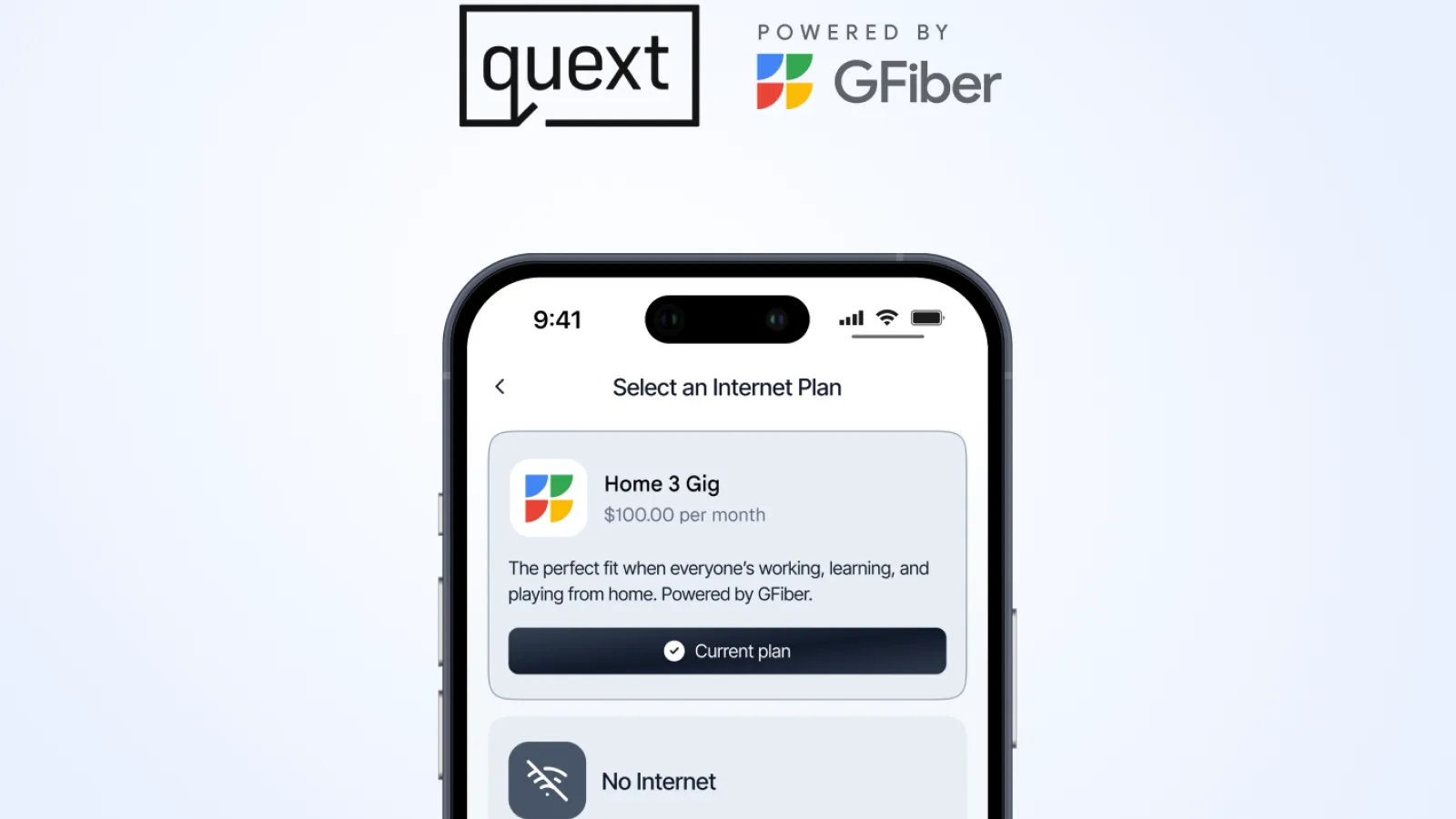
GFiber, the Google-backed fibre broadband provider, and smart property technology firm Quext have launched what they describe as a first-of-its-kind managed connectivity platform at Pacifica Place, a newly built 896-unit apartment complex in Irvine, California operated by the Irvine Company. The deployment combines 3 Gbps symmetrical fibre speeds with Wi-Fi 7 radio technology and a unified smart-home control layer, covering every unit and common area from the moment a resident moves in.
The "Instant On Connectivity" proposition is the headline claim. Rather than waiting days for an engineer visit or equipment delivery, new residents activate a personal network through the Quext app in seconds, using it to manage Wi-Fi credentials, control thermostats, and operate smart locks via Bluetooth. The private network then follows residents across communal spaces, removing the security and performance compromises of shared public Wi-Fi. Prospective tenants can also access guest Wi-Fi during self-guided tours through an integration with Irvine Company's own Tour Guide app, built on Quext's API and SDK.
Setting a new bar for proptech infrastructure
The technical specification is notable. Wi-Fi 7 (the 802.11be standard) delivers multi-gigabit wireless speeds and lower latency than its predecessor, Wi-Fi 6E, making it capable of handling the increasingly dense device environments inside modern apartments: streaming screens, smart appliances, remote-work setups and security hardware running simultaneously. Pairing that radio layer with a 3 Gbps fibre backhaul per unit places Pacifica Place well ahead of the pre-installed broadband norm in US multifamily housing, where 1 Gbps shared connections remain common.
John Keib, Chief Technology and Product Officer at GFiber, said the launch sets "a new standard for resident experience and eliminating connectivity friction from day one." The Irvine Company's VP Jinda Reining positioned the partnership as part of a broader drive to differentiate its portfolio at the premium end of the rental market, noting that connectivity is now available instantly upon move-in.
Cross-sector read-across: where real estate meets digital infrastructure
For the cross-sector strategist, the more interesting signal here is structural. The multifamily sector is quietly becoming a battleground where fibre network operators, smart-building software platforms, and real estate asset managers are vertically integrating. GFiber's move into managed Wi-Fi as a landlord-facing B2B product line represents a deliberate pivot beyond its consumer ISP roots. Quext, founded by multifamily investment firm Madera Residential, embeds operator economics directly into its technology stack, targeting net operating income (NOI) improvement as the commercial hook for property owners rather than resident delight alone.
That framing matters for capital allocation. US multifamily real estate, a multi-trillion-dollar asset class, has historically treated connectivity as a utility afterthought. The emerging model treats it as a differentiated amenity and a data layer, enabling dynamic lease pricing, operational automation, and reduced on-site staffing costs. A National Multifamily Housing Council survey cited in the release reports that nearly 75% of apartment tenants consider pre-installed Wi-Fi an important amenity, giving landlords a quantified justification for upgrading infrastructure spend.
The wider implication is for the internet-of-things and smart-building sector. As managed-Wi-Fi deployments standardise across large residential portfolios, the installed base for IoT device control, energy management integration, and eventually predictive maintenance sensors expands at scale. That creates a pull-through opportunity for energy management software vendors, smart-appliance manufacturers, and the cloud infrastructure providers that process building telemetry. GFiber and Quext's Irvine rollout is a single property today, but the replicable SaaS-plus-infrastructure model it demonstrates points toward a broader platform play across the Irvine Company's 125 apartment communities and 65,000 units, and beyond into the wider US multifamily market.
For investors watching convergence plays, the real-estate-as-digital-infrastructure thesis is gaining tangible deployments to point at. The question is how quickly competing ISPs and proptech platforms respond, and whether fibre operators like GFiber can lock in long-term managed-services contracts before hyperscalers or telecoms incumbents mount a serious challenge in the segment.