
DeepInfra and humans& deploy 1,000-GPU cluster for frontier AI
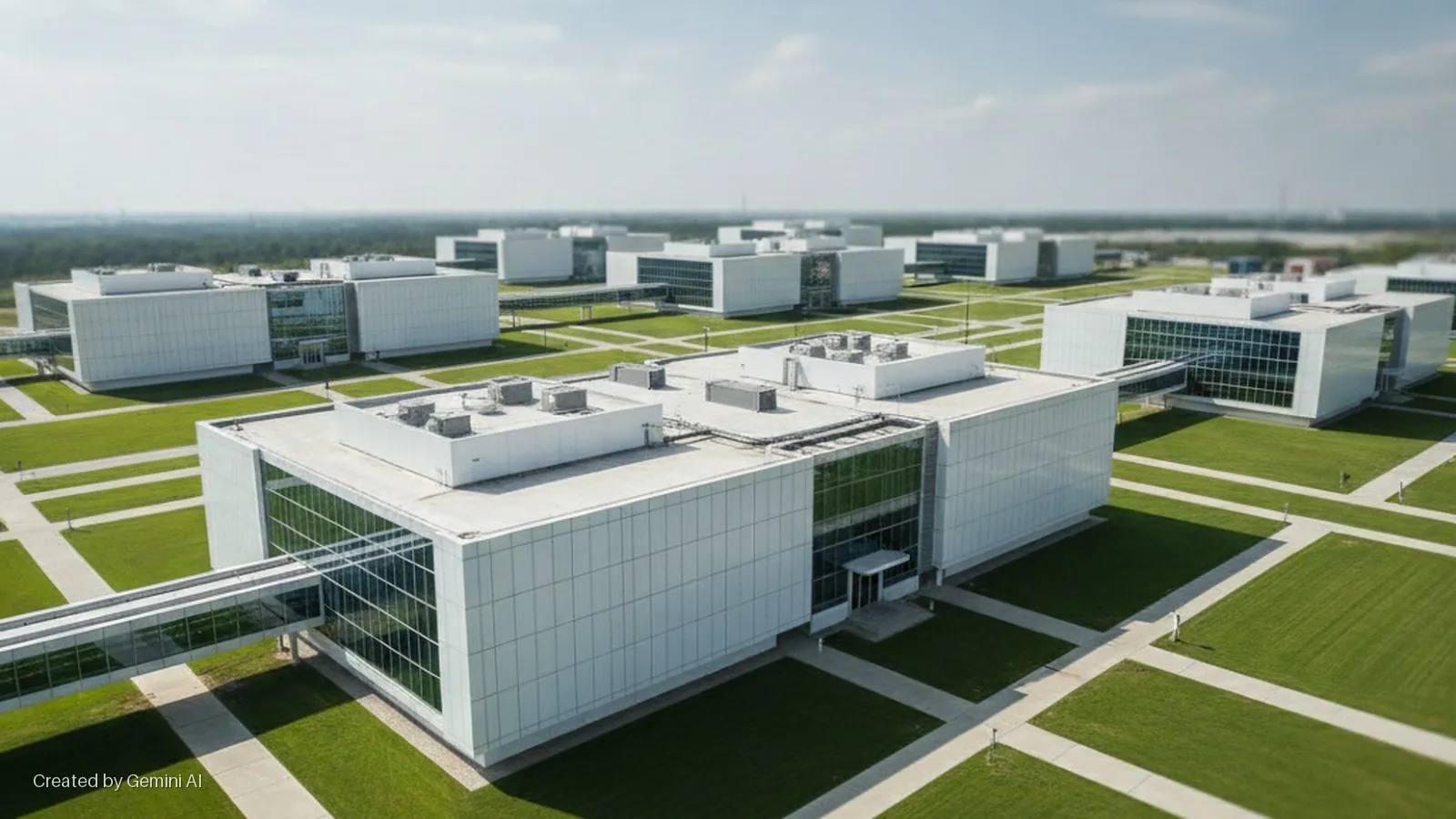
DeepInfra, a purpose-built cloud inference platform founded in 2022, has announced a dedicated compute partnership with humans&, a frontier AI lab focused on long-horizon human-AI collaboration. The deployment, described by DeepInfra as one of its largest to date under its DeepCluster offering, centres on a cluster of more than 1,000 NVIDIA B300 GPUs housed in Hillsboro, Oregon, with over two megawatts of power capacity earmarked to support training, inference, and research workloads at scale.
The deal is notable not only for its size but for its structure. Georges Harik, co-founder of humans&, was also a lead investor in DeepInfra's Series B financing round, a convergence of capital and infrastructure that blurs the line between vendor and strategic partner, and reflects a broader pattern emerging across the frontier AI ecosystem where research labs are tying their compute supply chains directly to their investment portfolios.
The case against the hyperscaler
For years, frontier AI development has been synonymous with dependency on the major cloud providers: AWS, Azure, and Google Cloud collectively control the lion's share of GPU-cluster provisioning globally. DeepInfra's DeepCluster model offers an alternative: dedicated, managed NVIDIA infrastructure that removes what CEO Nikola Borisov calls "the barriers that have historically slowed access to powerful AI compute," allowing research teams to focus on model development rather than infrastructure operations.
The appeal is partly financial and partly strategic. Managed dedicated clusters can offer lower per-token costs than on-demand hyperscaler pricing at sustained throughput, a material consideration for a lab like humans& that, according to co-founder Harik, "requires significant compute from day one." At nearly ten trillion tokens processed per week across its platform, DeepInfra is operating at a scale that gives it genuine negotiating leverage with NVIDIA on hardware allocation, an advantage smaller labs cannot replicate independently.
Convergence angles: energy, sovereignty, and the compute arms race
The two-megawatt power draw of the Hillsboro cluster is a useful lens for understanding where AI infrastructure investment is heading. Data centre power consumption has become a strategic constraint as much as a technical one: utilities, grid operators, and increasingly national governments are treating GPU cluster deployments as critical infrastructure. Oregon's combination of hydroelectric power, cooler climate, and existing fibre density makes it a favoured location for exactly this class of workload, a geography-as-strategy play that mirrors decisions made by hyperscalers a decade ago and is now being replicated by the next tier of AI infrastructure operators.
For macroeconomic investors, the deeper signal is the capital structure. Venture-backed frontier labs locking in dedicated compute through equity cross-holdings with their infrastructure providers creates supply-chain resilience that purely contractual arrangements cannot. It also concentrates risk: if the lab's research direction pivots or fundraising stalls, the infrastructure operator carries stranded asset exposure. This dynamic is playing out across the AI compute landscape, where the race to secure NVIDIA's latest GPU generations is forcing labs and infrastructure providers into arrangements that look less like customer-vendor relationships and more like joint ventures.
The humans& research focus on reinforcement learning for long-horizon human-AI interaction also carries cross-sector implications beyond the immediate compute deal. Systems trained to model the long-term consequences of human-AI interaction at scale are precisely the architecture that enterprise workflow automation, defence decision-support, and financial modelling applications will require as agentic AI matures. The compute infrastructure being laid down now will determine which labs are positioned to serve those markets when demand crystallises.