
Guident and FSCJ launch autonomous vehicle ops training centre
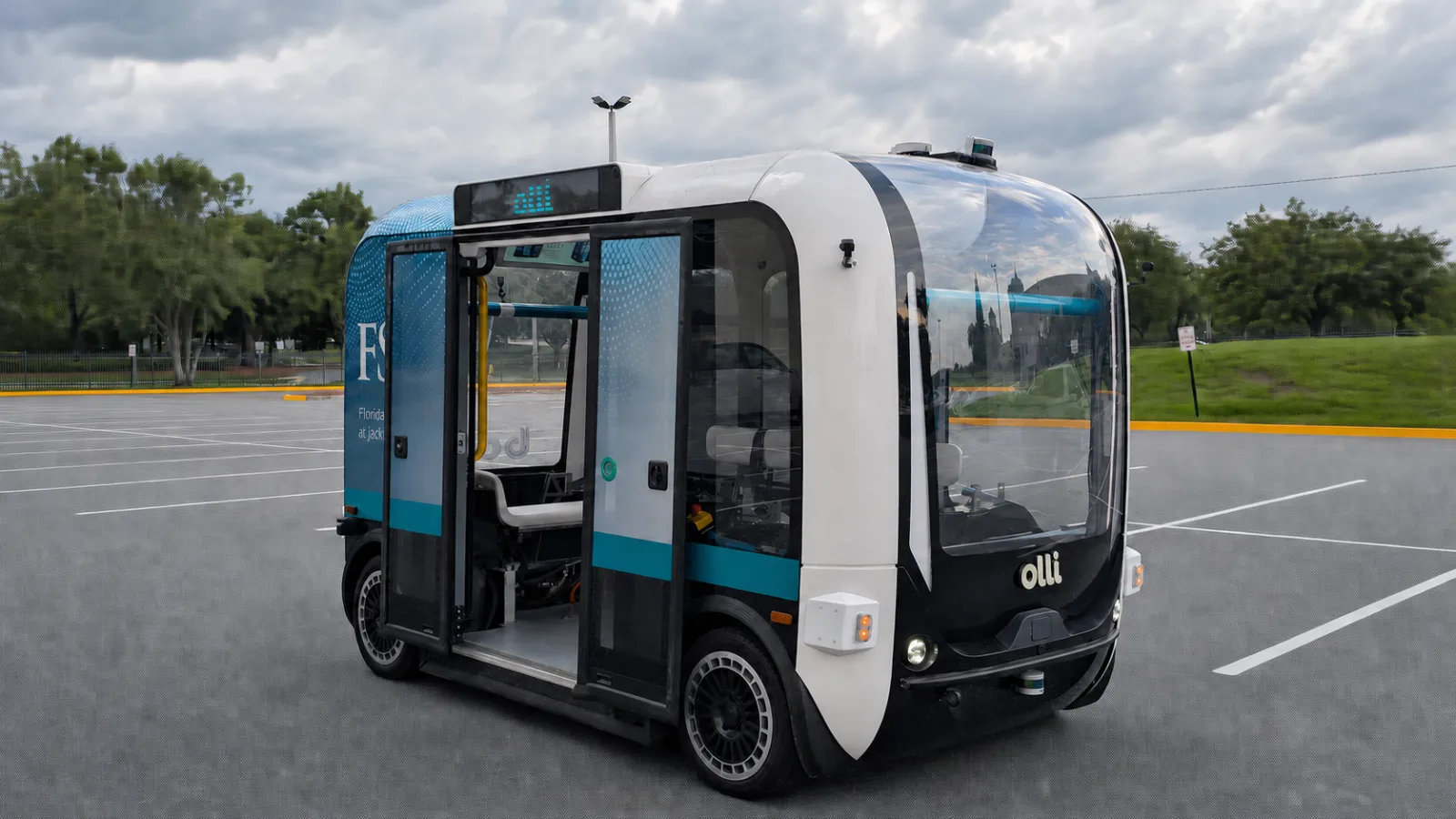
Guident Corp., the autonomous vehicle remote monitoring software firm, has partnered with Florida State College at Jacksonville (FSCJ) to establish a dedicated training centre for the operational workforce behind self-driving transport. The facility marks a notable inflection: rather than focusing on the engineers who build autonomous vehicles, the collaboration targets the people who will supervise, intervene in, and manage them once deployed.
FSCJ's Downtown Campus has been equipped with Guident's GuideOn remote monitoring and control platform, making it the company's sixth Remote Monitor and Control Centre (RMCC) globally. An "Olli" autonomous shuttle on campus has been integrated into the GuideOn network as the sixth vehicle in Guident's operational fleet, giving students live experience with remote assistance, fleet analytics, safety monitoring, and incident response workflows.
From pilots to operations: the workforce gap
The autonomous vehicle industry has spent a decade refining sensors, software stacks, and edge-case decision logic. What has lagged is the human infrastructure required to scale beyond tightly controlled pilots. Operators, public transit agencies, and logistics firms rolling out autonomous shuttles and robotaxis increasingly find themselves unable to hire people with practical experience of remote fleet supervision, an emerging discipline for which no established training pipeline yet exists.
The FSCJ programme is designed explicitly around that operational layer. Curriculum under development will cover vehicle monitoring, remote assistance and control, mobility data analysis, and safety compliance, areas that fall outside the engineering and maintenance focus of most existing autonomous vehicle education programmes. Doug Brauer, FSCJ's Dean of Engineering and Industry, described the setup as "a curriculum based on real-world interaction with the technology," emphasising the hands-on nature of the GuideOn integration.
Harald Braun, Guident's Executive Chairman and CEO, framed the stakes clearly: "The future of autonomy is not only about the vehicle. It is about the people, systems, processes, and operating environments that make autonomous services safe, reliable, and scalable."
Cross-sector read-across: talent as infrastructure
The workforce bottleneck in autonomous mobility carries implications well beyond the transport sector. In logistics and last-mile delivery, the transition from human-driven to supervised-autonomous fleets is already compressing margin assumptions at major carriers; the inability to hire qualified remote operators is emerging as a deployment constraint comparable to regulatory approval. Ports, airports, and municipal transit authorities face the same readiness gap, all cited by Guident as target verticals for the talent pipeline FSCJ will help build.
The capital landscape reflects the urgency. Autonomous mobility startups have attracted substantial venture and corporate investment across the US, Europe, and the Gulf over the past three years, but investor scrutiny has sharpened around commercialisation timelines. The bottleneck is increasingly operational rather than technical, a dynamic that positions workforce-development partnerships like this one as infrastructure investments in their own right. Academic-industry collaborations of this type are also drawing interest from state and federal workforce bodies in the US, where the CHIPS and IIJA-era precedent of pairing industrial capability build-outs with community-college training programmes has established a replicable model.
For Guident specifically, the FSCJ partnership extends its RMCC network at relatively low capital cost while simultaneously seeding a regional talent pipeline that could feed client deployments in transit, campus mobility, and commercial robotics. The company's positioning as the human-oversight layer for autonomous systems also aligns with the regulatory direction of travel: US federal and state regulators have consistently signalled that supervised autonomy, rather than fully driverless operation, will be the commercial norm for the medium term. Operators and investors calibrating deployment timelines should track whether workforce supply begins to close the gap with vehicle readiness over the next 18 to 24 months.