
STAX Engineering lands $150m Bain deal ahead of port rules
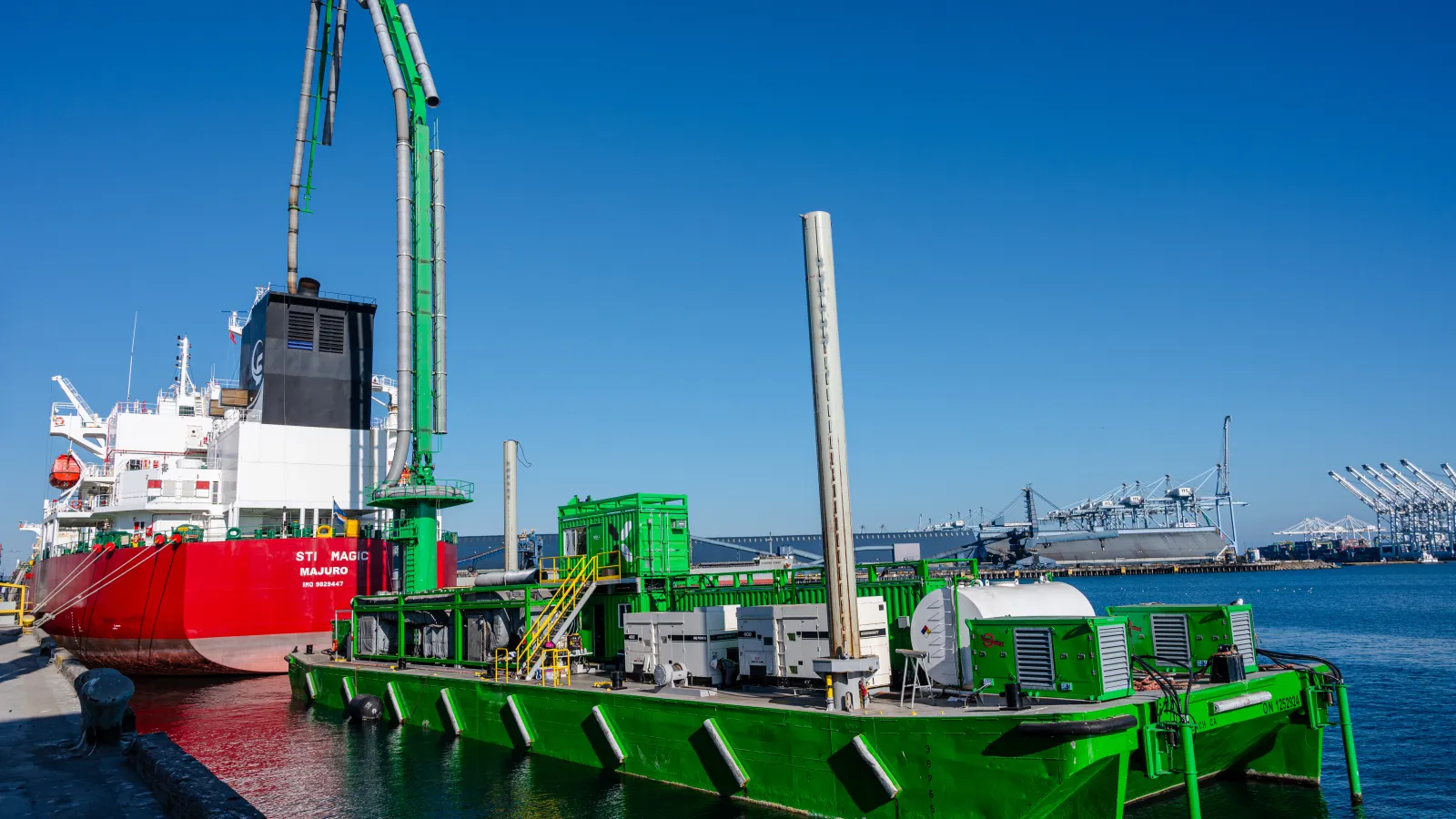
STAX Engineering, a Long Beach-based maritime emissions capture company, has secured $150 million in financing from Bain Capital's Private Capital Group to fund contracted builds through 2027 and expand its fleet of barge-based exhaust capture systems across California's ports. The deal arrives six months ahead of the California Air Resources Board's (CARB) At-Berth Regulation deadline, which mandates zero or near-zero emissions for tankers whilst docked from 1 January 2027. The financing refinances existing debt and provides fresh capital to complete contracted infrastructure builds, positioning STAX as the dominant compliance vendor in a corridor that sees roughly 400 tanker vessel visits and more than 9,600 at-berth hours annually.
STAX says it has already completed more than 2,700 vessel calls and logged over 46,000 service hours, capturing more than 350 tonnes of pollutants. Its barge-mounted system connects directly to a vessel's exhaust stack from the water, removing up to 99% of particulate matter and 95% of nitrogen oxides without requiring vessel modifications or shore-side infrastructure upgrades. In August 2025, CARB issued STAX an Executive Order authorising its fleet to service all three major vessel types operating in California: container ships, auto carriers, and tankers, making it the first emissions capture operator to hold that authorisation.
Compliance deadline as capital catalyst
The January 2027 deadline is doing the work that carbon pricing and voluntary ESG commitments often fail to achieve: converting regulatory intent into signed contracts and institutional debt. Two new agreements, with bulk liquid terminal operator IMTT at the Port of Richmond and with TransMontaigne at its Richmond and Martinez facilities, are expected to generate more than 6,400 at-berth service hours through 2031. Those deals extend STAX's existing Southern California footprint, which already includes agreements with Olympus Terminals and Shell at the Ports of Long Beach and Los Angeles.
Mike Walker, STAX's chief executive, said the company is "already operating at scale and is the market leader in tanker emissions capture," and that the financing provides the capacity needed to serve its expanding Northern California customer base. Bain Capital managing director David Healey cited the team's "execution capabilities" and "the role its technology can play as ports and vessel operators invest in cleaner at-berth operations."
The convergence angle: port infrastructure meets energy transition capital
For cross-sector investors, the STAX deal illustrates a structural shift in how compliance-driven infrastructure is being financed. Bain Capital's Private Capital Group, which typically deploys into growth-stage and infrastructure assets, is essentially underwriting a new category of port utility: dedicated emissions-control capacity that sits between the vessel and the terminal, owned and operated by a third party. That model mirrors the logic of contracted renewable energy capacity, where a specialist operator builds, owns, and services infrastructure against long-term offtake agreements.
The regulatory forcing function here is worth examining beyond California. CARB's At-Berth rules are among the most stringent port-emissions standards globally, but the International Maritime Organization is steadily tightening its own framework, and the European Union's FuelEU Maritime regulation came into force in January 2026. Terminal operators and tanker owners who are solving for California today are building operational muscle for compliance obligations that will follow in other jurisdictions. That positions specialist vendors such as STAX not merely as local compliance contractors but as early infrastructure in a global maritime decarbonisation stack.
The capital implication is equally significant. As sustainability-linked lending tightens for fossil-fuel-adjacent assets, maritime terminals are discovering that demonstrated emissions-control capability is becoming a condition of access to institutional financing, not simply a regulatory checkbox. Bain's involvement signals that growth-stage private capital is willing to underwrite that transition on a contracted, project-finance basis, a model that could attract sovereign-wealth and infrastructure-fund attention as the pipeline of CARB-style regulations grows internationally.